Pakistan, China, Russia, and Iran call for enhanced regional cooperation to combat terrorism and ensure lasting peace in Afghanistan.
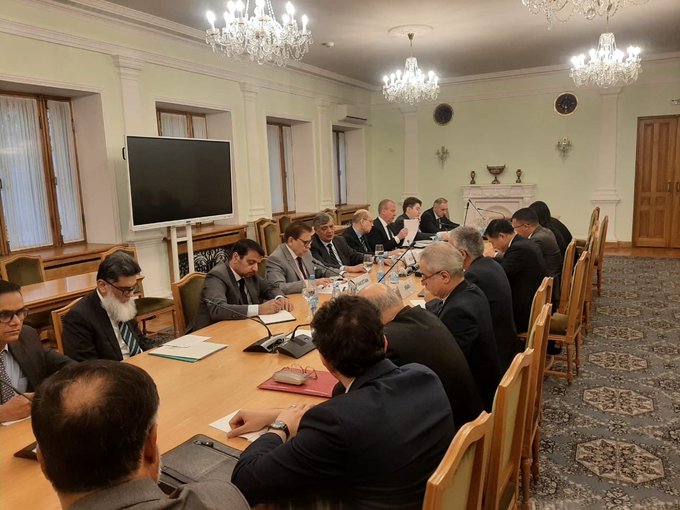
ISLAMABAD – The Quadrilateral Meeting of Special Representatives for Afghanistan, comprising Pakistan, China, Russia, and Iran, convened in Moscow on Tuesday to discuss the critical issues of regional peace and security. The meeting reaffirmed the collective commitment of the four countries to a stable, sovereign, and peaceful Afghanistan, free from terrorism and external interference.
Pakistan’s Special Representative for Afghanistan, Ambassador Mohammad Sadiq, conveyed the consensus, stating on social media, “The participating states unanimously reaffirmed their steadfast commitment to a stable, sovereign, and peaceful Afghanistan, underscoring the necessity of a country free from the scourge of terrorism and external intervention.”
The discussion highlighted the continued threat posed by various designated terrorist groups, including Tehreek-e-Taliban Pakistan (TTP), Balochistan Liberation Army (BLA), Eastern Turkistan Islamic Movement (ETIM), Jaish al-Adl, Daesh, and al-Qaeda. Ambassador Sadiq emphasized the importance of regional coordination and collaboration to combat these groups and prevent Afghanistan from becoming a haven for militant organizations once again.
“Given this shared threat, the nations stressed the need for enhanced cooperation and collaborative actions to address terrorism in all its forms,” he added.
The meeting’s participants reiterated their shared goal of ensuring that Afghanistan does not relapse into a stronghold for terror groups. It was emphasized that continued regional cooperation is vital to ensuring peace and stability not only in Afghanistan but across the broader region.
Bilateral Engagements Precede Consultations
Prior to the quadrilateral meeting, Ambassador Sadiq engaged in bilateral discussions with his Iranian counterpart, Ambassador Muhammad Reza Bahrami. The meeting was described as “great” by Ambassador Sadiq, focusing on the latest developments in Afghanistan and mutual concerns over the persistent terrorism threat. Both sides agreed on the importance of sustained dialogue and cooperation to address common security challenges and enhance regional stability.
Ambassador Sadiq also held productive talks with his Chinese counterpart, Ambassador Yue Xiaoyong, where discussions focused on regional security, counter-terrorism efforts, and humanitarian concerns in Afghanistan. The meeting underscored the strong partnership between Pakistan and China, particularly in addressing shared security challenges and advancing regional development.
Additionally, discussions between Ambassador Sadiq and Russian counterpart Ambassador Zamir Kabulov in Moscow centered on measures to strengthen regional cooperation for Afghanistan’s peace and stability. Pakistan’s Ambassador to Kabul, Ubaid ur Rahman Nizamani, also participated in the talks.
Pakistan’s Continued Push for Action Against Terrorism
The Moscow consultations are part of Pakistan’s ongoing efforts to press the Taliban administration in Kabul to take decisive action against terrorist organizations operating from Afghan soil. Prime Minister Shehbaz Sharif recently reiterated this stance, warning that Afghanistan must choose between supporting terrorism or aligning with Pakistan in the fight against extremism. He emphasized that Pakistan would continue its zero-tolerance policy toward militancy, including opposition to Indian-backed proxies.
Earlier this year, during the sixth Trilateral Foreign Ministers’ Dialogue in Kabul, Pakistan, China, and Afghanistan committed to deepening cooperation in the fight against terrorism while expanding ties in trade, regional development, and counter-narcotics efforts. The discussion also included plans to extend the China-Pakistan Economic Corridor (CPEC) to Afghanistan.
At that meeting, Deputy Prime Minister Ishaq Dar urged Kabul to take “concrete and verifiable measures” against banned terrorist organizations such as TTP, BLA, and Majeed Brigade. Dar reaffirmed Pakistan’s commitment to regional peace and collective security, emphasizing the necessity of joint efforts to combat extremism and foster stability.