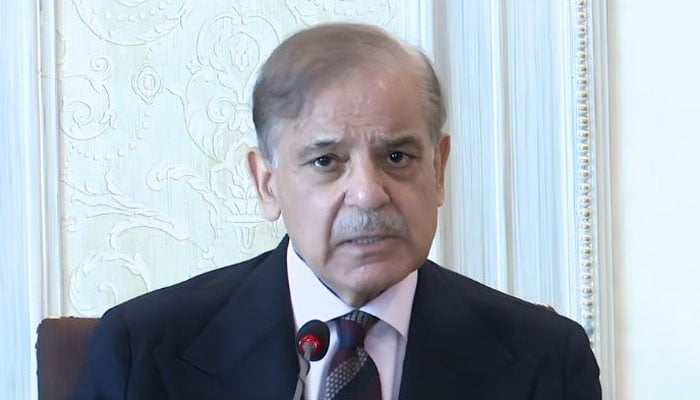
Pakistan Ready to Discuss Permanent Ceasefire with Taliban, PM Shehbaz Says
Islamabad — Prime Minister Shehbaz Sharif has announced that Pakistan is ready to engage in discussions with the Taliban regime in Afghanistan on reasonable terms, following a 48-hour temporary ceasefire between the two countries. The Prime Minister emphasized that the responsibility for a permanent ceasefire now lies with the Taliban leadership.
Speaking at the federal cabinet meeting on Thursday, Prime Minister Sharif addressed the ongoing tensions between Pakistan and Afghanistan, particularly along the Pak-Afghan border. He stated that Pakistan has shown patience in the face of repeated provocations but made it clear that the Taliban regime’s actions will determine the future course of relations.
“The ball is now in the court of the Afghan Taliban to commit to a permanent ceasefire,” said the premier. The comment comes after a series of violent exchanges between Afghan Taliban forces and Pakistan, culminating in a retaliatory military action by Pakistan following an unprovoked attack from the Taliban-backed Tehreek-e-Taliban Pakistan (TTP), a terrorist group allegedly supported by India.
Recent Clashes and Retaliation
On October 15, tensions between the two nations reached a peak when the Taliban forces, in collaboration with the TTP, launched an attack on Pakistan. The Pakistan Armed Forces responded decisively, killing over 200 Afghan Taliban militants and affiliated groups in a self-defensive strike. However, the clashes also resulted in the tragic loss of 23 Pakistani soldiers.
Following the violence, both Pakistan and Afghanistan agreed to a temporary ceasefire for 48 hours, effective from October 15, at the request of the Taliban regime. Despite this temporary halt in hostilities, Prime Minister Sharif expressed disappointment that the Taliban regime had failed to prioritize peace, choosing instead a path of aggression.
Tensions Over Cross-Border Terrorism
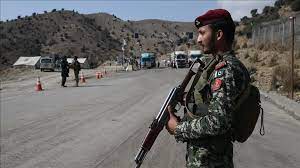
The increase in cross-border terrorism has become a significant point of contention between Pakistan and Afghanistan. Pakistan has repeatedly called on the Taliban regime to take action against terrorist groups operating within Afghanistan, particularly the TTP, which has launched numerous attacks inside Pakistan.
The porous 2,500-kilometer border between the two nations is crucial not only for regional trade but also for the cultural and economic ties that bind the populations on both sides. However, the persistent terrorist activities originating from Afghan soil continue to strain relations.
A recent United Nations Security Council (UNSC) report has highlighted a troubling link between Kabul and the TTP, with the Taliban regime allegedly providing logistical, operational, and financial support to the group. This has only fueled Pakistan’s concerns over the use of Afghan territory as a base for cross-border attacks.
Efforts for Peace and Regional Development
Despite these tensions, Pakistan has continued to engage diplomatically with Afghanistan in pursuit of peace. Senior Pakistani officials, including Deputy Prime Minister Ishaq Dar and Defence Minister Khawaja Asif, have made several visits to Kabul to convey Pakistan’s desire for peace and stability in the region.
PM Shehbaz reiterated that these efforts were part of Pakistan’s commitment to fostering peace, development, and regional cooperation. However, the prime minister warned that if the Taliban regime continued to disregard Pakistan’s concerns, it would not be possible for the two nations to move forward in a meaningful way.
Afghan Refugee Situation
In addition to security concerns, the issue of Afghan refugees in Pakistan has added another layer of complexity to the relationship. Pakistan has hosted millions of Afghans over the past four decades, but recent measures, including the repatriation of undocumented Afghans, have intensified tensions. Since April 2023, over 554,000 Afghans have been sent back to Afghanistan under Pakistan’s Illegal Foreigners Repatriation Plan, with a significant portion of this number being repatriated in August alone.
As Pakistan continues to navigate its relationship with Afghanistan, the path to lasting peace and stability remains fraught with challenges. While the temporary ceasefire offers hope for de-escalation, it is clear that both nations must address long-standing issues, including cross-border terrorism and the treatment of Afghan refugees, if they are to build a more cooperative and peaceful future.