Table of Contents
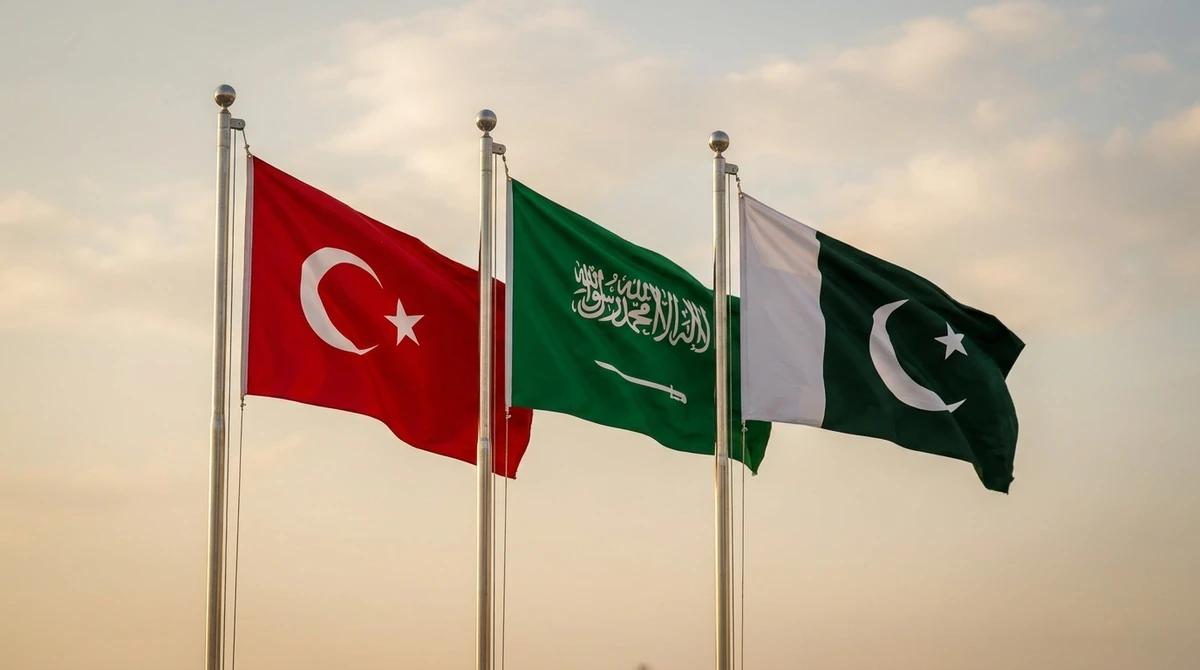
Mecca Defence Pact has gained further momentum as Pakistan, Saudi Arabia and Türkiye reaffirmed their commitment to collective defence, regional stability and stronger military cooperation during a high-level committee meeting in Islamabad on November 27, 2026.
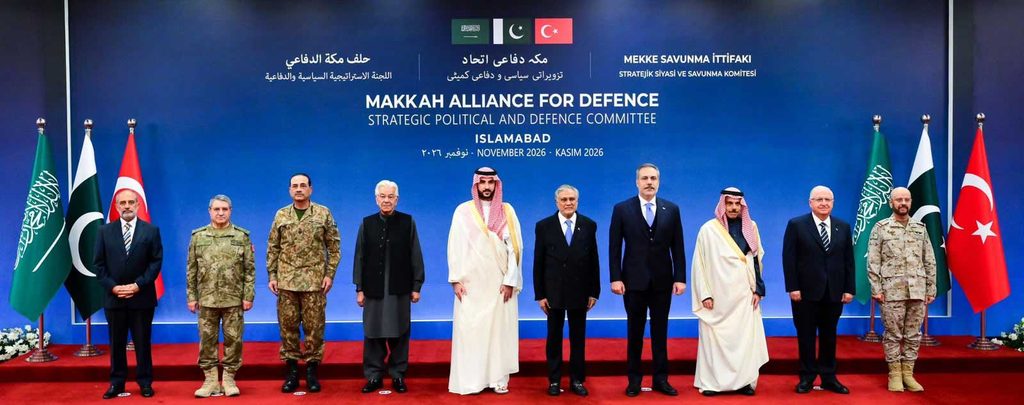
The three countries reviewed the evolving regional security situation, condemned attacks by Yemen’s Houthi militia on Saudi civilians and infrastructure, and pledged to strengthen cooperation under their joint defence agreement. The meeting also focused on institutional arrangements, defence capabilities and mechanisms for implementing previously agreed commitments.
Three Countries Reaffirm Mecca Defence Pact Commitment
Officials from Pakistan, Saudi Arabia and Türkiye reiterated their commitment to the principles and objectives of the Mecca Joint Defence Agreement during the Strategic, Political and Defence Committee meeting.
The participating countries emphasised collective defence, mutual solidarity and respect for the sovereignty and territorial integrity of all three member states.
The agreement, signed on August 7, 2026, in Mecca, provides a framework for mutual assistance in the event of armed aggression against any member. Under its collective defence provision, an attack on one member is treated as an attack on all.
The latest discussions reflect the three countries’ efforts to translate their political commitments into stronger institutional and defence cooperation.
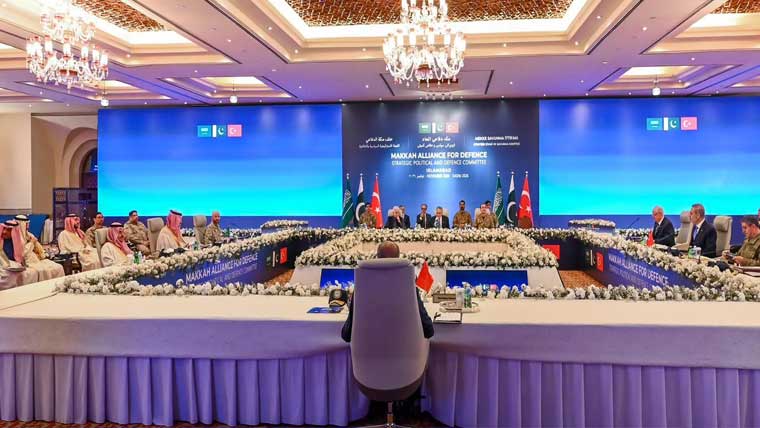
Regional Security Situation Takes Centre Stage
The committee reviewed developments in the regional security environment, with particular attention to emerging threats and challenges affecting regional peace and stability.
The three sides reaffirmed their determination to continue working together to promote security, prevent further escalation and encourage peaceful solutions to regional disputes.
The discussions took place amid continuing tensions in the Middle East, including attacks attributed to Yemen’s Houthi militia against Saudi Arabia.
The participants stressed that cooperation and coordination among member states remain important for addressing shared security concerns and protecting their respective national interests.
Implementation of Previous Decisions Reviewed
The committee also assessed progress on decisions taken during its inaugural meeting in Istanbul on August 31, 2026, and an emergency meeting held in Riyadh on October 5, 2026.
The review focused on translating earlier understandings into practical arrangements and strengthening the institutional framework governing cooperation between the three countries.
According to the communiqué, the parties reiterated their commitment to implementing collective defence obligations in accordance with their respective national laws.
The Riyadh emergency meeting had also discussed arrangements for providing forces and capabilities and facilitating their rapid deployment in Saudi Arabia under the agreement.
Saudi Arabia Secretariat Gains Importance
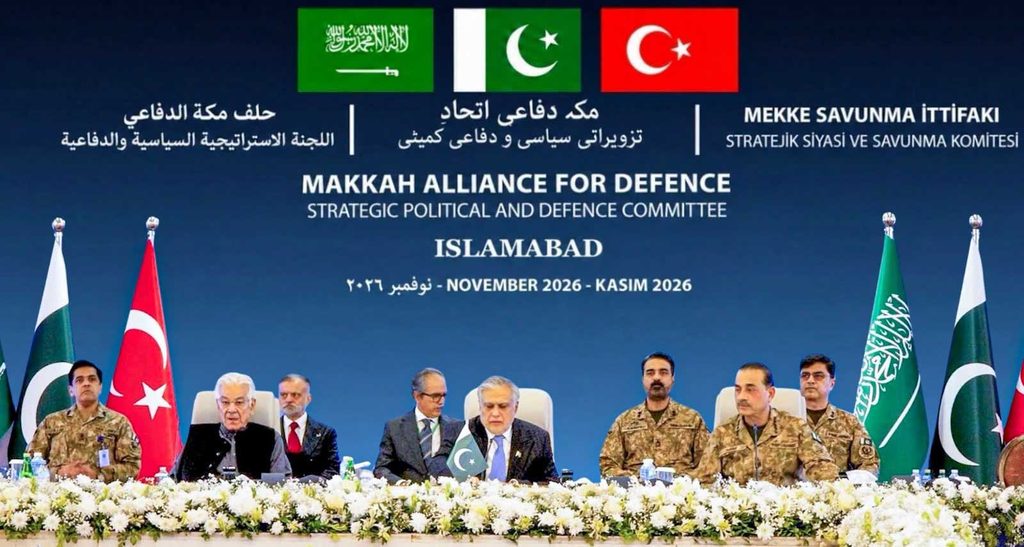
Another significant development highlighted in the joint communiqué was progress towards establishing and operationalising the agreement’s permanent secretariat in Saudi Arabia.
The committee welcomed the steps taken to strengthen the secretariat and emphasised its importance in coordinating activities, managing institutional affairs and maintaining communication among the participating countries.
The Riyadh-based secretariat is expected to provide an organisational foundation for implementing decisions, coordinating working groups and facilitating continued consultations between member states.
Pakistan’s retired Lieutenant General Nauman Mahmood has been appointed as the alliance’s first secretary-general for a three-year term, according to previous reporting.
Houthi Attacks Condemned by Member States
The three countries strongly condemned attacks by Yemen’s Houthi militia targeting civilians and civilian infrastructure in Saudi Arabia.
The participants expressed their determination to intensify efforts to support the kingdom in protecting its security, sovereignty and territorial integrity in line with the collective defence provisions of the agreement.
The issue has become increasingly important for the alliance amid continuing security challenges affecting Saudi Arabia.
Associated Press also reported that Pakistan and Türkiye reaffirmed their support for Saudi Arabia during the Islamabad discussions. Pakistani and Turkish officials have described the agreement as defensive in nature, while emphasising diplomatic efforts to reduce regional tensions.
Defence Industry and Military Cooperation
Beyond immediate security concerns, the committee reaffirmed its commitment to expanding cooperation across several strategic sectors.
These include defence production, joint technological development, military training and capacity building.
The three countries intend to strengthen collaboration in these areas to improve their ability to respond to common security challenges and develop stronger defence capabilities.
Greater cooperation between their defence industries could also support technology sharing, technical expertise and the development of joint capabilities.
The renewed commitment to military and institutional cooperation indicates that the three partners are seeking to establish a more coordinated framework for addressing regional security concerns.
A Continued Strategic Partnership
The latest committee discussions represent another step in the development of Pakistan, Saudi Arabia and Türkiye’s trilateral defence relationship.
While the joint communiqué reiterates important commitments, the practical implementation of collective defence arrangements, institutional coordination and defence cooperation will remain central to the agreement’s future development.
The three countries have reaffirmed their intention to work together for regional peace, security and stability while maintaining respect for national sovereignty and their respective legal frameworks.
Their next challenge will be translating these commitments into effective cooperation capable of addressing evolving regional security threats.See More on Pulse Pakistan