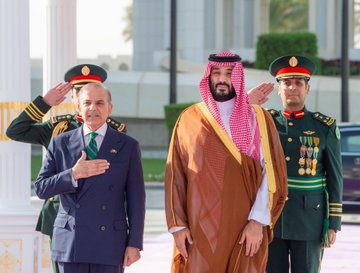
RIYADH, Sept. 17, 2025 — Pakistan and Saudi Arabia on Wednesday formalised a far-reaching Strategic Mutual Defence Agreement during Prime Minister Shehbaz Sharif’s state visit to Riyadh, pledging that any aggression against one country will be treated as aggression against both.
What the agreement says
The pact, signed at Al-Yamamah Palace in the presence of Saudi Crown Prince Mohammed bin Salman and Pakistan’s prime minister, commits the two governments to deepen defence cooperation and strengthen joint deterrence against external threats. Officials described the accord as a formalisation of decades of security ties and said the text establishes a mutual-assistance framework in the event of aggression.
Why the timing matters
Diplomats and analysts point to rising regional tensions as a key factor behind the deal. The announcement comes days after an Israeli strike in Doha that targeted senior Hamas figures, a move that stoked concern across the Gulf and among Muslim states about regional stability and sovereignty. Observers say Riyadh’s pact with Islamabad signals a strategic pivot toward bolstering regional deterrence amid wider geo-political uncertainty.
Reactions and interpretation
Commentators described the accord as historic, elevating bilateral ties into a clear security commitment rather than a series of informal understandings. Some analysts said the deal underscores Saudi Arabia’s determination to diversify its security partnerships at a time when Gulf states are reassessing long-standing defence arrangements.
Ceremony, attendees and protocol
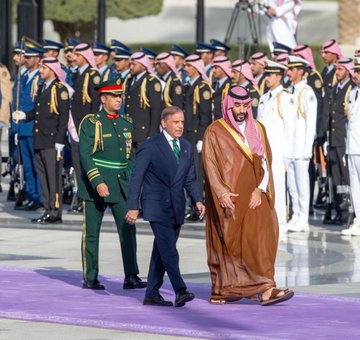
The signing ceremony brought together senior political and military figures from both sides. Pakistan’s delegation included Defence Minister Khawaja Muhammad Asif, Finance Minister Muhammad Aurangzeb, Foreign Minister Ishaq Dar and Chief of Army Staff Field Marshal Syed Asim Munir. The visit featured ceremonial honours — Saudi fighter jets escorted the prime minister’s plane into Saudi airspace and state protocol included a 21-gun salute and official receptions in Riyadh.
What this could mean regionally
While the text of the agreement stresses defensive cooperation and regional peace, its broad mutual-assistance clause is likely to be watched closely in capitals across South Asia and the Middle East. Policy makers will be assessing how the pact affects existing alliances, defence planning and diplomatic balancing — especially given Pakistan’s long-standing ties with multiple regional powers.
Next steps
Officials said implementation details will follow through defence and foreign ministry channels. The pact’s operational contours — force posture, joint exercises, command arrangements and any legal guarantees — will be clarified in subsequent agreements and working groups, officials and analysts say.