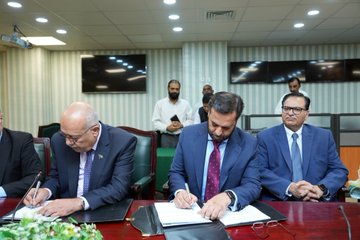
Pakistan and the State of Palestine have signed a memorandum of understanding to expand bilateral collaboration in health, covering advanced treatments, training and joint research. The agreement, inked in Islamabad by Federal Health Minister Syed Mustafa Kamal and the Palestinian ambassador, also foresees a Pakistan–Palestine Health Working Group to manage implementation.
What was agreed
The MoU sets out a practical framework for cooperation rather than a purely symbolic pledge. Officials said it will open channels for clinical partnerships, capacity building and longer-term projects aimed at strengthening both countries’ health systems. The formal signing took place at a ceremony attended by senior health ministry officials from Pakistan and diplomatic representatives of Palestine.
Areas of cooperation
Under the pact, Pakistan will work with Palestinian counterparts across a wide range of specialties, including interventional cardiology, organ transplantation, orthopaedics, endoscopic ultrasound, burn care and reconstructive plastic surgery. The agreement also covers support in infectious diseases, ophthalmology, pharmaceuticals and collaborative medical research, plus training placements for Palestinian clinicians at Pakistani institutions.
Implementation: a working group and a 30-day timeline
Minister Kamal announced that a Pakistan–Palestine Health Working Group will be established within 30 days to translate the MoU into actionable projects. That body is expected to map priorities, set training schedules and monitor progress on joint programmes.
Reactions and diplomatic context
Pakistan framed the agreement as an extension of longstanding political and humanitarian support for Palestine into the health sector. The Palestinian envoy expressed appreciation and described the arrangement as a concrete step toward improving medical services for Palestinians. Pakistani officials emphasised that the partnership aims to deliver measurable benefits through knowledge exchange and practical support.
Why it matters
Beyond goodwill, the MoU is notable for prioritising technical cooperation that can produce near-term patient benefits — for example, through specialist training and referrals — while also laying groundwork for research collaboration. For Palestine, access to training and clinical expertise could help address gaps in advanced procedures; for Pakistan, the pact reinforces diplomatic ties and expands its role in regional health diplomacy.
What comes next
Officials say detailed implementation plans, lists of priority projects and timelines will follow once the Health Working Group meets. Observers will watch whether the agreement quickly results in exchange programmes, specialist missions or joint research projects that deliver visible improvements for patients in both countries.