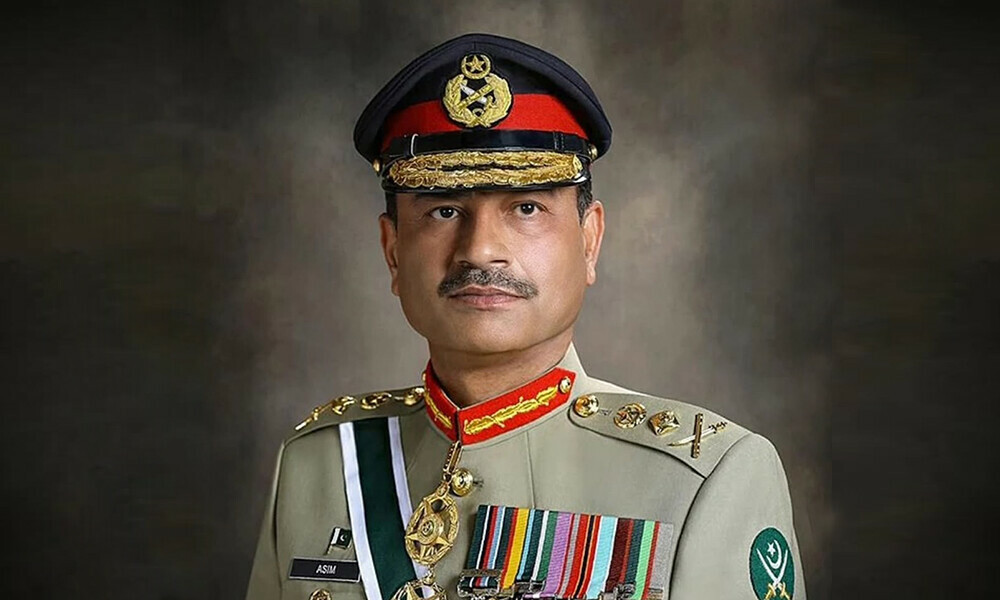
RAWALPINDI — The Pakistan Army has issued a stern warning to India, pledging a “swift and destructive response” to any potential aggression. The warning came as Pakistan’s top military leaders convened at the 272nd Corps Commanders’ Conference (CCC) on Wednesday, chaired by Chief of Army Staff (COAS) Field Marshal Asim Munir.
According to the Inter-Services Public Relations (ISPR), the forum expressed deep concern over recent provocative statements by Indian political and military leaders, accusing them of stirring war hysteria for political gain. The army leaders vowed to counter any aggression from India decisively, emphasizing that any perceived sense of security arising from geography would be shattered by a swift retributive response.
The statement further stressed that any attempt by India to create a new “normal” of aggression would be met with a determined and forceful counteraction. “The forum pledged to counter any Indian aggression with a swift and decisive response,” the ISPR said. “Any imaginary new normal will be met with a new normal of swift retributive response.”
The meeting also focused on Pakistan’s ongoing security operations, reviewing counterterrorism measures, and reaffirming the army’s commitment to neutralizing terror proxies linked to India, such as Fitna Al-Khawarij and Fitna Al-Hindustan. The army pledged to dismantle networks that undermine the state’s security, highlighting the damaging nexus between terrorism, crime, and political patronage.
The conference’s remarks came in response to heightened tensions between the two nuclear-armed neighbors, following provocative comments by Indian officials. On October 3, Indian Air Force Chief Amar Preet Singh claimed that India had downed five Pakistani fighter jets during intense fighting in May. However, Singh’s assertion was made without presenting any evidence.
The May conflict, the most severe between the two countries in decades, began after a terrorist attack in India’s Jammu and Kashmir region, which India claimed was backed by Pakistan. In retaliation, India launched a series of unprovoked attacks on Pakistan, resulting in casualties. Pakistan responded forcefully, downing six Indian fighter jets, including three Rafale jets, during Operation Bunyan-um-Marsoos, which culminated in a ceasefire agreement brokered by the United States.
In addition to the military tensions, the forum also discussed the recent Pakistan-Saudi Arabia Strategic Mutual Defence Agreement, which was hailed as a significant step toward enhancing multi-domain cooperation and regional security. The agreement emphasizes shared values and mutual respect between the two nations, with a focus on peace and stability in both the Middle East and South Asia.
The military leadership reiterated its unwavering support for the rights of the Kashmiri and Palestinian peoples, reaffirming Pakistan’s stance on the two-state solution based on pre-1967 borders with Al Quds Al Sharif as the capital of Palestine. The forum also expressed concern for the people of Gaza and called for an immediate ceasefire and humanitarian aid delivery.
In closing, COAS Field Marshal Asim Munir commended the resilience of the troops and emphasized the army’s readiness to face both conventional and hybrid threats. He stressed the importance of maintaining high levels of innovation, discipline, and operational readiness as Pakistan faces an increasingly complex security landscape.