Lower house passes SC Practice and Procedure Bill, aligning laws with 27th Amendment
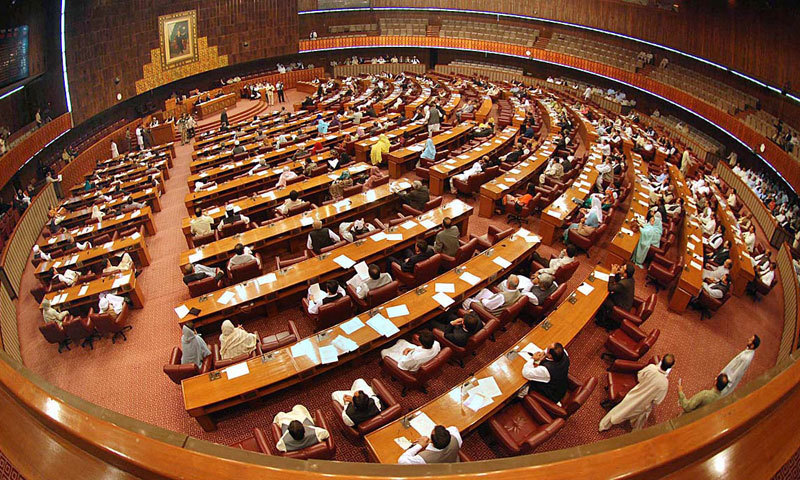
ISLAMABAD: The National Assembly on Thursday passed key armed forces amendments to the laws governing the Army, Navy, and Air Force, as well as significant changes to judicial procedures, aligning both sets of reforms with the 27th Constitutional Amendment approved earlier by President Asif Ali Zardari.
The lower house’s approval came shortly after the federal cabinet endorsed the legislative changes during its session earlier in the day. According to the Prime Minister’s Office, the amendments were introduced to bring the armed forces’ framework and judicial laws in conformity with the recently enacted constitutional provisions.
Purpose of the Amendments
A statement issued by the Prime Minister’s Office clarified that the new legislation stems from the constitutional revisions to Article 243, which defines the powers, appointments, and tenure of top military leadership.
Defence Minister Khawaja Asif presented the three amendment bills — one each for the Army Act, Navy Act, and Air Force Act — emphasizing the need for legal uniformity following the introduction of the 27th Amendment.
“The intent is not to rewrite the laws but to refine and harmonize them with constitutional mandates,” Asif stated during the session.
Creation of Chief of Defence Forces Post
Law Minister Azam Nazeer Tarar, while elaborating on the changes, clarified that the amendments were not entirely new laws but modifications to existing ones.
“The Chief of Army Staff (COAS) will now concurrently serve as the Chief of Defence Forces (CDF),” he explained. “The position of the Chairman Joint Chiefs of Staff Committee (CJCSC) will cease to exist after the retirement of the current incumbent.”
Under the revised provisions, the CDF will serve a five-year term from the date of appointment. The amendments also introduce honorary designations including Field Marshal, Marshal of the Air Force, and Admiral of the Fleet, to be conferred by the Parliament.
Additionally, only Parliament will retain the authority to revoke these honorary titles or impeach any of the armed forces’ chiefs.
Changes in Command and Appointments
The updated framework also empowers the Prime Minister to appoint the National Strategic Command’s commander from the Army, based on the recommendation of the CDF.
Further adjustments were made to the Navy and Air Force Acts, with redundant clauses removed and new regulatory sections introduced to ensure consistency across all branches of the military.
Supreme Court Practice and Procedure (Amendment) Bill, 2025
In the same session, Law Minister Tarar tabled the Supreme Court Practice and Procedure (Amendment) Bill 2025, which was passed by a majority vote in the lower house. The bill introduces crucial changes intended to align judicial processes with the 27th Constitutional Amendment.
The legislation eliminates Clause 191-A, previously related to the top court’s procedural authority, and creates a new three-member committee responsible for constituting benches to hear cases.
This committee will be headed by the Chief Justice of Pakistan, along with the most senior judge and a third member nominated by the Chief Justice. In case of any member’s absence, the Chief Justice may appoint a substitute.
Decisions on bench formation will be made through majority vote, reducing the unilateral power of the chief justice and ensuring greater judicial transparency and balance in case assignments.
Next Steps
Following parliamentary approval, the Prime Minister will send a summary for the appointment of the Chief Justice of the Federal Constitutional Court, a new position established under the constitutional reforms.
The bills will now move to the Senate for final consideration before being signed into law by the President.