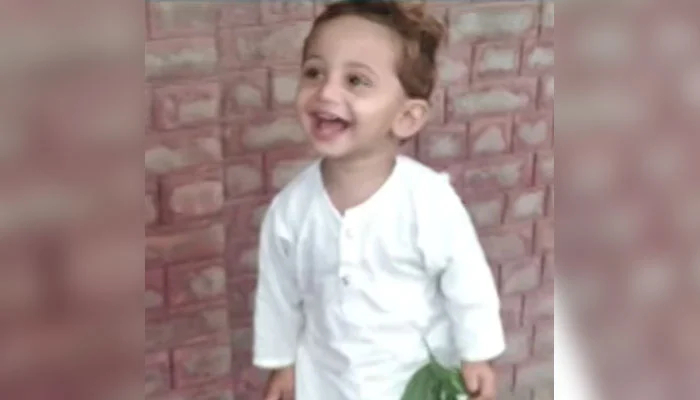
LAYYAH — The death of a two-year-old boy after he fell into an open sewage pit in Punjab’s Layyah district has once again exposed the deadly consequences of unsafe civic infrastructure, sparking renewed calls for government intervention to protect children.
The incident occurred in Kakkar Wala village, where the toddler was playing outside his home when he slipped into an uncovered sewage pit. His father told local residents that the pit was open and unguarded, leaving no chance for the child to escape.
Villagers said the area lacks a formal sewage system, forcing residents to dig makeshift pits to manage wastewater. According to locals, they have been repeatedly requesting authorities to install a proper drainage system for the past six years, but their appeals have gone unanswered.
“These pits are dangerous, but we have no alternative,” said a resident, adding that the community had been left to manage sanitation on its own due to prolonged official neglect. Several residents warned that multiple uncovered pits remain in the village, posing a constant risk to children.
The bereaved family, supported by neighbours, has appealed to Punjab Chief Minister Maryam Nawaz to take notice of the tragedy and order immediate remedial measures. They urged authorities to ensure accountability and prevent similar incidents through proper infrastructure development.
The Layyah incident follows closely on the heels of another tragic child death in Lodhran district, where a seven-year-old boy fell into an open manhole in the Dhanot area. According to the child’s uncle, the boy had gone to the market with his father to buy breakfast and fell into the uncovered manhole while returning home.
“He remained trapped for nearly two hours before his body was recovered,” the uncle said, describing the ordeal.
The Lodhran tragedy triggered swift action from the provincial government. Punjab Chief Minister Maryam Nawaz ordered the removal of the district commissioner and directed strict action against those responsible. Additional Deputy Commissioner Liaqat Ali Gillani later confirmed that a case had been registered against the contractor and the highway sub-engineer tasked with maintaining the area.
“The matter is under investigation, and strict action will be taken,” Gillani said at the time.
Beyond Punjab, similar incidents in Karachi have repeatedly highlighted the dangers posed by uncovered manholes in urban areas as well. In recent years, multiple children have lost their lives after falling into open drains during rainfall or while playing near streets.
In one widely reported Karachi incident, a young child was swept into an open manhole during monsoon rains after streets became flooded, concealing uncovered drains. Rescue teams recovered the child’s body hours later, prompting public outrage and renewed criticism of civic agencies for failing to secure hazardous openings.
Read more about Karachi incident
Urban planners and safety advocates say Karachi’s ageing drainage system, combined with poor maintenance and missing manhole covers, turns seasonal rain into a deadly threat, particularly for children. Despite repeated assurances by authorities, uncovered manholes continue to be reported across the city after every downpour.
Public safety experts warn that the recurring loss of young lives in Layyah, Lodhran, Karachi, and other parts of the country points to a broader pattern of negligence and weak enforcement. They stress that temporary fixes and post-incident actions are not enough.
“Children are paying the price for systemic failures,” said a civic rights activist. “Unless authorities prioritize basic infrastructure and accountability, these tragedies will keep repeating.”
Residents in Kakkar Wala village echoed this sentiment, urging authorities to immediately cover existing sewage pits and launch inspections across rural settlements. They stressed that no family should have to endure such loss due to preventable hazards.
As grief continues to grip affected families, the latest incidents have reignited a nationwide debate on governance, public safety, and the urgent need to secure streets and neighborhoods—before more innocent lives are lost.