Table of Contents
ICC emergency meeting deliberations are underway after Pakistan announced it will boycott its highly anticipated T20 World Cup group-stage match against India, triggering a major governance and sporting crisis ahead of the global tournament.
The International Cricket Council has convened a virtual emergency board meeting in Dubai following confirmation that Pakistan will participate in the T20 World Cup but will not take the field against India on February 15, 2026. The match, scheduled to be played in Sri Lanka, is one of the tournament’s marquee fixtures and a major commercial draw for broadcasters and sponsors.
Government Directive and PCB Role
The decision to boycott the India match was formally announced by the Government of Pakistan through its official social media channels on Sunday. The statement followed a high-level meeting between Prime Minister Shehbaz Sharif and Pakistan Cricket Board Chairman Mohsin Naqvi, held ahead of the ICC emergency meeting.
According to the government’s announcement, the national team has been granted approval to compete in the tournament while being explicitly barred from playing India. The move places the PCB in a difficult position, as it is contractually bound to honour all ICC fixtures.
Why the India Match Matters
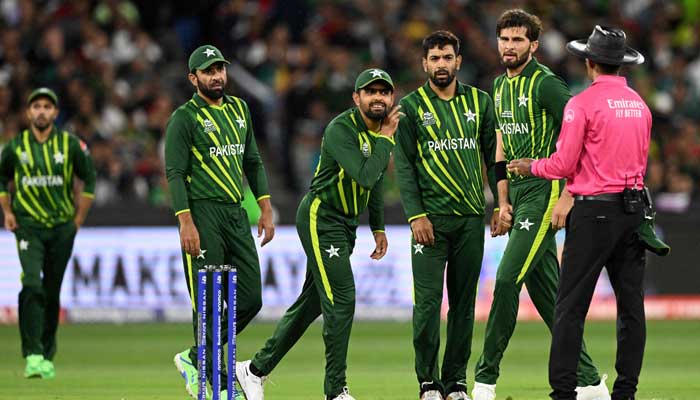
The Pakistan–India clash is widely regarded as the most valuable fixture in international cricket, generating significant global viewership and advertising revenue. Any disruption to the match schedule has immediate financial implications for the ICC, host broadcasters, sponsors, and commercial partners.
Source: The News International
Sources close to the matter say the boycott is being viewed within ICC circles as an attempt to exert financial and political pressure on the governing body. The PCB has recently voiced strong criticism of the ICC, accusing it of applying double standards and acting under the influence of the Indian cricket board.
ICC’s Initial Reaction
The ICC has confirmed that it is awaiting formal written communication from the PCB outlining the decision. However, in a preliminary response, the global body expressed serious concern, stating that selective participation undermines the core principles of a world tournament.
The council emphasized that all participating teams are required to fulfil their scheduled fixtures, warning that failure to do so threatens the integrity of the competition. While acknowledging that national governments may influence sporting decisions, the ICC urged Pakistan to reconsider its stance and seek a mutually acceptable resolution.
Possible Sanctions Under Review
According to informed sources, the ICC emergency meeting is expected to deliberate on a range of punitive measures. These reportedly include substantial financial penalties against the PCB and the possibility of suspension from future ICC events if the boycott proceeds.
Additional sanctions under discussion include restrictions on Pakistan’s bilateral cricket engagements, limitations on foreign player participation in the Pakistan Super League, and potential compensation claims from broadcasters and commercial partners affected by the cancelled match.
Broader Impact on Pakistan Cricket
The controversy comes against the backdrop of already strained relations between the PCB and the ICC, marked by dissatisfaction over several recent scheduling and administrative decisions — notably the late replacement of Bangladesh with Scotland in the tournament lineup. Such moves have fueled perceptions of inconsistency and marginalisation, further deepening mistrust between the two bodies.
Cricket analysts caution that a prolonged standoff with the ICC could leave Pakistan increasingly isolated within the global cricket ecosystem, with serious consequences for revenue generation, international exposure for players, and the long-term growth and development of the sport in the country.
As the ICC weighs its options, the outcome of the ICC emergency meeting is expected to have far-reaching consequences—not just for Pakistan’s World Cup campaign, but for the governance of international cricket as a whole.