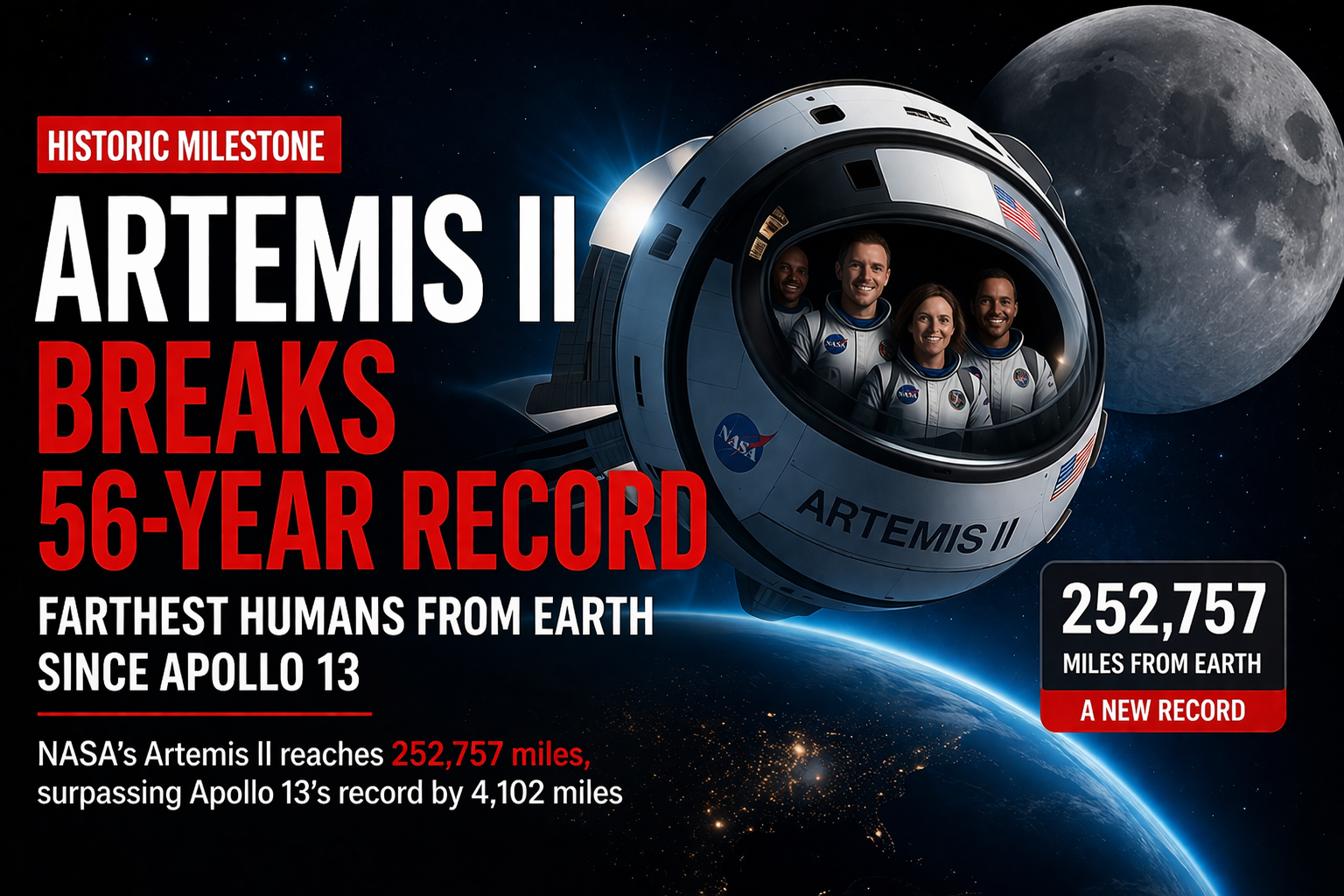
Artemis II Sets New Human Distance Record
Artemis II has officially redefined the limits of human space travel by surpassing the 56-year-old distance record set by Apollo 13. On April 6, 2026, the Orion spacecraft carrying astronauts Reid Wiseman, Victor Glover, Christina Koch, and Canadian astronaut Jeremy Hansen traveled 252,757 miles from Earth, roughly 4,102 miles farther than Apollo 13 did in 1970.
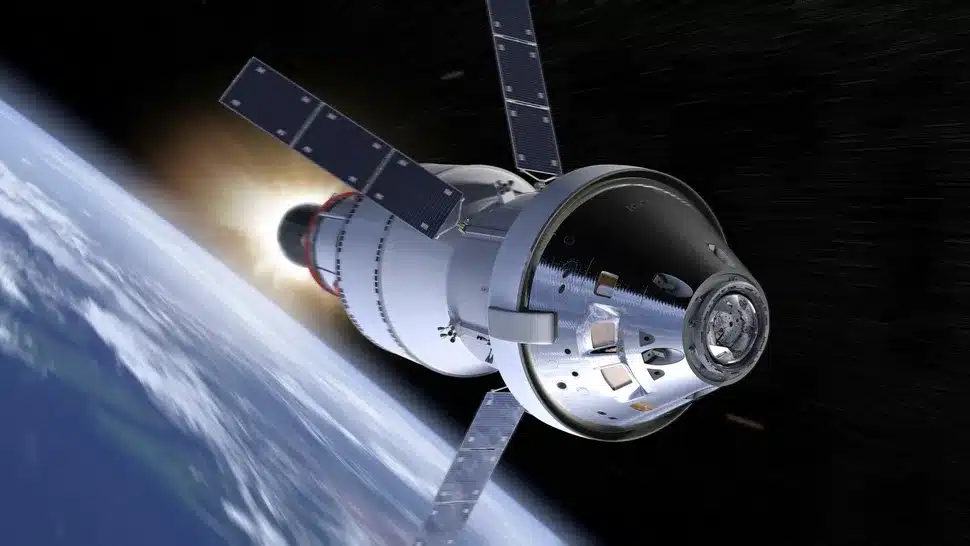
The record-breaking moment occurred during a lunar flyby when Artemis II passed behind the Moon on a free-return trajectory. This maneuver allows the spacecraft to loop around the Moon and begin its return journey to Earth safely. At exactly 1:57 PM ET, Artemis II became the farthest humans have ever ventured into space.
This milestone demonstrates the progress of human spaceflight since the Apollo era, highlighting the capabilities of modern spacecraft and the preparation for sustainable lunar missions.
Astronauts’ Historic Experience
Inside the Orion capsule, the Artemis II astronauts celebrated this achievement with hugs and cheers. Canadian astronaut Jeremy Hansen described the view of Earth and the Moon as “unbelievable,” emphasizing how the mission allows humans to observe the lunar far side, a perspective rarely seen up close.
The crew experienced a 40-minute communications blackout as they passed behind the Moon, mirroring the challenges Apollo astronauts faced decades ago. Despite the temporary silence, astronauts continued scientific observations and photography, capturing high-resolution images of the Moon’s far side.
Scientific and Program Impact of Artemis II
As a test flight, he mission is pivotal for validating spacecraft systems and operational readiness for future lunar landings. The mission not only tests Orion’s capabilities but also examines human endurance in deep space conditions.
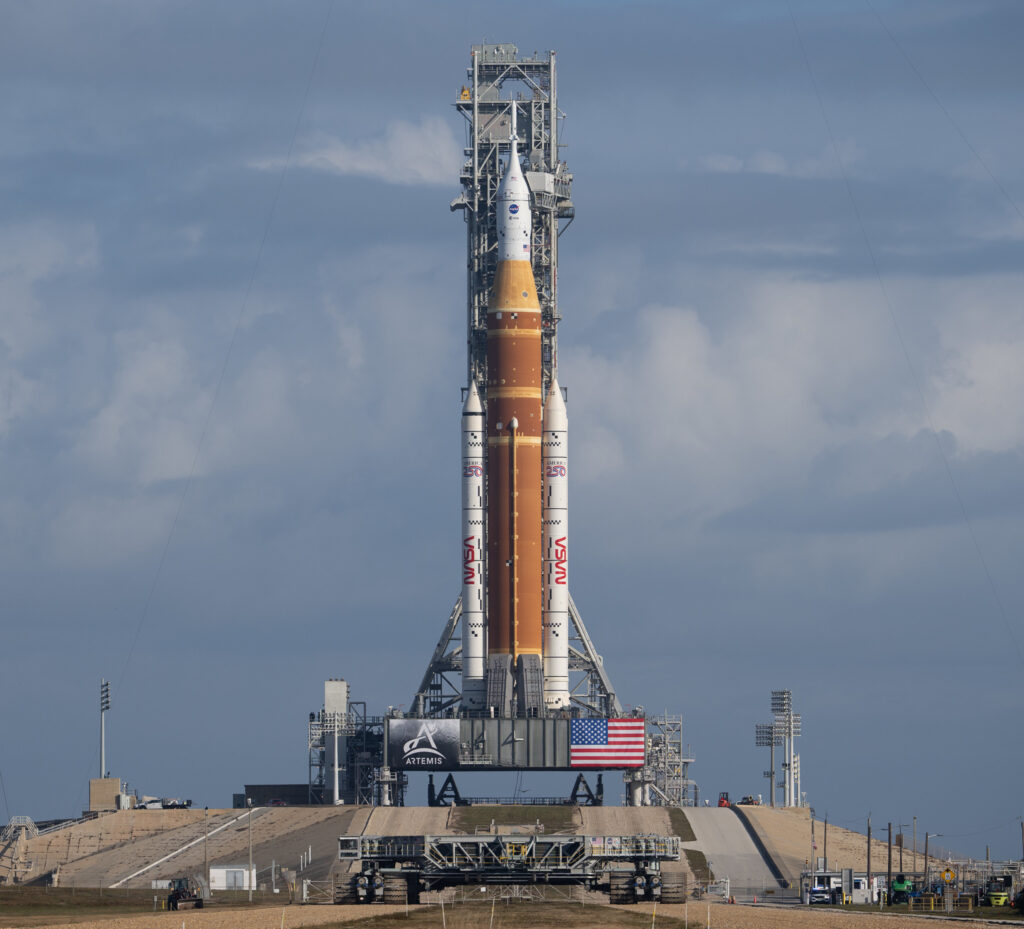
Observations from Artemis II provide valuable data about the lunar surface, including previously unseen craters and basins on the Moon’s far side. This contributes to ongoing research and future mission planning. The mission also reinforces the performance of NASA’s Space Launch System (SLS) rocket and other Artemis program technologies
Future of Space Exploration
By surpassing the Apollo 13 milestone, Artemis II sets the stage for more ambitious missions, including Artemis III, which aims to return humans to the Moon’s surface. NASA officials emphasize that this achievement inspires international cooperation, future Mars missions, and a sustained human presence in deep space.
The success of the spacecraft, represents a symbolic and technical passing of the torch from Apollo-era astronauts to the new generation of explorers, combining decades of knowledge with modern innovation. (Guardian Artemis II Story)
For more updates on space exploration and the Artemis program, visit our site