Table of Contents
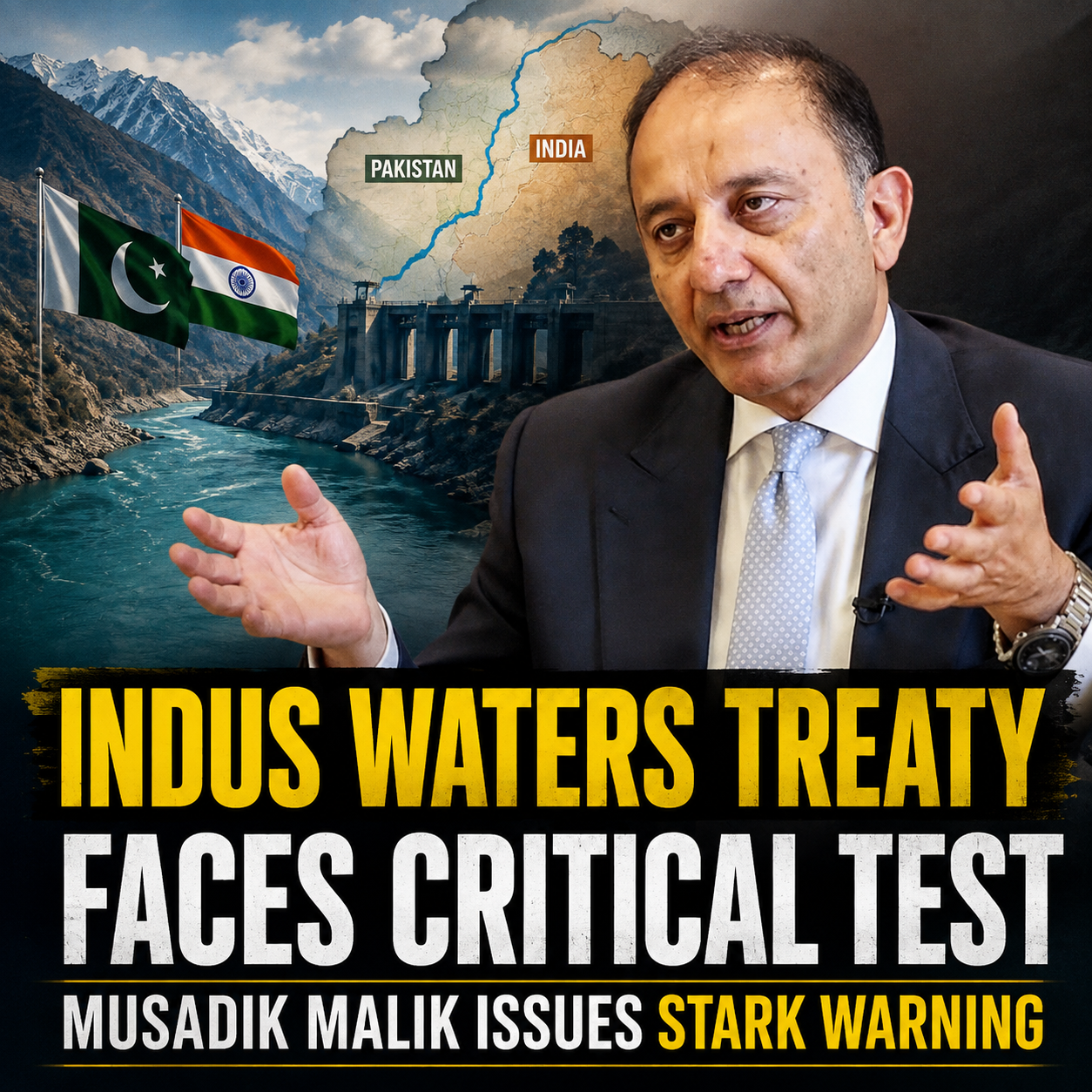
Indus Waters Treaty has become the focus of renewed international attention after Federal Minister for Climate Change Senator Musadik Malik warned that the collapse of the agreement could have consequences far beyond the water dispute between Pakistan and India.

Speaking at an Islamabad event focused on protecting water resources, Malik described Pakistan’s water security as a top priority and a red line, stressing that Islamabad would continue to defend its water rights.
The minister’s remarks came a day after the Hague-based Court of Arbitration ruled that the Indus Waters Treaty remains fully in force and that India cannot unilaterally suspend or terminate the agreement. The court also imposed interim measures concerning construction at India’s Ratle hydroelectric project.
Indus Waters Treaty and International Law
Malik argued that the significance of the treaty extends beyond the allocation of river waters between the two countries.
He warned that if an international agreement of such importance were allowed to collapse through unilateral action, confidence in other international treaties could also be weakened.
“If the Indus Waters Treaty does not remain, no agreement in the world can remain,” Malik said, according to reports of his remarks at the Islamabad event.
He further cautioned that disregarding an international arbitration mechanism could lead to a situation where international relations are governed by what he described as the “law of the jungle.”
Malik said Pakistan was prepared to defend its interests if such a system were to emerge.
Pakistan’s Water Security Concerns
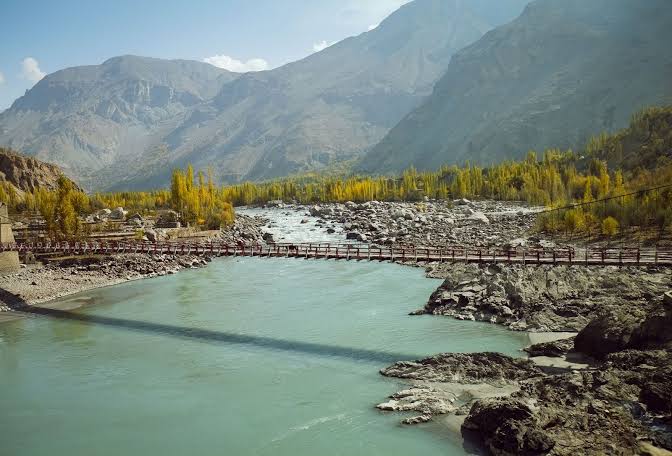
The minister maintained that protecting Pakistan’s share of water is central to the country’s economic and environmental security.
Pakistan relies heavily on the Indus River system for agriculture, food production and livelihoods. Government officials have repeatedly emphasized that water security is not simply an environmental issue but one directly connected to national development and long-term stability.
At an international seminar on the treaty in June, Malik similarly argued that controlling water flows could affect downstream countries and said the issue should be viewed in a broader global context.
He also pointed to the treaty’s resilience, noting that the agreement survived major conflicts between Pakistan and India over several decades.
According to Malik, the treaty’s survival despite repeated tensions demonstrates its importance as a framework for managing shared water resources.
Hague Court Ruling and India’s Position
The latest controversy follows a significant ruling issued on August 31, 2026, by the Court of Arbitration in The Hague.
The court unanimously determined that the treaty remains fully in force and rejected India’s attempt to place it in abeyance. It also said India remains bound by treaty obligations concerning hydroelectric projects on the Western Rivers.
The court additionally imposed interim restrictions on certain construction activities at the Ratle Hydroelectric Plant until a World Bank-appointed neutral expert determines whether the project complies with the treaty. The expert’s decision is expected in 2027.
India, however, has rejected the arbitration process and ruling, maintaining that the court lacks jurisdiction and that the treaty remains in abeyance.
The conflicting positions underline the continuing legal and diplomatic dispute surrounding the six-decade-old water-sharing agreement.
Wider Global Implications
Malik argued that the dispute should not be viewed solely through the lens of Pakistan-India relations.
He warned that if upstream states were able to disregard established water-sharing arrangements, downstream countries around the world could face similar risks.
The minister therefore presented the Indus Waters Treaty as part of a broader debate over international law, water security and the protection of agreements between states.
His comments also echoed Pakistan’s recent diplomatic position that international treaties should not be suspended or terminated unilaterally.
Pakistan’s Commitment to Water Rights
Pakistan has welcomed the Hague ruling and described it as reinforcing the principle that a binding international treaty cannot simply be set aside by one party. Deputy Prime Minister and Foreign Minister Ishaq Dar said Pakistan remains committed to safeguarding its rights under the treaty.
For Islamabad, the issue now extends beyond the immediate dispute over river flows and hydroelectric projects. It also concerns the credibility of international dispute-resolution mechanisms and the broader principle that states should honor legally binding agreements.
As tensions over water security continue, Pakistan is expected to maintain its legal and diplomatic efforts to defend its position under the Indus Waters Treaty while closely monitoring developments surrounding the Hague proceedings. See More on pulse Pakistan