Table of Contents
Yemen Conflict Intensifies as Fierce Houthi Fighting Raises Fresh War Fears
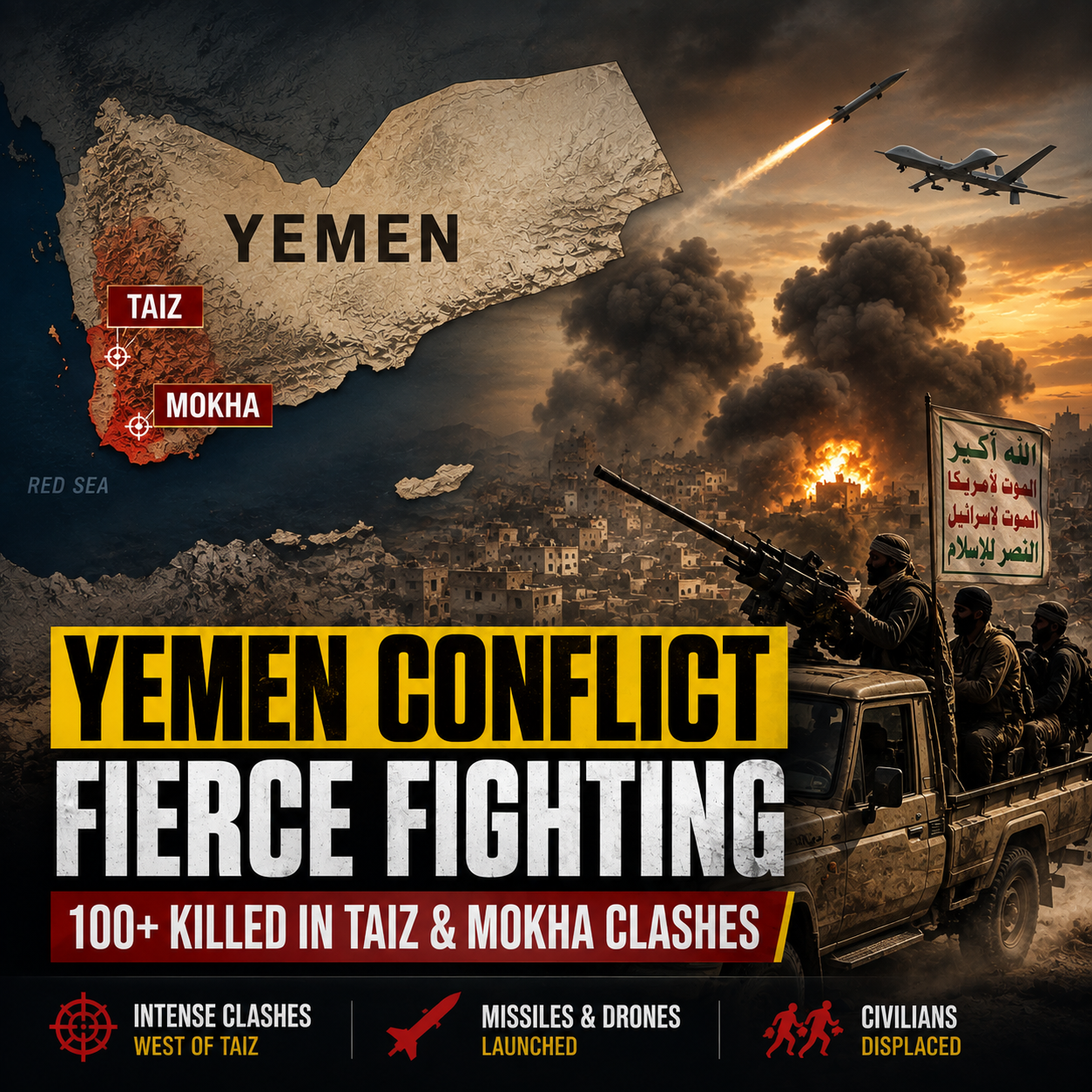
Yemen conflict has entered a dangerous new phase as Houthi fighters and forces loyal to Yemen’s internationally recognized government engage in some of the fiercest fighting reported along western front lines since the 2022 truce.
According to reports by Al Jazeera, AFP and other international news agencies, fighting intensified across several areas west of Taiz, with Houthi forces attempting to advance toward the road connecting Taiz city with the Red Sea coast and the strategic port of Mokha.
Fierce Fighting Erupts in Western Taiz
The latest clashes began with a Houthi offensive early Thursday, involving missile and drone attacks followed by ground assaults on several government-held positions.
The fighting has been reported around Maqbanah, Mawza and Jabal Habashi. Government forces said they managed to retake some positions after pushing back Houthi advances.
Yemen’s Army Media Centre said more than 18 Houthi fighters were killed, while other fighters were wounded or captured. An unnamed military source separately told AFP that 13 government personnel were killed.
Houthi sources, meanwhile, have claimed that more than 100 fighters and government troops have been killed across the various fronts. However, the broader casualty figure has not been independently verified.
Missile and Drone Attacks Reported
The Yemeni military said the Houthis launched 14 ballistic missiles and multiple drones toward areas of Taiz and Hodeidah.
Military officials said attacks were directed at positions in the Maqbanah Mountains, while Houthi fighters attempted to infiltrate several nearby areas.
The escalation follows weeks of increasing violence along Yemen’s western coast. Earlier in August, Houthi missile and drone attacks on Mokha killed civilians and military personnel and caused damage around the port.
Why Mokha Is Strategically Important
Mokha, also known as Al-Makha, sits on Yemen’s southern Red Sea coast and has significant military and commercial importance.
The road connecting Taiz to Mokha serves as an important supply route for government-aligned forces. Control of the route could allow the Houthis to isolate government positions in Taiz from forces based along the coast.
The area is also close to the Bab el-Mandeb Strait, one of the world’s most important maritime chokepoints. Any further deterioration in security along Yemen’s western coast could therefore have implications beyond the country’s borders.
Civilian Displacement Intensifies
The renewed fighting is also creating a fresh displacement crisis.
Al Jazeera reported that around 300 families who had been living in a displacement camp near Jabal Habashi were forced to move again as fighting approached. Some had already fled their homes during earlier fighting in 2022.
The latest displacement comes as Yemen continues to face a severe humanitarian crisis after more than a decade of conflict.
Houthi and Government Positions

Government forces say they have successfully resisted the Houthi offensive and regained some positions.
A Houthi source in Sanaa described the fighting as part of an effort to break what the group calls a siege on Yemen, particularly on the maritime front. Houthi media have not provided a comprehensive independent casualty assessment.
The competing claims underline the difficulty of establishing an exact death toll while fighting remains active.
Risk of Yemen War Escalation
The latest Yemen conflict escalation has revived concerns that the country’s largely frozen front lines could develop into a broader war.
A UN envoy warned in August that Yemen faced its highest risk of returning to full-scale conflict since the 2022 truce. Fighting has already intensified in Taiz, Mokha, Hodeidah, Marib and other areas.
The conflict began escalating dramatically in 2014 when the Houthis seized Sanaa and large parts of northern Yemen. A Saudi-led coalition intervened the following year in support of the internationally recognized government.
Although the 2022 UN-backed truce significantly reduced large-scale fighting, it did not resolve the underlying political and military dispute.
With fresh offensives now threatening key roads and coastal positions, the latest clashes could become a significant test of whether Yemen’s fragile period of relative calm can survive .See More on Pulse Pakistan