Table of Contents
New Provinces in Pakistan: Bold Reform Push Rekindles Governance Debate
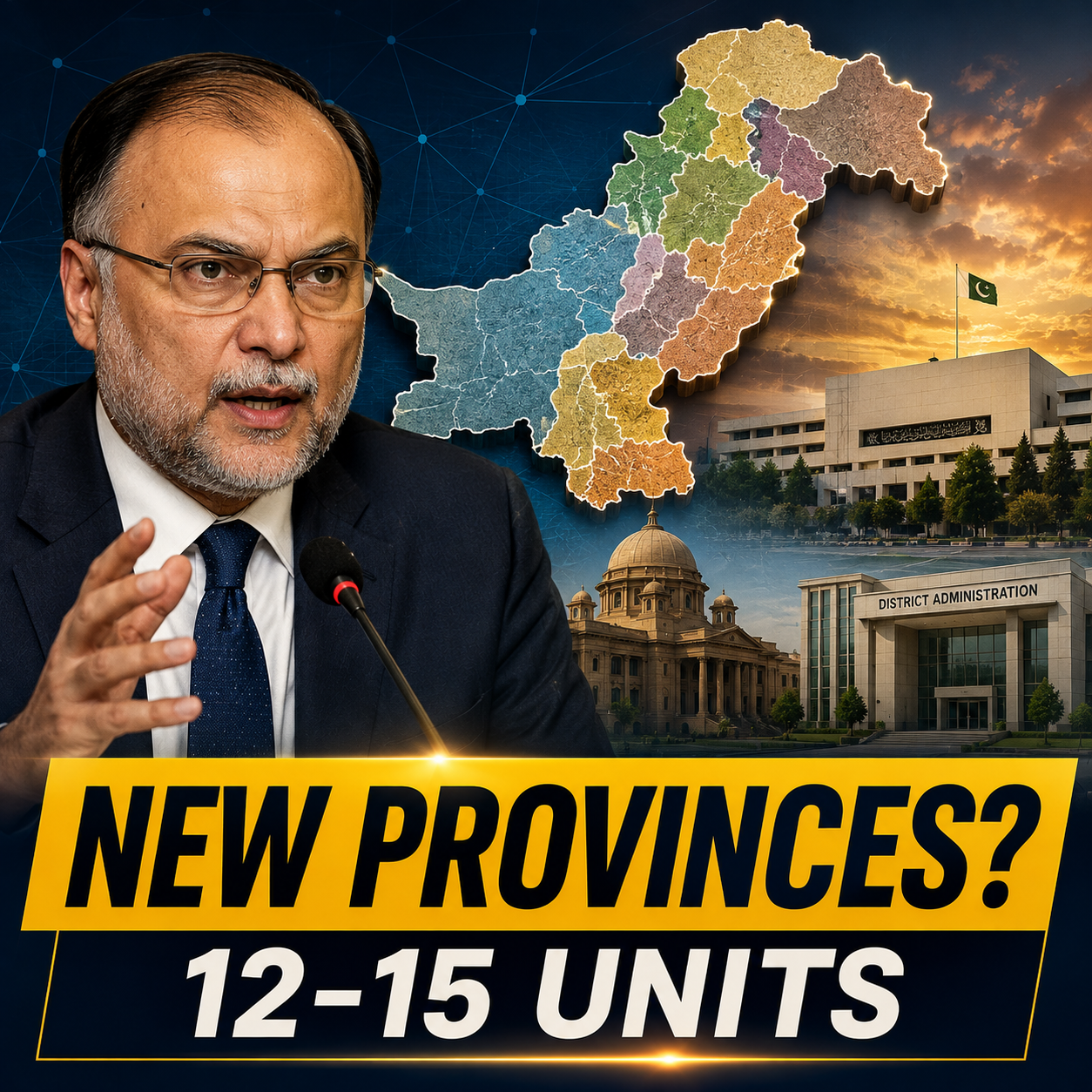
New Provinces in Pakistan have returned to the centre of the national political debate after Federal Minister for Planning, Development and Special Initiatives Ahsan Iqbal called for a major restructuring of the country’s administrative system.
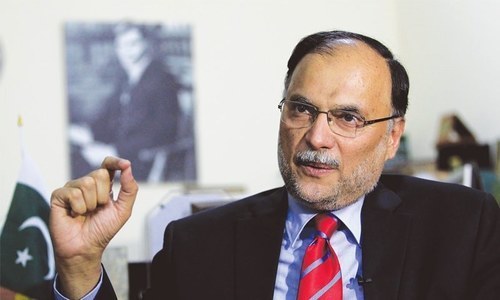
Iqbal has proposed dividing Pakistan’s existing provincial structure into smaller units, suggesting 12 to 15 new provinces, while also presenting 160 fully empowered district governments as an alternative. He argues that excessive centralisation has weakened public-service delivery and left the existing governance system struggling to meet the needs of a growing population.
Ahsan Iqbal Calls for Administrative Overhaul
Speaking about administrative reforms, Iqbal said Pakistan’s four provinces had become increasingly centralised and that the existing structure was not delivering essential services effectively.
He pointed to healthcare and education as areas where administrative weaknesses have become increasingly visible. According to the minister, government must be brought closer to citizens if social indicators are to improve.
The proposal follows renewed discussion among senior political and state officials about whether Pakistan’s existing provincial structure remains suitable for its population and administrative needs. Interior Minister Mohsin Naqvi had earlier called for changes to the governance system, while the ISPR director general also supported a serious debate on the issue.
New Provinces in Pakistan Proposed as Reform Option
Iqbal said he believed the country could consider creating between 12 and 15 new provinces by dividing the existing provinces into smaller administrative units.
He stressed, however, that any such restructuring would require an equitable formula. In particular, he noted that dividing a large province such as Punjab could alter its representation in the Senate and therefore require careful consideration of political balance.
The minister has urged the federal government to begin a national and political discussion rather than treating the proposal as an immediate administrative decision.
160 Empowered District Governments as Alternative
Iqbal has also presented a second option: establishing around 160 empowered district governments capable of handling political, administrative and financial responsibilities at the local level.
He has argued that Pakistan’s governance system needs a functioning third tier rather than relying overwhelmingly on federal and provincial institutions.
The minister previously pointed out that after the 2010 devolution of 17 subjects from the federal government to provinces, provincial governments did not similarly transfer authority to local governments. He linked the problem to the implementation of Article 140-A of the Constitution, which requires provinces to establish local government systems and devolve political, administrative and financial authority to elected local representatives.
Political Consensus Remains Essential
Despite the proposal, there is currently no formal federal process to create new provinces.
Iqbal has called for a committee through the law ministry to examine administrative reforms and initiate a national debate. However, Prime Minister Shehbaz Sharif’s coordinator, Rana Ihsaan Afzal Khan, said no such federal committee had been formed and that no decision had been taken on creating new provinces or other administrative units.
Iqbal himself has acknowledged that political consensus would be essential before any new provinces could be established.
Sindh Division Debate Intensifies
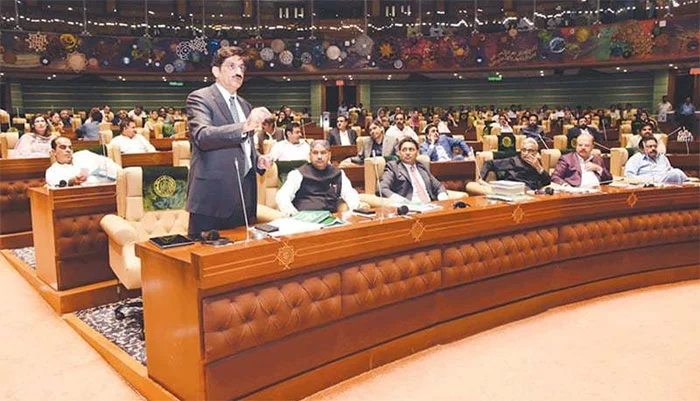
The proposal has particular sensitivity in Sindh, where political and nationalist groups have strongly opposed any division of the province.
The Sindh Assembly has passed a resolution rejecting the division of Sindh, while Chief Minister Murad Ali Shah has argued that the province’s territorial future should be determined by its elected representatives.
The renewed debate therefore extends beyond administrative efficiency to questions of political representation, provincial identity, resources and constitutional authority.
Financial and Constitutional Challenges
Creating new provinces would also require significant institutional and financial arrangements. New administrations would need assemblies, executive structures, departments and other government institutions.
Analysts cited by Arab News have warned that Pakistan’s limited fiscal space could make such restructuring expensive. They have also stressed that stronger devolution and functioning local governments may be more important than simply increasing the number of provinces.
For now, the proposal remains a subject of political debate rather than an approved government plan. Whether Pakistan moves toward new provinces or empowered district governments will depend on political consensus, constitutional requirements and agreement over resources and representation. See More on Pulse Pakistan