Table of Contents
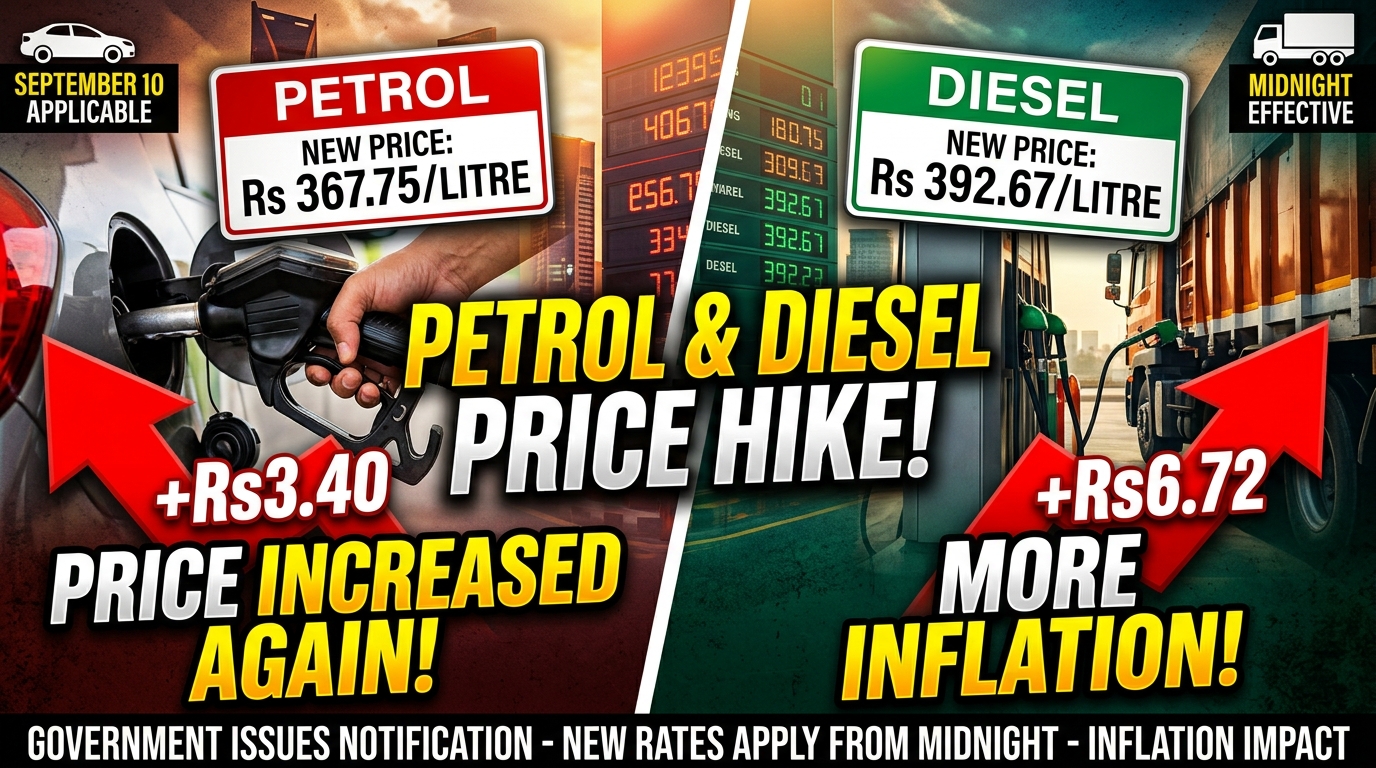
Petrol prices in Pakistan are set to rise again, with the government announcing another increase in the rates of petrol and high-speed diesel. The latest notification sets petrol at Rs367.75 per litre and diesel at Rs392.67 per litre, with the revised rates scheduled to take effect from September 10.
The latest increase comes amid a period of unusually frequent adjustments in petroleum prices. The government has recently been revising fuel rates on a daily basis as international oil-market conditions remain volatile. The Petroleum Division’s official website has published successive petroleum-price notifications during September.
Petrol Prices Rise by Rs3.40 Per Litre
According to the notification provided for the latest revision, the price of petrol has been increased by Rs3.40 per litre.
Following the adjustment, petrol will be available at Rs367.75 per litre from September 10. The latest increase adds further pressure on motorists, commuters and businesses that rely heavily on fuel for transportation.
The repeated changes in fuel prices have become a significant concern for consumers because increases in petrol costs can affect transportation expenses and, indirectly, the prices of goods and services.
The government had already increased petrol by Rs5.58 per litre to Rs364.35 for September 9, following a Rs12.90-per-litre increase announced for September 8.
Diesel Price Climbs to Rs392.67
The latest notification also brings another increase in the price of high-speed diesel.
Diesel has been increased by Rs6.72 per litre, taking its new price to Rs392.67 per litre.
Diesel is particularly important for Pakistan’s transport, agriculture, logistics and industrial sectors. Any substantial increase in diesel prices can therefore have wider economic implications, particularly through higher freight and transportation costs.
The latest increase follows several recent adjustments. For September 9, the government had set the high-speed diesel price at Rs385.95 per litre after raising it by Rs4.18.
New Rates Effective From September 10
The notification states that the revised petroleum prices will apply for September 10 and will come into force after midnight.
The latest revision reflects the government’s ongoing approach of adjusting petroleum prices in response to changing market conditions. Earlier reports noted that the government had moved toward a daily fuel-pricing mechanism because of sharp fluctuations in international oil prices following renewed geopolitical tensions.
For consumers, the successive increases mean fuel expenses are once again moving higher within a short period.
Petrol prices had stood at Rs345.87 per litre for September 5-7 before being raised sharply to Rs358.77 on September 8 and then to Rs364.35 on September 9.
The latest move is therefore likely to intensify concerns among motorists and businesses already facing rising operating costs.
While the government continues to adjust rates according to its petroleum-pricing mechanism, consumers will be closely watching international oil prices and future notifications for any further changes.
For now, the revised rates mean petrol will cost Rs367.75 per litre, while high-speed diesel will be sold at Rs392.67 per litre from September 10.
Why Petrol Prices Are Rising Again
The latest increase adds to the financial pressure already facing households, businesses and transport operators across Pakistan. Higher fuel prices can have a wider impact because petrol and diesel are closely linked to transportation, logistics and the movement of essential goods.
Petrol is widely used by private motorists, motorcycles and smaller vehicles, while diesel remains particularly important for commercial transport, agriculture and heavy vehicles. As fuel costs increase, transport operators may face higher operating expenses, which can eventually affect fares and the prices of goods reaching markets.
The government’s decision to revise fuel rates comes amid continued volatility in international energy markets. Changes in global crude oil prices, exchange-rate movements and domestic pricing adjustments can all influence the final price paid by consumers at filling stations.
For consumers, the latest increase means household transport budgets may need to be adjusted once again. Businesses that depend heavily on road transportation are also likely to monitor the impact closely, particularly if elevated fuel costs persist.
The new rates therefore represent more than a change at petrol stations. They could also contribute to broader cost pressures across the economy, depending on how long international energy prices remain elevated and whether further domestic adjustments are announced.See More on Pulse Pakistan