Table of Contents
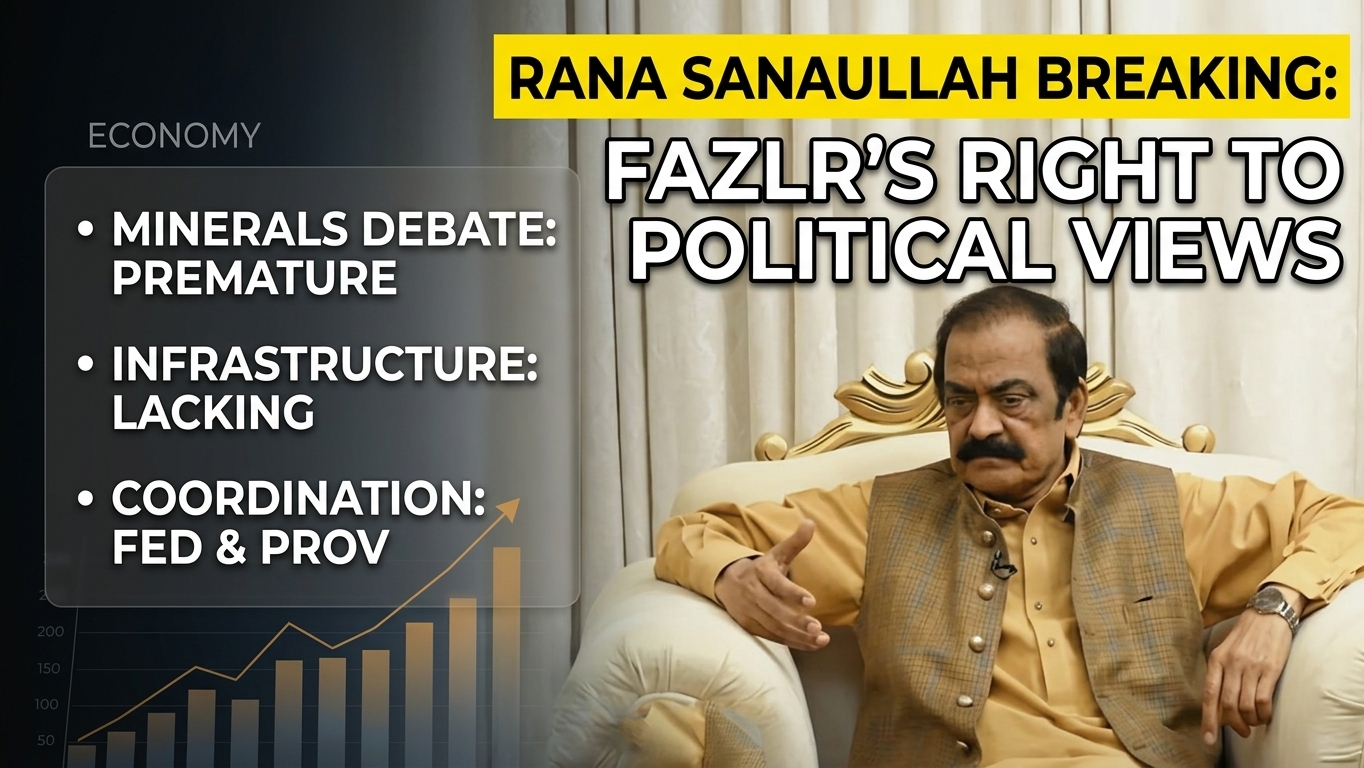
Rana Sanaullah has defended JUI-F chief Maulana Fazlur Rehman’s right to express his political views, while describing discussions surrounding Pakistan’s mineral resources as premature. The prime minister’s adviser said mineral deposits have not yet been fully mapped and that questions about extraction and government responsibilities should be assessed as the process develops.
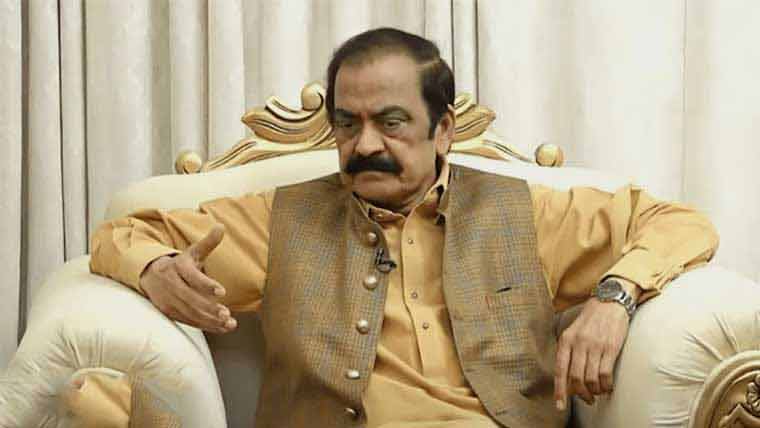
Rana Sanaullah Backs Maulana Fazlur Rehman’s Right to Differ
ISLAMABAD: Adviser to the Prime Minister and Senator Rana Sanaullah has said that Maulana Fazlur Rehman is entitled to maintain his political position, even when other political leaders disagree with him.
Rana Sanaullah said his views differed from those of the Jamiat Ulema-e-Islam-Fazl (JUI-F) chief. However, he maintained that political differences should not prevent Maulana Fazlur Rehman from expressing his opinion.
The adviser also played down the controversy surrounding the religious-political leader’s recent remarks. He argued that the statement had received more attention than it warranted and rejected the suggestion that Maulana Fazlur Rehman was upset.
Rana Sanaullah’s comments come amid political discussion over mineral resources, provincial interests and the distribution of responsibilities between federal and provincial authorities.
Pakistan Mineral Resources Debate Remains Premature
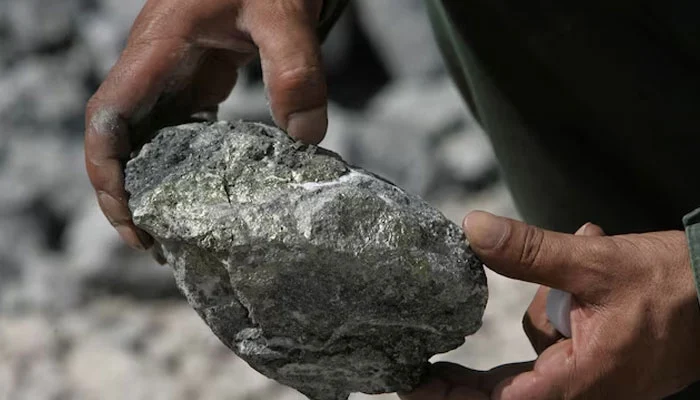
Addressing the mineral resources issue, Rana Sanaullah said it was too early to draw firm conclusions because important groundwork remained incomplete.
He specifically pointed out that mapping of the mineral deposits had not yet been carried out. Without that stage being completed, the scale of available resources and the practical requirements for extracting them cannot be fully assessed.
The prime minister’s adviser also highlighted Pakistan’s limited capacity to undertake mineral extraction, arguing that the country did not currently possess the necessary resources to carry out such operations independently.
His remarks suggest that the debate should be considered in the context of the technical, financial and administrative requirements involved in developing mineral deposits.
However, the interview did not provide specific details about the deposits under discussion, their estimated value or the timeline for completing the mapping process.
Federal and Provincial Governments Will Both Have a Role
Rana Sanaullah said that if mineral extraction projects move forward, both the federal and provincial governments would have responsibilities in the process.
His statement highlights the importance of coordination between the two levels of government as Pakistan considers the development of its mineral wealth.
Such projects can involve questions concerning resource ownership, regulatory oversight, investment arrangements and the distribution of economic benefits. The precise responsibilities in any particular project would depend on the applicable legal framework and contractual terms.
The adviser did not outline a detailed division of responsibilities between Islamabad and the provinces during the television interview.
His comments instead focused on the need to allow the process to develop before reaching conclusions about how mineral extraction would be managed.
International Mining Contracts and Accountability
Rana Sanaullah also addressed criticism surrounding the prospect of awarding mineral extraction contracts to foreign companies.
He argued that substantive criticism would be more appropriate once an international company had formally received a contract to extract minerals.
The statement places emphasis on the distinction between preliminary discussions about mineral potential and decisions involving actual investment or extraction agreements.
At the same time, the question of how contracts are awarded, what conditions they contain and how the resulting benefits are distributed remains important to public accountability.
Details concerning any specific international company, contract value, ownership arrangement or extraction schedule were not provided in the reported remarks.
Political Concerns in Khyber Pakhtunkhwa
The adviser acknowledged that Maulana Fazlur Rehman might have information supporting his position, suggesting that the JUI-F chief could have reasons for raising concerns about the issue.
Rana Sanaullah also referred to the presence of a governor and an advisory council in Khyber Pakhtunkhwa, pointing to existing political and administrative structures in the province.
His remarks come against the backdrop of broader discussions about provincial interests and the management of natural resources.
For policymakers, the challenge will be to establish reliable information about mineral deposits, clarify the respective roles of federal and provincial authorities, and ensure transparency if extraction projects proceed.
For now, Rana Sanaullah’s central argument is that the mineral resources debate should be based on concrete developments rather than assumptions about projects that have yet to reach the extraction stage.
He also reiterated that political disagreement is legitimate, defending Maulana Fazlur Rehman’s right to express a different view even as he disputed the broader interpretation of the JUI-F chief’s remarks.See More on Pulse Pakistan