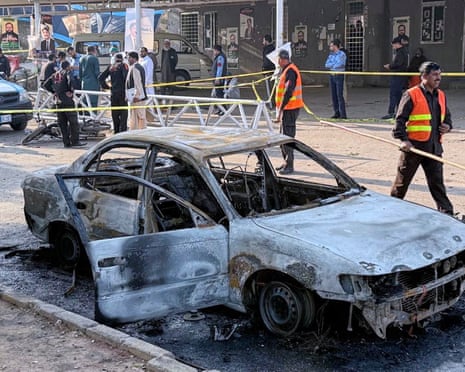
A suicide bomber struck outside Islamabad’s District Judicial Complex on Tuesday afternoon, killing at least 12 people and injuring 36 others. The attacker detonated explosives near a police vehicle after failing to enter the courthouse, Interior Minister Mohsin Naqvi confirmed.
Attack Near Islamabad District Courts
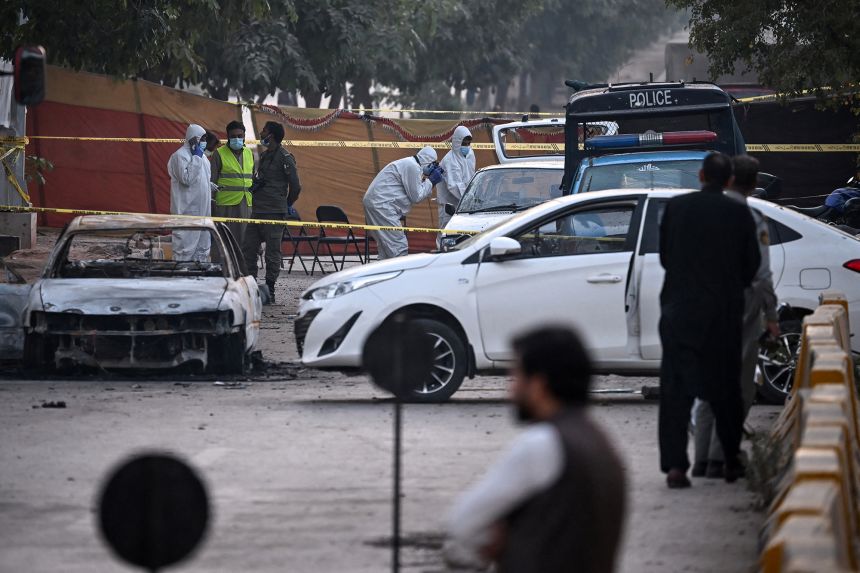
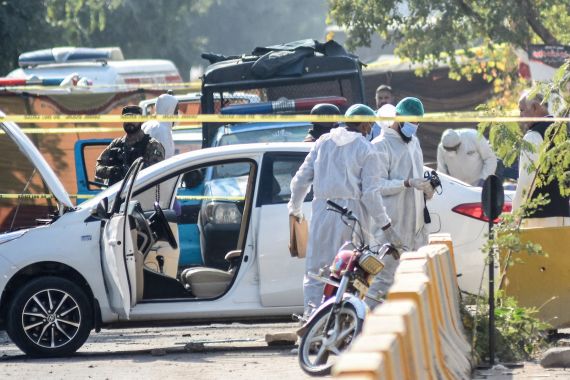
The explosion occurred at around 12:39 p.m. in the G-11 sector, outside the busy District Judicial Complex. Police said the attacker had attempted to enter the courthouse premises but blew himself up when intercepted by security forces near a police mobile.
Emergency services rushed the injured to the Pakistan Institute of Medical Sciences (PIMS), where Dr. Mubashir Daha confirmed that 36 patients were treated. Eighteen were later discharged, while four remained in critical condition.
Source: Al Jazeera
Source: The Guardian
Source: CNN
Government Vows Full Investigation
Interior Minister Mohsin Naqvi said Prime Minister Shehbaz Sharif had directed authorities to ensure the best medical care for the injured and to identify the perpetrators behind the attack. “Those responsible will be brought to justice. There are many leads, and evidence will be revealed soon,” Naqvi told reporters.
He added that the attacker lingered at the scene for about 10 to 15 minutes before detonating the device as a police vehicle approached. Forensic teams later recovered the suspected bomber’s head from the blast site.
Indian-Backed Network Suspected
Security sources said preliminary investigations suggest involvement of India-backed terrorists and Afghan-based proxies, Fitna al-Khawarij. The same network is believed to have orchestrated Monday’s assault on Cadet College Wana in South Waziristan. (read complete article)
Officials also cited multiple threatening social media posts from Afghan-linked accounts earlier in the day that hinted at possible militant activity in Islamabad.
Nationwide Condemnations
President Asif Ali Zardari and Prime Minister Shehbaz Sharif condemned the “heinous terrorist act,” expressing solidarity with the victims’ families and lauding law enforcement agencies for their swift response.
Prime Minister Sharif described the bombing as “a continuation of India’s state-sponsored terrorism from Afghan soil,” vowing that the blood of innocent Pakistanis “will not go in vain.”
Defence Minister Khawaja Asif warned that the attack was “a wake-up call,” stressing that Pakistan must confront terrorism as a national fight, not a border issue.
International Reactions
Condemnations poured in from several countries and diplomatic missions. The Chinese Embassy, Qatar’s Foreign Ministry, and the US Embassy in Islamabad all denounced the attack, extending condolences to the victims’ families.
UK High Commissioner Jane Marriott also expressed sorrow over the loss of lives, advising British nationals in Pakistan to remain alert.
Rising Tide of Terrorism
The Islamabad bombing marks a grim escalation in the wave of terrorist attacks across Pakistan, particularly in Khyber Pakhtunkhwa and Balochistan.
Since the Taliban takeover of Afghanistan in 2021, Pakistan has faced hundreds of cross-border attacks. Officials say the militants’ growing coordination from Afghan territory poses a major threat to regional stability.