Table of Contents
Israeli Elections Deepen Political Uncertainty as Netanyahu’s Bloc Alleges Fraud
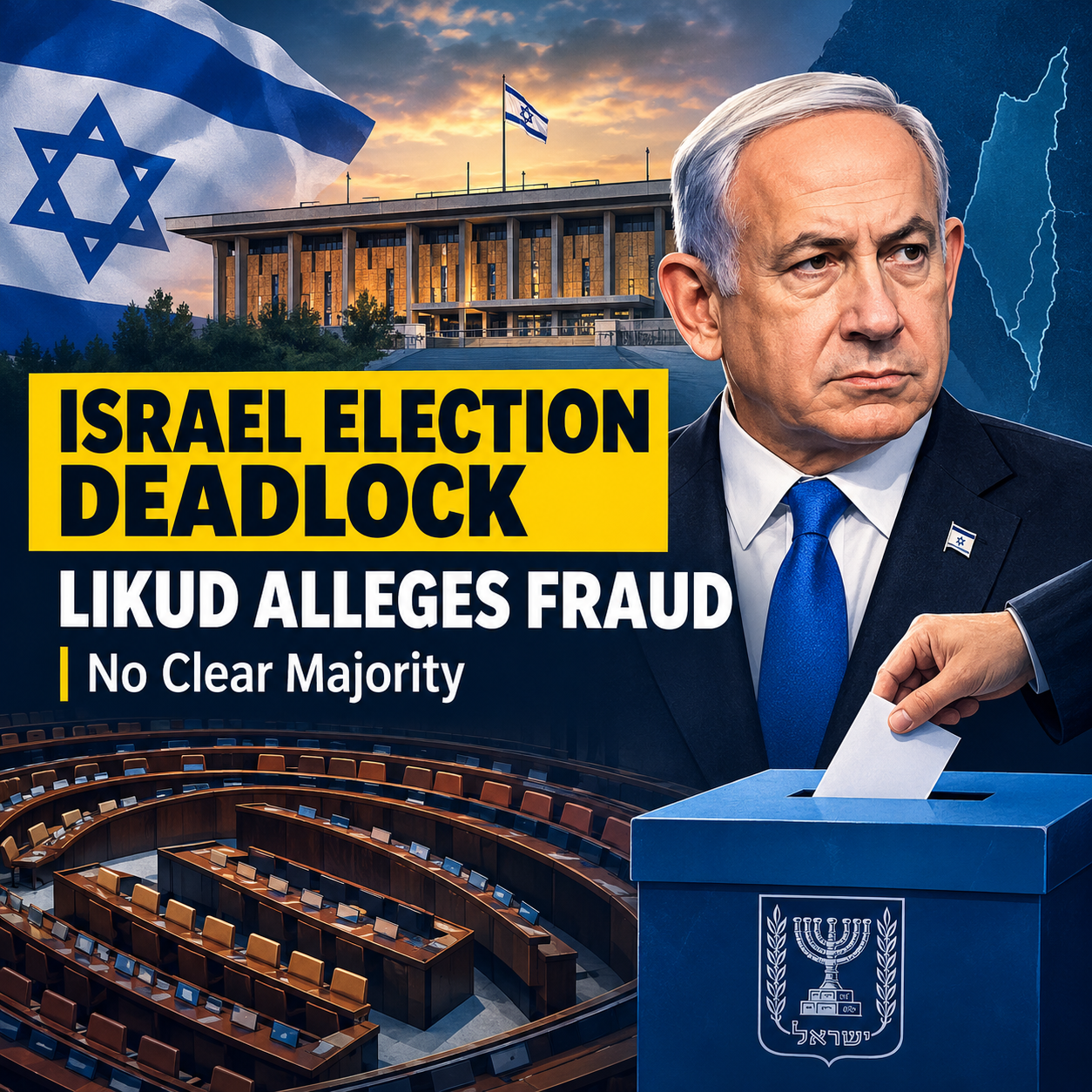
Israeli Elections have entered a period of political uncertainty after Prime Minister Benjamin Netanyahu‘s Likud-led alliance failed to secure a parliamentary majority in preliminary results. The ruling party has accused Arab political groups of widespread electoral misconduct, while an election official has rejected the allegations. The outcome of the October 27 vote has raised questions about who can form Israel’s next government. The Times of Israel
Likud Accuses Arab Parties of Electoral Fraud
Netanyahu’s Likud party has alleged that Arab political parties engaged in bribery, intimidation, violence and electoral manipulation during voting.
According to The Times of Israel, Likud claimed that illegal voter-mobilization software, forged records and other irregularities influenced the electoral process.
The party also alleged that envelopes containing cash and Ra’am election materials were distributed to voters. Its accusations included multiple voting, threats against polling officials and discrepancies between voter numbers and ballot-envelope records.
Likud said it had collected hundreds of testimonies and supporting materials. However, these allegations remain disputed and should not be treated as established findings. The Times of Israel
Arab-Led Parties Gain Historic Representation
One of the most significant developments in the Israeli Elections has been the strong performance of Arab-led political parties.
The Joint List and Ra’am were projected to secure a combined 19 parliamentary seats during the counting process, potentially representing a historic level of combined Arab-party representation.
Their electoral performance has increased their potential influence over coalition negotiations, particularly because neither major Jewish-led political bloc has independently secured the required majority.
The outcome also reflects the importance of Arab voters in determining Israel’s parliamentary balance. The Times of Israel+1
Netanyahu Alliance Faces Parliamentary Challenges
Israel’s Knesset contains 120 seats, meaning that a governing coalition ordinarily requires the support of at least 61 lawmakers.
As counting progressed, preliminary seat allocations showed Netanyahu’s alliance falling short of that threshold.
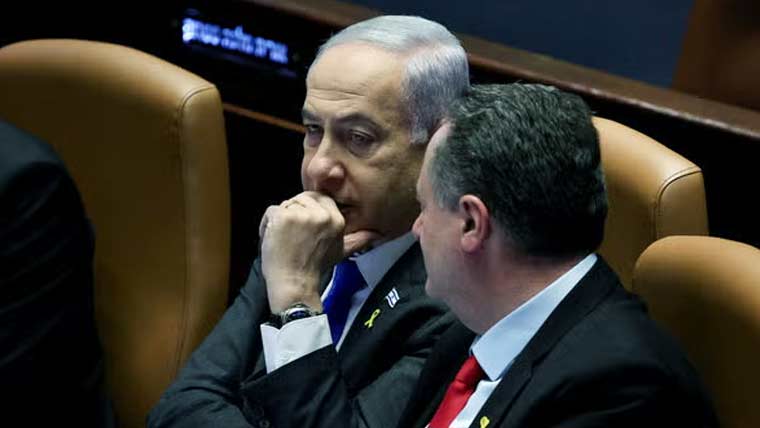
His principal challenger, Gadi Eisenkot, leads the centrist Yashar party. Opposition parties also face difficulties forming a majority without negotiating support from Arab representatives.
Such cooperation remains politically sensitive because several opposition parties have previously rejected formal governing arrangements with Arab-led factions.
The parliamentary arithmetic therefore presents challenges for both Netanyahu and his opponents. EPRS Website+1
Election Authorities Reject Fraud Allegations
The Israeli Elections controversy intensified when Likud demanded investigations by the police, the Shin Bet internal security agency and the Central Elections Committee.
The party called for an immediate examination of its evidence and allegations concerning polling procedures.
However, an official from the Central Elections Committee dismissed claims of electoral fraud during an interview with Israel’s Channel 12.
The official’s response directly challenged Likud’s accusations, underscoring the distinction between allegations made by a political party and misconduct established through an investigation.
No conclusive finding supporting Likud’s broad allegations was identified in the reports reviewed for this article. The Times of Israel
Political Implications and Government Formation
The Israeli Elections results could lead to difficult coalition negotiations involving Netanyahu, Eisenkot and smaller parliamentary factions.
With nearly all votes counted, Anadolu Agency reported preliminary allocations of 53 seats for Netanyahu’s bloc, 48 for Eisenkot’s bloc and 19 for Arab parties. Official results are expected by November 4. AA
President Isaac Herzog will play a constitutional role in selecting a lawmaker to attempt forming the next government after consultations with parliamentary factions.
Possible outcomes include a negotiated coalition, an alternative governing arrangement or prolonged political uncertainty if parties cannot agree.
For Netanyahu, the immediate challenge is securing sufficient parliamentary support. For his opponents, the central question is whether parties with differing political positions can cooperate.
Until the official results and subsequent coalition negotiations are completed, Israel’s future governing arrangement remains unresolved.
Editorial note: The 19-seat figure refers to preliminary Arab-party representation, not certified final results. Likud’s fraud allegations are attributed claims, not verified findings.See More on Pulse Pakistan