Table of Contents
Makkah Defence Pact and Regional Security
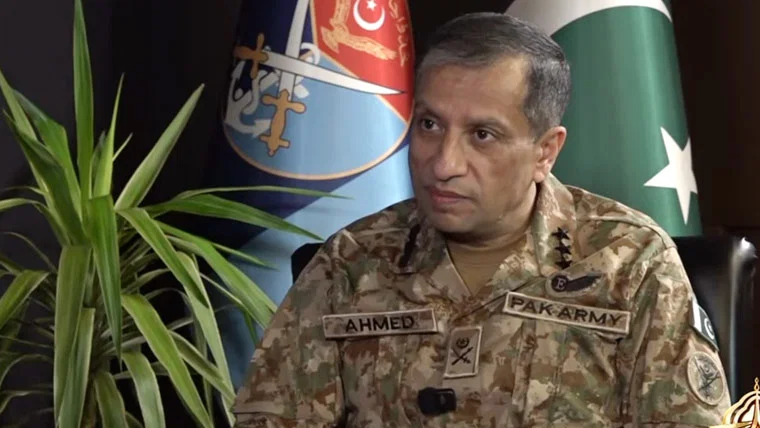
Makkah Defence Pact has emerged as a significant element of Pakistan’s regional security policy, with Director General Inter-Services Public Relations (DG ISPR) Lieutenant General Ahmed Sharif Chaudhry reaffirming Islamabad’s commitment to defending Saudi Arabia and maintaining regional stability. In an interview with CNN, he described the agreement as a defensive arrangement rooted in longstanding relations and said Pakistan would continue supporting diplomatic efforts to prevent further escalation of the US-Iran conflict.
Makkah Defence Pact and Regional Security
Lieutenant General Ahmed Sharif Chaudhry said the agreement was intended to strengthen collective defence and respond to emerging security challenges. He stressed that the arrangement had not been established overnight but reflected decades of military cooperation and broader relations between Pakistan and Saudi Arabia.
According to the military spokesperson, the pact is designed to enhance security coordination and discourage potential threats. He described regional stability as a central objective, emphasizing that the agreement should be understood in the context of defence rather than offensive military ambitions.
The announcement comes amid growing security concerns across the Middle East, where regional tensions have raised questions about the protection of strategic infrastructure, territorial security and the risk of a wider conflict.
The agreement also reflects the importance its participating countries place on coordination in responding to potential threats.
Pakistan’s Longstanding Military Presence in Saudi Arabia
The DG ISPR said Pakistani military personnel had been present in Saudi Arabia for decades, serving in different capacities and across multiple operational domains.
He emphasized that the Makkah Defence Pact did not create Pakistan’s defence relationship with the Kingdom from scratch. Instead, it builds on established military cooperation and longstanding diplomatic, political and people-to-people ties.
Pakistan and Saudi Arabia have maintained close relations over many years, with defence cooperation forming an important part of their partnership. The agreement provides a framework for strengthening collective security arrangements while allowing participating countries to coordinate their capabilities.
Lieutenant General Chaudhry reiterated that defending Saudi Arabia was among the pact’s principal objectives.
“Saudi Arabia will be defended,” he said, underscoring Pakistan’s stated commitment to the Kingdom’s security.
How the Joint Defence Agreement Will Work
Explaining the practical implementation of the Makkah Defence Pact, the DG ISPR said that actions taken under the agreement and their resulting effects would remain strictly defensive.
He clarified that operational commanders would determine the nature of any deployment, including which forces might be sent, how they would be employed and what operational requirements would need to be met.
The statement indicates that decisions regarding military personnel and capabilities would depend on operational assessments rather than a publicly announced, fixed deployment formula.
Such decisions involve military planning and the evaluation of specific security requirements. The DG ISPR did not disclose detailed operational arrangements during the interview.
He also stressed that the agreement was not intended to categorise countries as friends or enemies. Its stated purpose, he said, was to protect Saudi Arabia and strengthen collective deterrence against potential threats.
Collective Defence and Regional Deterrence
A key principle highlighted by the DG ISPR was that an attack on one participating country would be treated as an attack on all members.
He said this collective-defence commitment would require potential aggressors to consider the consequences of hostile actions before attempting to carry them out.
The arrangement is intended to increase coordination among participating countries and make their combined defensive capabilities more effective. By reinforcing the prospect of a collective response, the pact aims to discourage actions that could threaten regional security.
However, the military spokesperson maintained that the agreement’s implementation would remain defensive in nature. He presented the arrangement as a mechanism for deterrence and stability, rather than an initiative directed against a particular country.
The agreement’s practical impact will depend on how its members coordinate their military capabilities and respond to evolving security challenges.
Pakistan’s Mediation Efforts in the US-Iran Conflict
Beyond defence cooperation, Lieutenant General Ahmed Sharif Chaudhry addressed Pakistan’s efforts to facilitate an end to the US-Iran conflict.
He said Islamabad had contributed to diplomatic initiatives in the past, was continuing those efforts and would remain engaged in the future to reduce differences between the parties.
Pakistan, he explained, wanted the conflict to end through negotiations and a peaceful settlement rather than allowing hostilities to spread further.
The DG ISPR described Pakistan as an impartial and honest mediator, stressing that regional peace and stability remained central to the country’s interests.
He added that Pakistan had communicated to its partners and friends that further escalation would not benefit any party involved.
His remarks underline Islamabad’s stated intention to pursue two objectives simultaneously: strengthening Saudi Arabia’s defence through regional cooperation and encouraging diplomatic engagement to prevent a broader Middle Eastern conflict.
Together, these priorities reflect Pakistan’s emphasis on collective security, deterrence and dialogue as the region confronts continuing geopolitical uncertainty.See More on Pulse Pakistan