Pakistan Confirms Border Closures with Afghanistan Due to Security Concerns
Tension Over Cross-Border Security Forces Pakistan to Maintain Border Closure
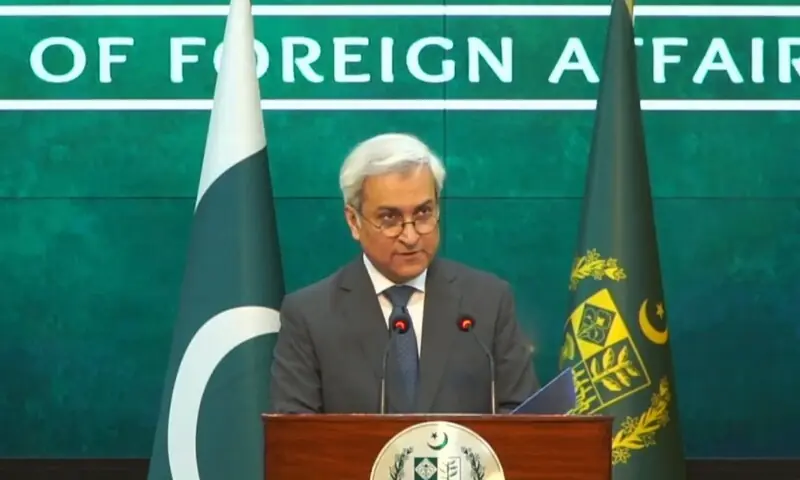
Pakistan has announced that its border crossings with Afghanistan will remain closed indefinitely, citing significant security concerns that arose after violent clashes earlier this month. The decision, confirmed by Foreign Office spokesperson Tahir Hussain Andrabi, underscores Pakistan’s priority of protecting its citizens over trade or goods transportation.
Since October 11, the borders between the two countries have remained shut following some of the worst border skirmishes in recent years. The fighting, which has resulted in dozens of casualties on both sides, marks the most severe conflict since the Taliban’s takeover of Kabul in 2021.
Pakistan Prioritizes Security Over Trade
In a statement during his weekly press briefing, Andrabi stressed that Pakistan’s commitment to the safety of its citizens outweighs economic considerations. He explained that while the border closure has disrupted trade—leading to a sharp rise in the prices of essential goods such as tomatoes—the decision was made in light of the escalating security threat.
“The Afghan border crossings will remain closed; the life of a common Pakistani is more valuable than trade or goods transport,” said Andrabi.
This prolonged border closure has had a ripple effect on the regional economy, causing a steep increase in the cost of vital products. Essential goods like tomatoes, fruits, vegetables, sugar, and meat have become significantly more expensive in Pakistan. Prices have surged, with tomatoes now costing five times more than before the border was shut.
Trade Disruptions and Stranded Goods
Pakistan’s annual trade with Afghanistan, which amounts to about $2.3 billion, is heavily reliant on the movement of agricultural products, medicine, and raw materials. At present, over 5,000 containers of goods are stranded at the Torkham crossing in northwestern Pakistan, one of the busiest trade routes between the two countries.
Despite these economic setbacks, the government maintains that securing the lives of its citizens is of paramount importance. According to officials, the security situation remains volatile, with militants exploiting the porous border to launch attacks on Pakistani territory.
Ceasefire Talks and Future Negotiations
While tensions continue along the border, a ceasefire agreement reached in talks hosted by Qatar and Turkey last weekend has brought temporary relief. Andrabi confirmed that a formal document was signed by both sides, although it remains unclear whether the Afghan Taliban regime recognizes it as a binding agreement.
The next round of negotiations between Pakistan and Afghanistan is scheduled for October 25 in Istanbul, where further discussions are expected to address border security and related concerns.
Pakistan’s Stance on India-Afghanistan Relations
In the context of regional politics, Andrabi also responded to questions about India’s reopening of its embassy in Afghanistan. He emphasized that this was an internal matter for the two countries, reiterating Pakistan’s position of non-interference in the affairs of other nations. However, he noted that India’s role in Afghanistan has not been constructive, echoing longstanding concerns about the country’s involvement in the region.
Israel’s Violations of International Laws
On the international front, Pakistan also addressed ongoing issues with Israel. Andrabi condemned Israel’s continued violations of international law and reaffirmed Pakistan’s stance on the Israeli-Palestinian conflict, emphasizing that the establishment of a Palestinian state remains Pakistan’s only acceptable solution. The Foreign Office stated that Pakistan will continue to monitor Israel’s actions closely and raise the issue on the global stage.
Conclusion
The closure of the Afghan-Pakistani border highlights ongoing security challenges that have significant economic and diplomatic repercussions for both countries. With trade severely impacted and security still a concern, the outcome of upcoming negotiations in Istanbul will be critical in determining the future of the region’s stability.