Table of Contents
- Revival of the Health Card Programme
- Prime Minister’s Vision for Universal Healthcare
- Focus on Transparency and Oversight
- Coverage Areas and Beneficiaries
- Sindh Expansion and Future Outlook
Full News Article
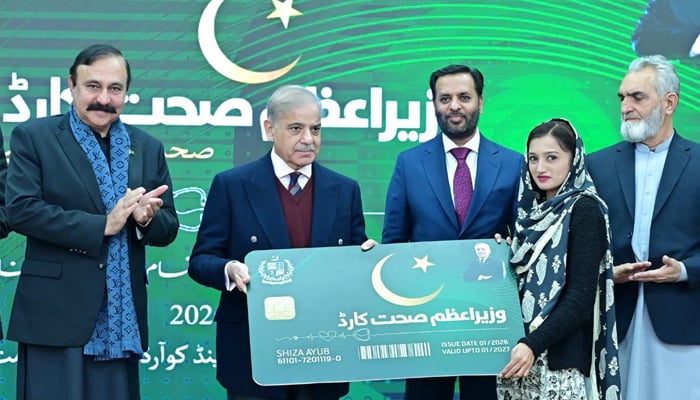
PM Shehbaz Health Card programme has been formally revived and expanded, with Prime Minister Shehbaz Sharif announcing the restoration of free, cashless healthcare services for residents of Islamabad, Azad Jammu and Kashmir (AJK), and Gilgit-Baltistan (GB), reaffirming the government’s pledge to make healthcare a fundamental right for all citizens.
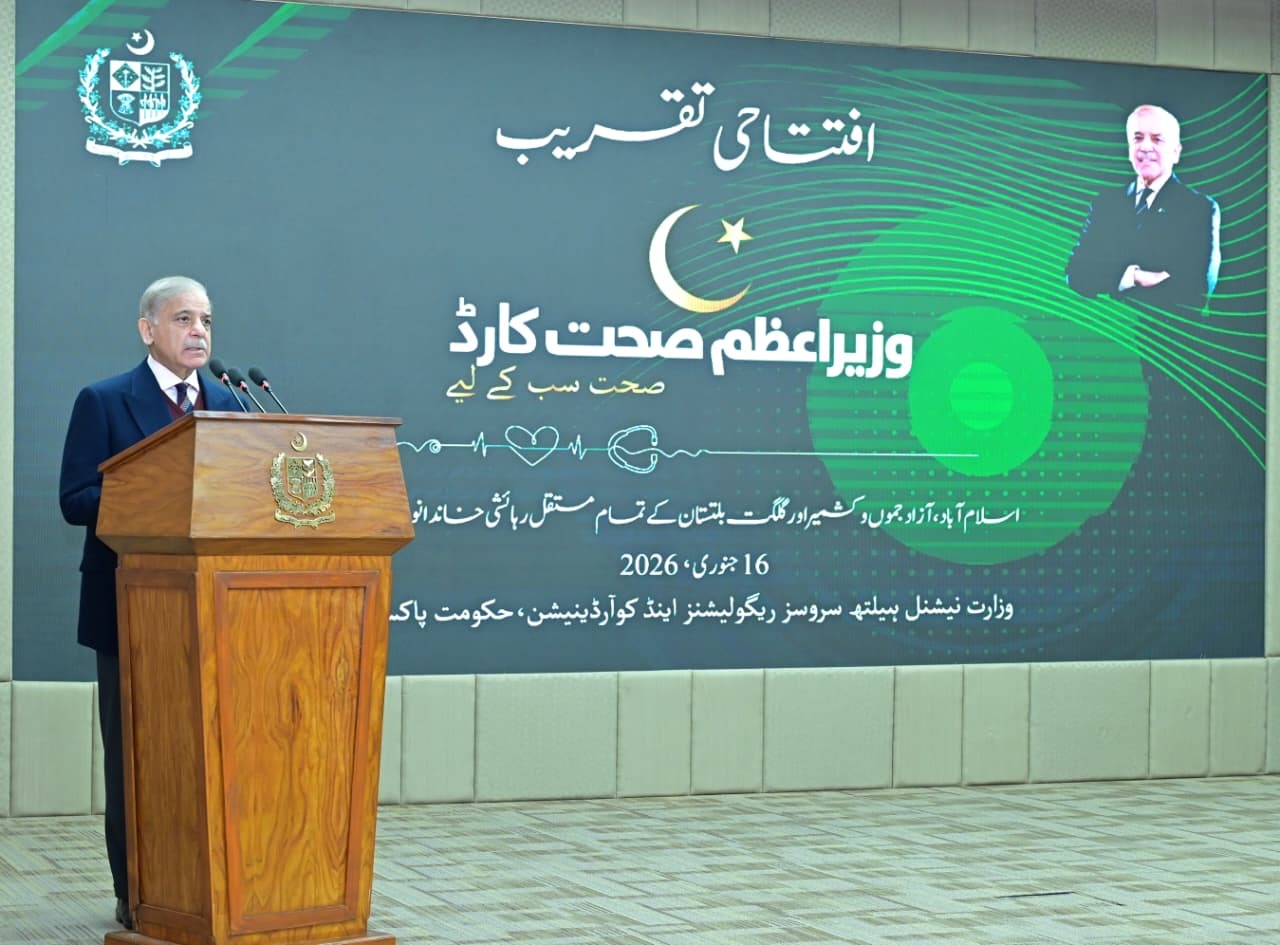
Addressing a ceremony on Friday, the prime minister said the revival of the initiative marked a significant step toward delivering quality medical treatment directly to the people, particularly those unable to afford costly healthcare services.
Revival of the Health Card Programme
PM Shehbaz recalled that the Health Card initiative was first launched in 2016 under the leadership of former prime minister Nawaz Sharif and later expanded nationwide. Emphasising the centrality of health to national development, he remarked that no asset in life was more valuable than good health.
“If there is health, there is education; if there is health, there is dignified employment; if there is health, there is progress in every field of life,” the prime minister said, underlining the interconnectedness of healthcare and social stability.
Source: “Online”
Prime Minister’s Vision for Universal Healthcare
The premier stressed that while wealthier citizens could afford treatment anywhere in the world, the true responsibility of the state lay in protecting society’s most vulnerable segments, including labourers, widows, orphans, and daily wage earners.
He warned that the illness or death of a breadwinner without access to treatment could push entire families into lifelong hardship. “Healthcare is the right of every Pakistani — whether a prime minister or a street vendor,” he said.
Transparency and Oversight Measures
Congratulating Federal Health Minister Mustafa Kamal, the health ministry officials, and their teams, PM Shehbaz urged transparent and honest implementation of the programme. He called for third-party monitoring to ensure patients receive treatment at approved facilities meeting required medical standards.
The prime minister expressed confidence that transparent execution would not only benefit citizens but also strengthen public trust in state institutions. He also announced that the programme would be personally monitored through regular visits and inspections, in coordination with Islamabad’s health leadership, parliamentarians, the chief minister of Gilgit-Baltistan, and the prime minister of AJK.
Coverage Areas and Beneficiaries
Earlier, Federal Health Minister Mustafa Kamal said the revived PM Shehbaz Health Card programme would provide free, cashless healthcare to nearly 10 million people across Islamabad Capital Territory, AJK, and Gilgit-Baltistan.
He said approximately 70 hospitals were being empanelled under the scheme, including 20 additional hospitals in Islamabad. Kamal added that cardholders from these regions residing in Karachi would also be able to access treatment at 16 designated hospitals in the city.
Sindh Expansion and Future Outlook
Kamal noted that Sindh remained the only province not yet covered under the Prime Minister’s Health Card, while Punjab, Khyber Pakhtunkhwa, Balochistan, and federal territories were already benefiting from the initiative.
Responding to calls for Sindh’s inclusion, PM Shehbaz termed the proposal valid and assured that he would personally raise the matter with the Sindh chief minister. Kamal revealed that a proposal covering 10 rural and urban districts of Sindh, costing an estimated Rs24 billion, had already been prepared.
“If funding is provided for just two years, the programme can become self-sustaining from the third year onward,” he said, expressing hope that healthcare gaps in Sindh could soon be addressed.