Table of Contents
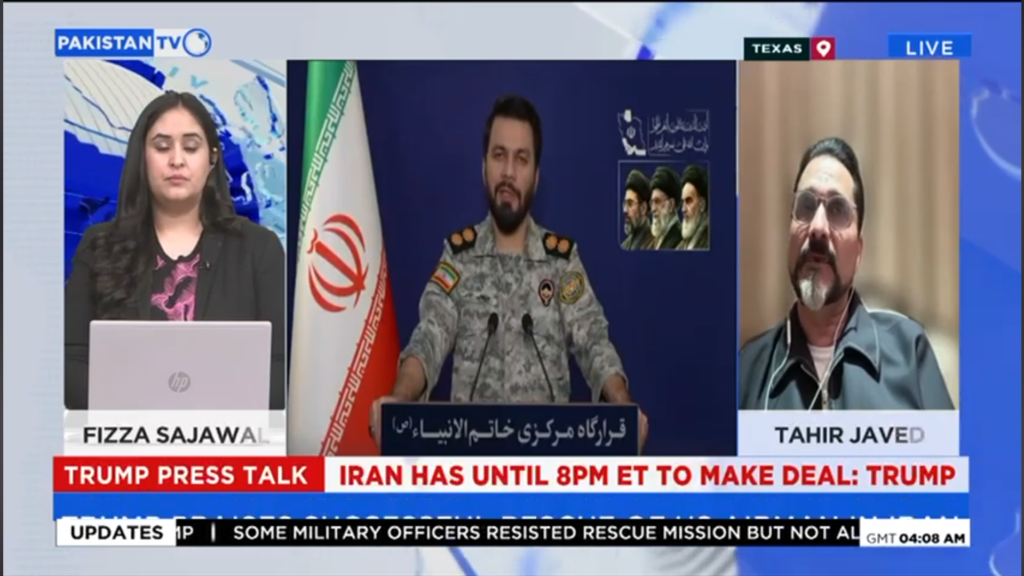
Trump Iran Ultimatum has emerged as a focal point in rising geopolitical tensions, with analysis from Tahir Javed suggesting the move reflects a calculated strategy rather than an immediate push toward confrontation.
In a recent televised interview, Tahir Javed examined the implications of the reported ultimatum linked to Donald Trump, which focuses on pressuring Iran to reopen the Strait of Hormuz—a critical global oil transit route.
Tahir Javed’s Strategic Analysis
According to Tahir Javed, the Trump Iran Ultimatum should be viewed as a strategic pressure tactic aimed at shaping negotiations rather than enforcing a rigid deadline.
He emphasized that such moves are often designed to create urgency, pushing stakeholders toward dialogue while maintaining room for diplomatic maneuvering. The analysis suggests that the ultimatum provides an opportunity for a negotiated outcome that can be publicly framed as a success.
Tahir Javed also linked the development to domestic political considerations in the United States, where achieving a high-profile foreign policy outcome could strengthen political positioning amid ongoing challenges.
Pakistan’s Role in Quiet Diplomacy
Highlighting regional dynamics, Tahir Javed noted that Pakistan could play a crucial behind-the-scenes role in easing tensions.
With established communication channels with both Washington and Tehran, Pakistan is viewed as a potential mediator capable of facilitating dialogue. Tahir Javed suggested that discreet diplomatic engagement is already underway to prevent escalation.
Strait of Hormuz and Global Stakes
Tahir Javed stressed that the Trump Iran Ultimatum carries significant global implications due to the strategic importance of the Strait of Hormuz.
Any disruption in this vital corridor could impact global energy markets, leading to price volatility and broader economic consequences. He noted that maintaining stability in the region remains a top priority for international stakeholders.
Diplomatic Outlook and Possible Outcomes
Concluding his assessment, Tahir Javed observed that the ultimatum’s deadline may not be absolute, but rather a flexible negotiating tool.
The Trump Iran Ultimatum, he argued, is likely intended to accelerate diplomatic engagement while allowing space for a resolution that avoids military conflict. Global actors, he added, appear to be carefully managing the situation to balance political optics with long-term regional stability.