Table of Contents
Full News Article
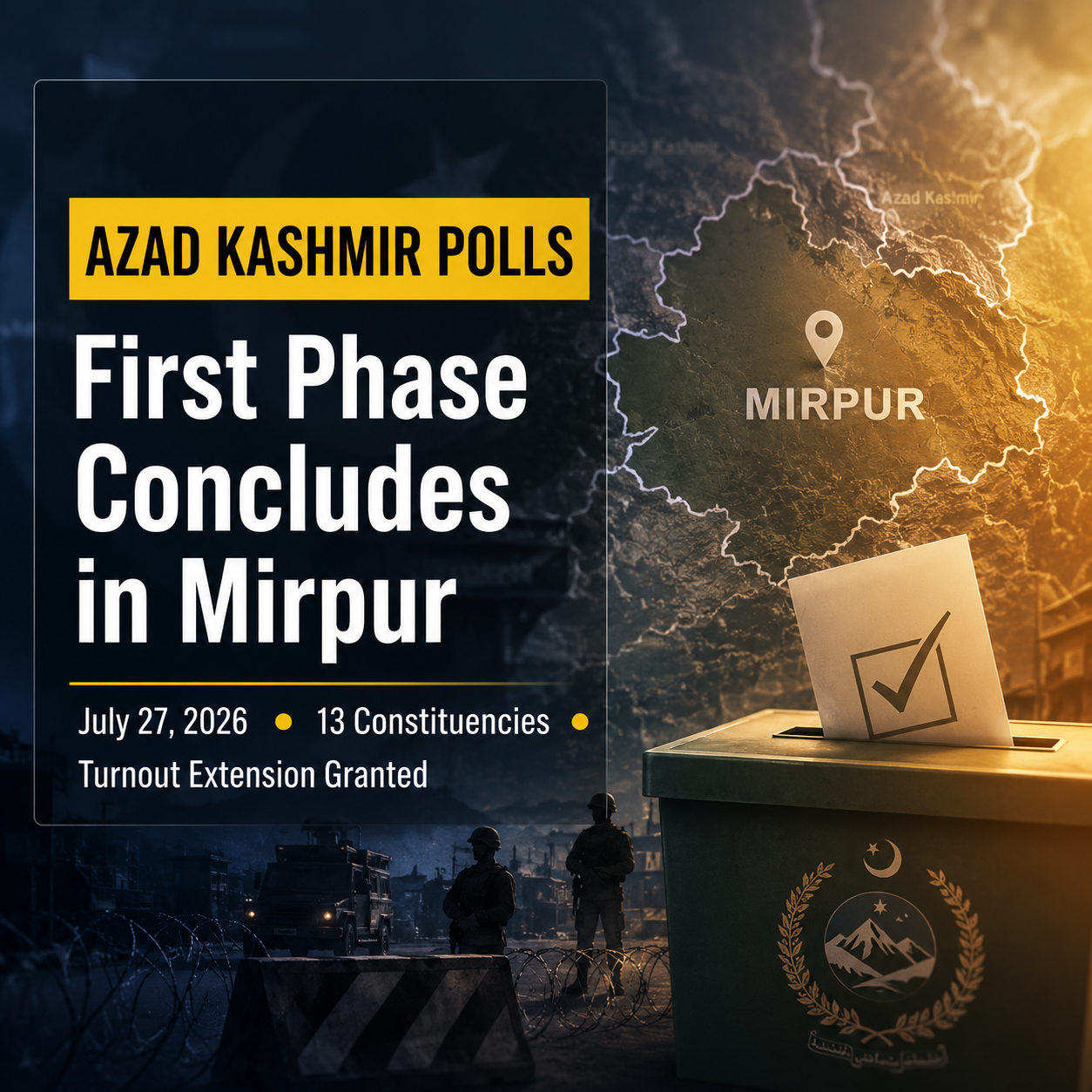
Azad Kashmir witnessed the conclusion of its highly anticipated first phase of general elections in the Mirpur division on Monday evening, marking a critical milestone in the disputed region’s volatile political trajectory. Voters across 13 key constituencies exercised their fundamental democratic franchise under unprecedented security monitoring following weeks of intense political turmoil and civil unrest across the territory.
Mirpur Division Voting Surge in Azad Kashmir
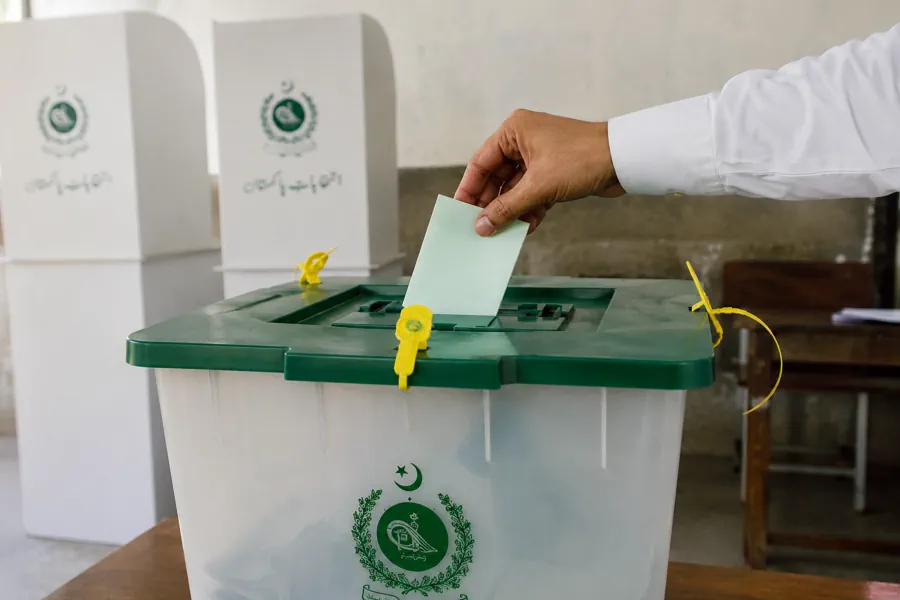
Election authorities initially scheduled polling to run continuously from 8:00 AM until 5:00 PM across all designated stations. However, Chief Election Commissioner Ghulam Mustafa Mughal issued an official directive granting an emergency one-hour extension until 6:00 PM due to an unexpected, massive surge in voter participation. The regional election commission confirmed that formal vote counting procedures commenced immediately following the official sealing of ballot boxes across the division.
To preserve civil order during the vote, administrative authorities deployed approximately 18,560 law enforcement personnel throughout the division. Furthermore, around 2,100 heavily armed troops from the Pakistan Army took up strategic positions outside sensitive polling locations to deter potential violence and ensure safe passage for voters.
The sheer scale of this electoral exercise in the Mirpur division remains historic. The region encompasses over 1.4 million registered voters, including 724,811 male citizens and 675,626 female citizens. To facilitate smooth operations, regional administrators established 2,316 polling stations for 288 candidates contesting seats across 13 electoral areas. Security officials classified 1,241 stations as “highly sensitive,” 724 as “sensitive,” and 351 as “normal” based on localized threat assessments.
Heavy Security Operations across Azad Kashmir
Despite these comprehensive defensive measures, local officials confirmed a violent clash between rival political supporters in the division, which tragically left one person dead and three others severely injured. Chief Election Commissioner Mughal nonetheless assured the public that voting proceeded peacefully across the overwhelming majority of polling stations throughout the day.
JAAC Protests and Boycott Impact on Azad Kashmir
The general election unfolded against the backdrop of prolonged civil unrest organized by the Joint Awami Action Committee (JAAC). The civil rights coalition, recently declared an unlawful organization under anti-terrorism laws, has spearheaded weeks of public rallies and strikes across Azad Kashmir, leading to violent clashes with law enforcement that resulted in roughly 30 deaths over recent months.
The JAAC has maintained an uncompromising boycott of the entire election process, demanding the immediate abolition of 12 regional assembly seats reserved specifically for Kashmiri refugees living in other Pakistani provinces. The protest movement contends that these reserved seats allow national political parties in Islamabad to improperly influence local government formation inside the region.
Government authorities strongly dispute these claims, maintaining that refugee representation remains constitutional. The legal battle reached the Supreme Court last month, which formally observed that these refugee seats hold permanent constitutional protection and cannot be abolished through executive action. AJK Chief Secretary Khushal Khan subsequently reiterated stern warnings that any individuals attempting to disrupt the polling process would face severe legal consequences under anti-terrorism legislation.
Next Phases of Azad Kashmir General Elections
The regional legislative assembly comprises 45 total seats, consisting of 33 territorial constituencies and 12 refugee seats distributed across Pakistan. Following the completion of the Mirpur division polling, the three-phase election schedule moves next to the Muzaffarabad division on August 2, 2026. This second phase will simultaneously include voting for the 12 refugee seats located in Punjab, Sindh, and Khyber Pakhtunkhwa. The final phase across the Poonch division will conclude on August 10, 2026, marking the end of the election cycle across Azad Kashmir.ssembly consists of 45 total seats, including 33 territorial constituencies and 12 seats allocated for refugees across Pakistan. Following the completion of the Mirpur division polling, the electoral schedule moves to the Muzaffarabad division on August 2, 2026. This second phase will simultaneously host voting for the 12 refugee seats. The final phase of polling across the Poonch division is scheduled for August 10, 2026, completing the election cycle across Azad Kashmir. See More on Pulse Pakistan