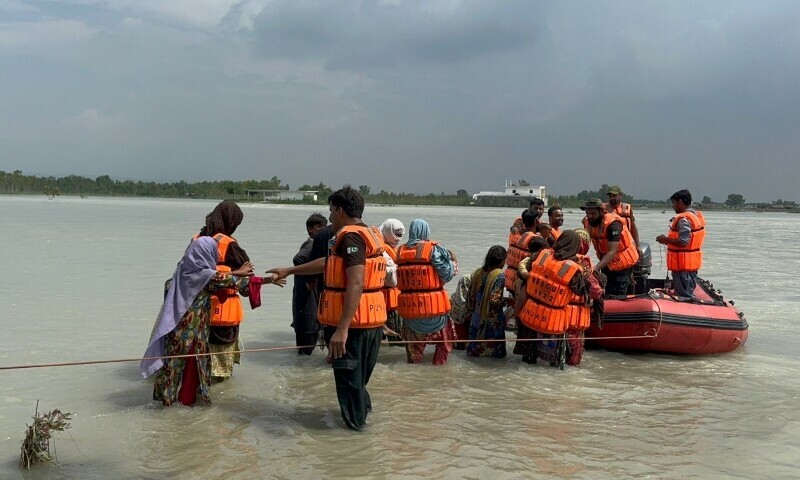
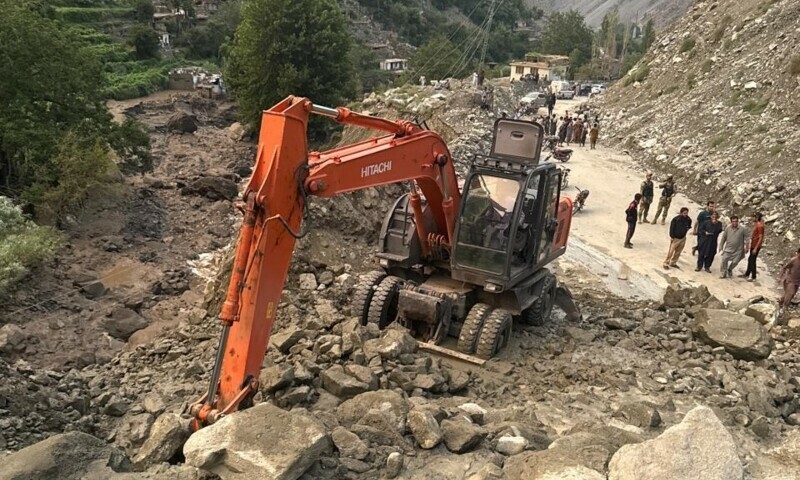
The death toll from flash floods in Gilgit-Baltistan’s Diamer district has risen to six, following a devastating series of floods caused by heavy rains and climate change-induced cloudbursts. Rescue operations are still underway in search of missing tourists in Babusar valley.
The flash floods in Gilgit-Baltistan’s Diamer district have claimed six lives as rescue teams continue their efforts to locate missing visitors. The region has been severely impacted by cloudburst-induced floods, which have devastated several areas, making climate change’s effects more apparent. Faizullah Faraq, a spokesperson for the GB government, confirmed that rescue teams recovered another body from Babusar valley, bringing the death toll to six. “The search operation to locate the remaining tourists at Babusar is still ongoing,” he added.
The floods, which have caused widespread destruction across the region, have affected various districts. Flash floods in Ghanche district, for instance, have damaged a dozen homes, a dispensary, mosques, and agricultural land. Rescue 1122 reported that Sikarkoi, a village in the Gilgit area, was similarly impacted, with several houses and infrastructure in Dass Mohallah suffering extensive damage.
The flash floods, occurring at the peak of Pakistan’s monsoon season, have left a trail of devastation. Earlier this week, at least five people had lost their lives and 15 others had gone missing after the floods hit the region on Monday.
In a separate incident, a retired colonel’s body was recovered in Rawalpindi after his car was swept away by floodwaters last week. Retired Colonel Ishaq Qazi, aged around 62-64 years, and his 25-year-old daughter were missing after their vehicle was caught in a rainwater drain near the Soan River. While the body of Colonel Qazi has been found, efforts continue to locate his daughter.
The monsoon season in Pakistan, spanning from June to September, is marked by heavy rainfall, which often leads to deadly floods and landslides. This season has already claimed over 60 lives in Punjab due to flooding, and emergency measures such as Section 144 have been imposed across various districts to curb the damage.
Elsewhere, residents of Rawalpindi’s Metro City Housing Society staged a protest, blocking the Grand Trunk Road after rescue teams were unable to retrieve the body of a 17-year-old boy who drowned while attempting to cross a nullah. The boy was swept away by high-speed torrents, and despite the efforts of two of his relatives, who tried to save him, the body was not recovered as of the latest reports.
In another rescue operation, 40 people trapped in a canal in Attock district, Punjab, were successfully evacuated by Rescue 1122 teams after high water levels in the Indus River caused a dangerous situation. The operation lasted five hours under the supervision of District Emergency Officer Ali Hussain.