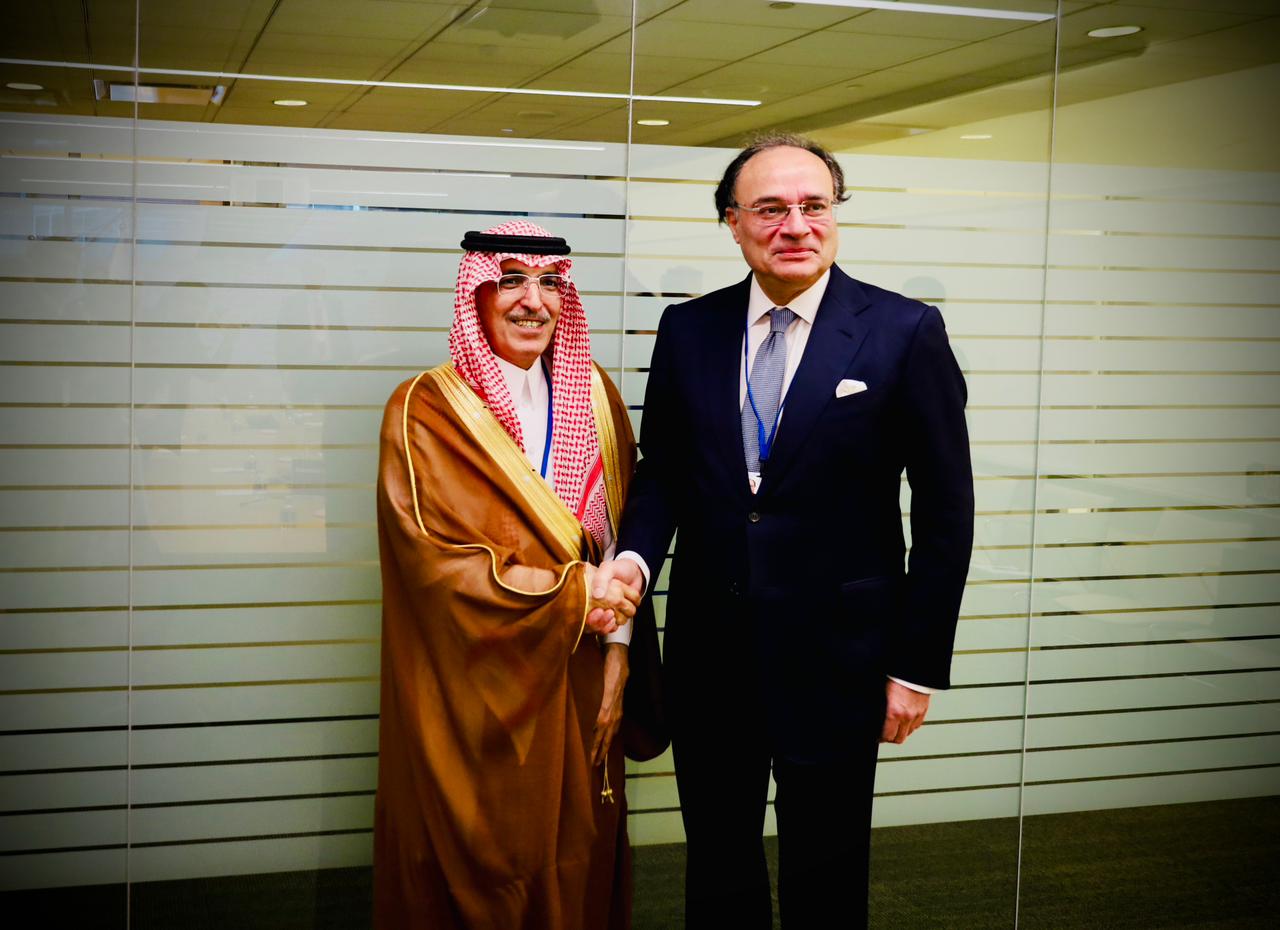
Finance Minister Briefs Saudi Counterpart on Pakistan’s Privatisation Plans
Washington, D.C. — On the sidelines of the IMF-World Bank annual meetings in Washington, DC, Pakistan’s Finance Minister Muhammad Aurangzeb met with his Saudi counterpart, Mohammed Al-Jadaan, to discuss the privatisation of Pakistan International Airlines (PIA) and key airports, as part of the country’s broader economic reform agenda.
According to a statement issued by the Finance Ministry, the meeting focused on Pakistan’s efforts to privatise its national carrier, PIA, a move designed to address the airline’s massive debts and to generate revenue for the government. The privatisation of PIA, along with key airports, is in line with the terms of Pakistan’s $7 billion agreement with the International Monetary Fund (IMF). This reform aims to overhaul several loss-making state-owned enterprises as part of Pakistan’s fiscal restructuring.
Officials revealed that the sale of PIA is expected to be completed by November 2025, a crucial step in the country’s efforts to stabilize its economy.
During the meeting, both ministers reviewed the strengthening economic ties between Pakistan and Saudi Arabia, underscoring the growing trade and investment relations between the two countries. Minister Aurangzeb emphasized Pakistan’s commitment to ensuring transparency and efficiency in the privatisation process, highlighting the government’s resolve to attract strategic foreign investment. This includes ongoing structural reforms aimed at improving governance within Pakistan’s state-owned enterprises.
The ministers also discussed the vital role international financial institutions like the International Finance Corporation (IFC) and the Multilateral Investment Guarantee Agency (MIGA) can play in mobilising private sector investments for Pakistan’s infrastructure projects.
As part of Pakistan’s efforts to deepen its economic partnership with Saudi Arabia, Aurangzeb also requested support from the Kingdom for several key infrastructure development initiatives in the country.
In a related development, Finance Minister Aurangzeb met with Sultan Abdulrahman Al-Marshad, the CEO of the Saudi Fund for Development (SFD). The meeting reaffirmed the strategic partnership between the two nations, as both sides agreed on fostering greater economic cooperation.
Earlier this month, a high-level Saudi business delegation visited Pakistan, where it signed two important Memorandums of Understanding (MoUs) focused on investment in Pakistan’s power sector. The MoUs involved K-Electric Limited and Trident Energy Ltd exploring strategic cooperation, as well as the purchase of shares in KES Power Ltd.
This growing collaboration between the two countries comes on the heels of a significant agreement, the “Strategic Mutual Defence Agreement” signed in September, which vows that any attack on either nation would be treated as an act of aggression against both.
On the sidelines of the IMF and World Bank meetings, Aurangzeb also held discussions with other international leaders. He met with Benjamin Black, CEO of the U.S. International Development Finance Corporation (DFC), to highlight investment opportunities in various sectors, including oil and gas, agriculture, and IT in Pakistan. Additionally, he reaffirmed strong economic relations with Azerbaijan during a meeting with Anar Karimov, the first deputy finance minister of Azerbaijan.
The Finance Minister’s participation in these high-level meetings reflects Pakistan’s ongoing efforts to strengthen its global economic partnerships and drive investment into its strategic sectors.