Pakistan has accused India of violating the Indus Waters Treaty (IWT) by deliberately manipulating water flows in the Chenab River, raising serious concerns about regional water security and agricultural stability.
In a weekly press briefing, Foreign Office spokesperson Tahir Hussain Andrabi said abrupt changes in Chenab’s flow were recorded starting December 7, 2025, with India initially releasing 58,000 cusecs of water during midnight hours of December 7–8. This surge was followed by a sharp reduction in flow to between 870 and 1,000 cusecs from December 13 to 17, a level significantly below the 10-year average of 4,000–10,000 cusecs for this period.
“These variations are a cause of extreme concern. They indicate unilateral action by India without prior notification or data sharing, violating treaty obligations,” Andrabi said. He stressed that such manipulations directly threaten the lives, livelihoods, food security, and economic well-being of Pakistani citizens, particularly during the critical winter agricultural season.
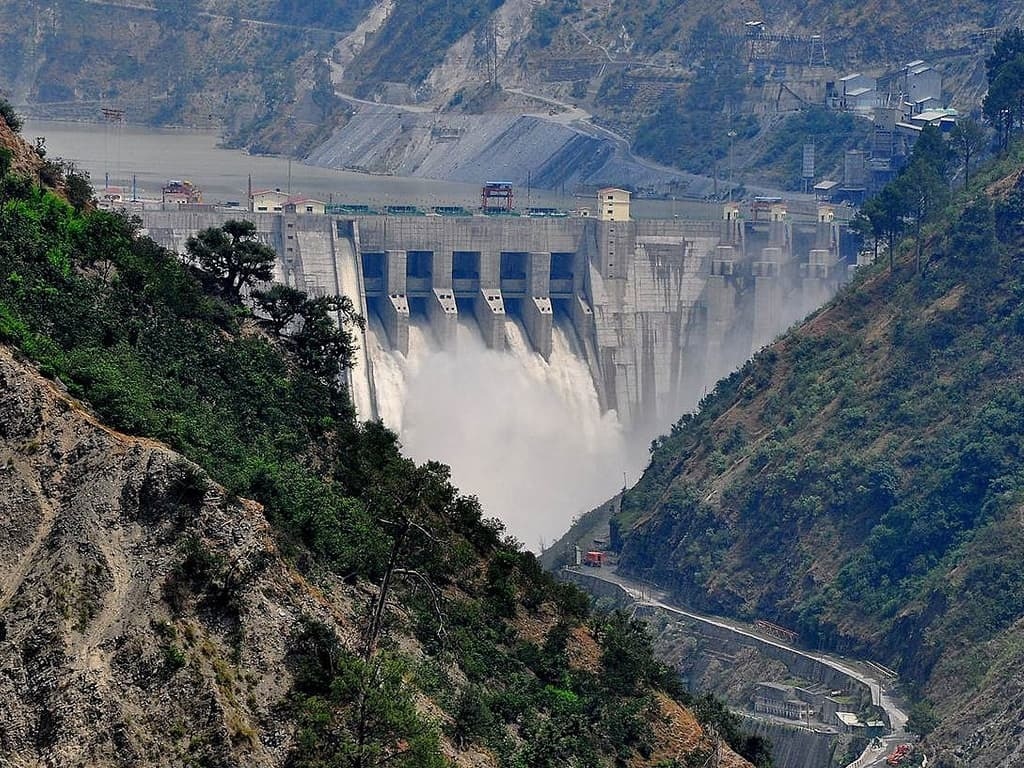
Officials highlighted that India’s actions involved emptying and refilling the Baglihar Hydropower Project reservoir, a move explicitly prohibited for run-of-the-river projects on rivers allocated to Pakistan. The Court of Arbitration had ruled on August 8, 2025, that such manipulations constitute water weaponisation and reaffirmed that India cannot suspend treaty obligations unilaterally.
Pakistan’s Commissioner for Indus Waters, Syed Mehr Ali Shah, confirmed that a formal letter was sent to his Indian counterpart under Articles VI(1)(a) and (b) and VIII(1)(a) and (4)(b) of the IWT, requesting detailed water-release data and immediate consultations to mitigate risks caused by sudden flow variations. Shah noted that scientific evidence shows the emptying and refilling of Baglihar Dam was deliberate and not caused by natural factors.
The incident follows India’s previous attempt to suspend the treaty in April 2024, a move rejected by Pakistan’s National Security Committee, chaired by Prime Minister Shehbaz Sharif, which warned that any stoppage or manipulation of treaty waters would be treated as an act of war.
Pakistan has approached India through the Indus Water Commissioner, emphasizing that the treaty remains legally binding. The Foreign Office reiterated its call for urgent resolution of these unilateral actions, citing the potential for severe humanitarian and economic consequences.
The latest developments have reignited fears of a “water war” between the two countries and underscore the fragility of water-sharing agreements amid geopolitical tensions in South Asia.