Table of Contents
Iran-US Talks Face Fresh Uncertainty as Tehran Rejects Immediate Negotiations
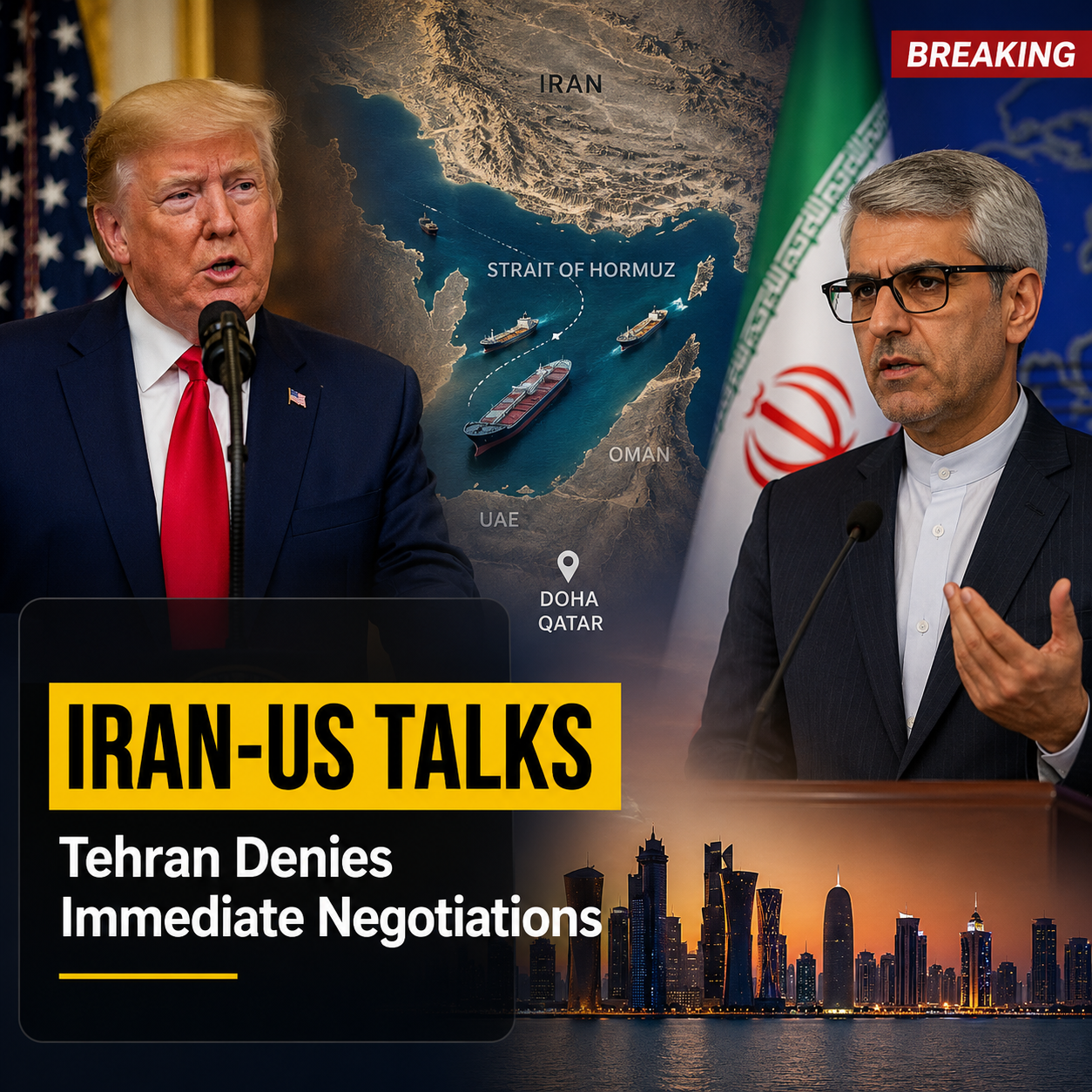
Iran-US Talks entered a new phase of uncertainty on Monday after Tehran dismissed reports suggesting direct negotiations with Washington would resume in the coming days, despite continued diplomatic activity surrounding a recently agreed memorandum of understanding (MoU).
Fresh statements from Iranian officials indicate that negotiations aimed at achieving a comprehensive agreement remain on hold as Tehran prioritizes implementing existing commitments before engaging in further political discussions.
Iran-US Talks Delayed Despite Diplomatic Activity
Iran’s Foreign Ministry spokesperson Esmaeil Baghaei said no meetings between Iranian and American officials are scheduled in the immediate future.
According to Tehran, an Iranian technical delegation will travel to Qatar this week, but officials stressed the visit is unrelated to any planned discussions with US representatives.
The clarification came after reports suggested technical teams from both countries could meet in Doha to discuss implementation of the recently signed memorandum of understanding designed to reduce tensions following weeks of regional conflict.
Iranian officials insist that before negotiations on a permanent agreement can begin, both sides must first fulfill obligations outlined in the existing framework.
Doha Remains the Center of Regional Diplomacy
Although Tehran rejected reports of imminent talks, diplomatic activity surrounding the agreement continues.
US President Donald Trump announced that discussions involving American representatives were expected to take place in Doha. The White House later confirmed that Special Envoy Steve Witkoff and Jared Kushner would travel to Qatar for high-level meetings related to implementation of the memorandum.
White House officials described the meetings as part of ongoing diplomatic coordination rather than negotiations toward a final settlement.
Meanwhile, Secretary of State Marco Rubio and Special Envoy Steve Witkoff were scheduled to brief members of the US Congress regarding developments surrounding the Iran agreement.
The differing public statements from Washington and Tehran highlight the complexity of ongoing diplomatic efforts and demonstrate that significant differences remain regarding the current stage of negotiations.
Strait of Hormuz Security Becomes a New Flashpoint
Attention has also shifted toward maritime security in the Strait of Hormuz, one of the world’s most strategically important shipping routes.
Iran’s Deputy Foreign Minister Kazem Gharibabadi stated that any de-mining operations in the waterway should be conducted exclusively by Iran under the terms of the memorandum reached with the United States.
His remarks followed comments by French President Emmanuel Macron, who announced that France and Oman would cooperate with international partners to remove mines from the Strait and ensure uninterrupted commercial navigation.
Iran responded by warning that outside involvement could increase regional tensions, describing the current situation as sensitive and urging foreign governments to avoid actions that might complicate implementation of the agreement.
Regional Governments Continue Supporting Stability
Across the Middle East, governments continue emphasizing the importance of preserving regional security following recent military escalation.
Lebanese President Joseph Aoun reaffirmed his government’s commitment to extending the authority of Lebanon’s armed forces throughout the country’s southern border region during talks with senior US military officials.
Elsewhere, diplomatic engagement continues between Gulf states, Western governments and regional partners seeking to maintain the ceasefire and reduce the possibility of renewed conflict.
Iranian state media also reported that approximately $6 billion in previously frozen Iranian assets held in Qatar would be released following partial sanctions relief agreed under the memorandum.
The reported release represents one of the first tangible economic outcomes linked to the recent diplomatic breakthrough.
What Comes Next?
While both Washington and Tehran continue describing the memorandum as a pathway toward broader stability, Monday’s developments illustrate that important political and technical issues remain unresolved.
The coming days will likely focus on implementation of existing commitments rather than launching comprehensive negotiations.
Regional mediators, particularly Qatar and Oman, are expected to remain central to diplomatic coordination as efforts continue to transform the ceasefire into a more durable political settlement.
For now, uncertainty surrounding Iran-US Talks remains one of the defining factors shaping Middle East diplomacy, with governments across the region closely monitoring every diplomatic signal from both capitals.
Read our complete coverage of the Iran-Israel conflict and the latest Middle East ceasefire developments on Pulse Pakistan