Pakistan and Afghanistan Agree to Interim Ceasefire Amid Tensions, Future Talks Set for Istanbul
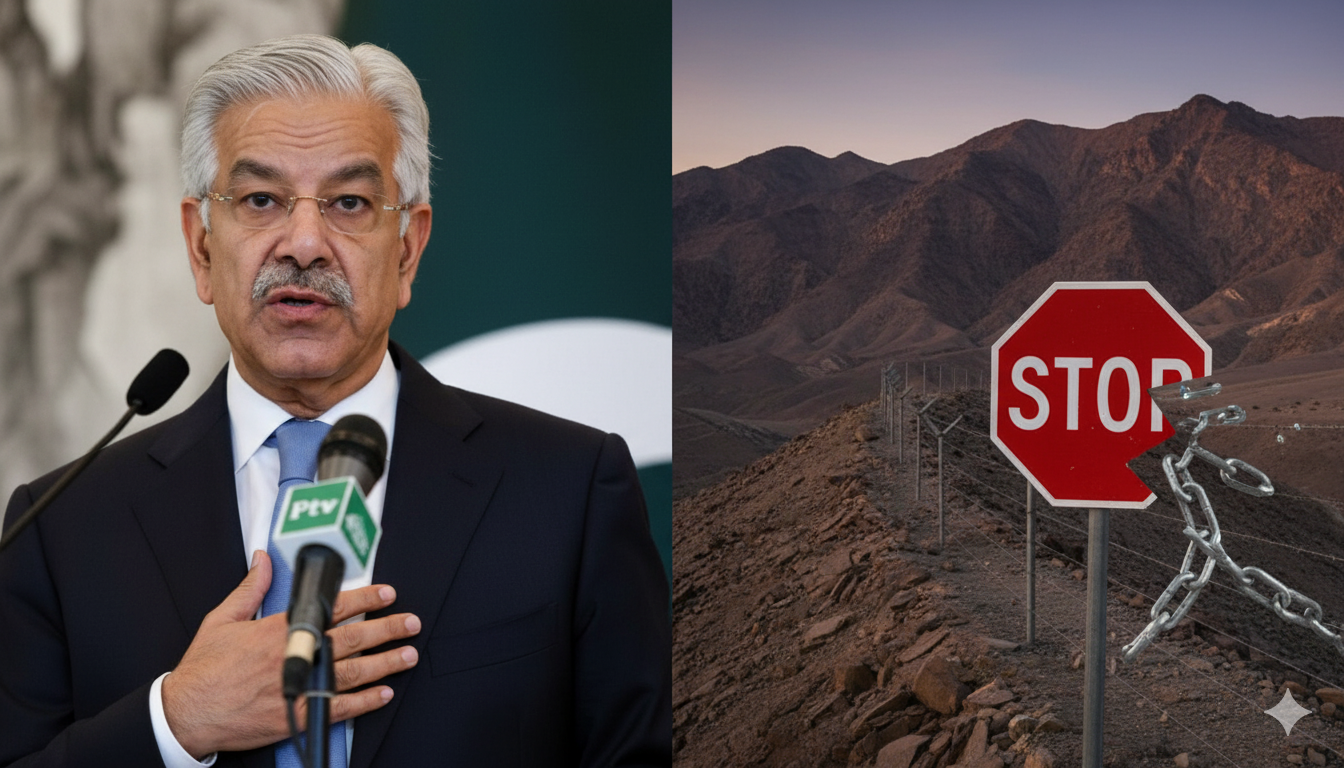
ISLAMABAD – Pakistan’s Defence Minister, Khawaja Asif, has unequivocally stated that any lasting normalization of relations with the current regime in Kabul is contingent upon a complete cessation of support for the outlawed Tehreek-e-Taliban Pakistan (TTP).
Speaking to media, Minister Asif emphasized that peace between the two neighbors can only be realized if those sheltering TTP militants in Afghanistan actively prevent their cross-border infiltration into Pakistan. “It is difficult to trust the Afghan side without firm guarantees against cross-border attacks,” he remarked, noting that some degree of infiltration persists, preventing any comprehensive agreement from taking full effect.
While refraining from blaming the entire Afghan government, the Defence Minister asserted that elements within its ranks are providing assistance to these militant groups. He stressed that stopping infiltration from Afghan soil remains Pakistan’s principal demand.
Diplomatic Engagement and Security Concerns
The Minister’s comments come as an interim ceasefire agreement was reached between Pakistan and the Afghan Taliban regime, secured late Thursday through the mediation efforts of Qatar and Turkiye. This breakthrough followed six days of intensive talks in Istanbul, succeeding the initial agreement made in Doha.
The joint statement confirmed that a high-level meeting is scheduled for November 6 in Istanbul to finalize the implementation modalities of the agreement. Crucially, the parties have consented to establish a robust monitoring and verification mechanism to ensure compliance and impose penalties on any party that violates the peace.
Foreign Office Stresses Sovereignty
Separately, the Foreign Office (FO) spokesperson, Tahir Andrabi, reiterated Islamabad’s preference for de-escalation with Afghanistan, expressing hope that the Taliban administration will honor its responsibility to prevent its territory from being used against Pakistan. He confirmed that during the talks, Pakistan clearly conveyed its non-negotiable demand for Afghanistan to halt hostile activities emanating from its soil.
The FO also highlighted that Pakistan has consistently presented evidence regarding the operations of various hostile groups on Afghan territory. Responding to recent border tensions, the spokesperson affirmed Pakistan’s firm response to any aggression from the Afghan side, asserting the nation’s commitment to defending its territorial integrity and sovereignty under all circumstances.
This diplomatic engagement follows a significant flare-up of hostilities, including unprovoked firing by the Afghan side, which prompted swift retaliation from the Pakistan Armed Forces. Pakistan has faced a surge in terror attacks, particularly in Khyber Pakhtunkhwa and Balochistan, since the Taliban took control in 2021, and has persistently called on Kabul to contain the militant groups targeting Pakistani security forces and civilians.