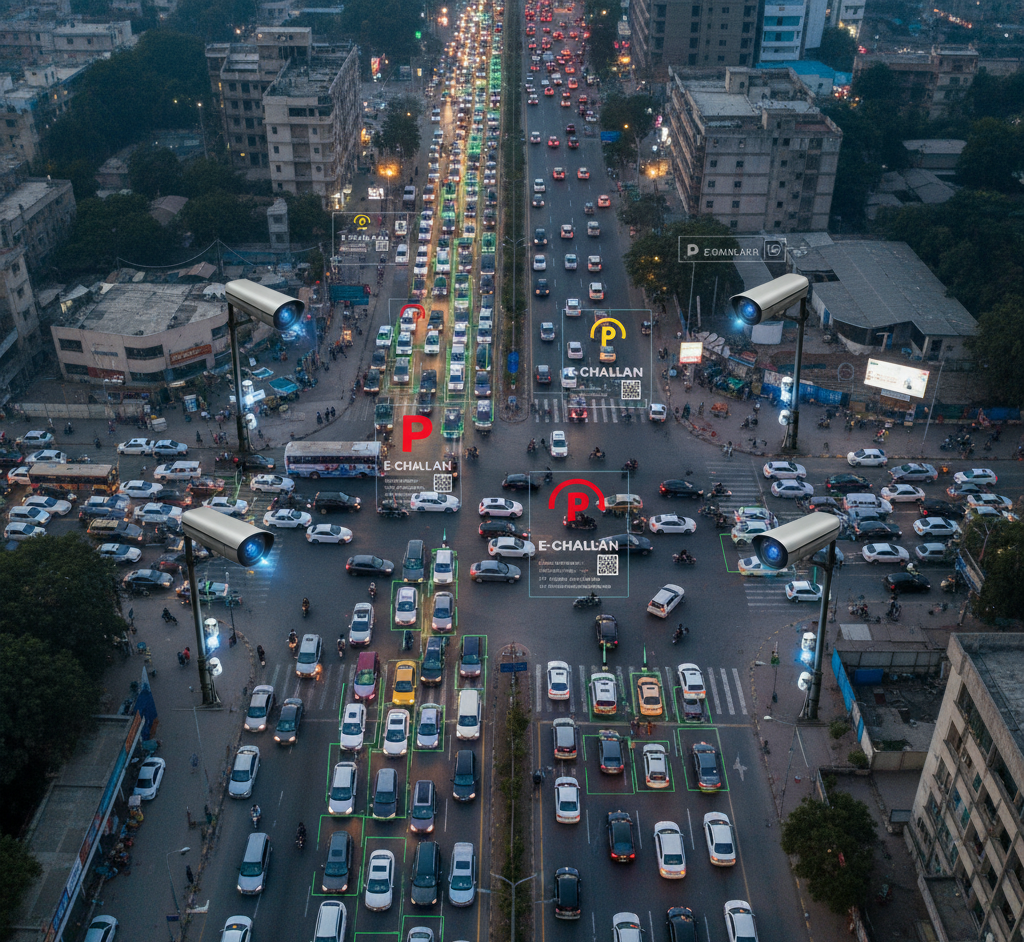
Karachi’s roads witnessed a digital overhaul on Tuesday as the city’s newly launched faceless e-challan system recorded its first major milestone — issuing 2,662 traffic tickets worth over Rs12.5 million within just six hours of operation.
According to a report released by the Karachi Traffic Police, violations captured through the Traffic Regulation and Citation System (TRACS) included 419 cases of overspeeding, 1,535 for not wearing seat belts, 166 for running red lights, and 507 for riding without helmets. Other infractions involved illegal parking, tinted windows, mobile phone use while driving, and wrong-way driving on one-way streets.
The TRACS system, inaugurated a day earlier by Sindh Chief Minister Syed Murad Ali Shah, replaces traditional manual challans with a fully automated, AI-driven digital monitoring network. Using advanced CCTV cameras positioned at key intersections, the system identifies traffic violations in real time and issues electronic challans directly to vehicle owners.
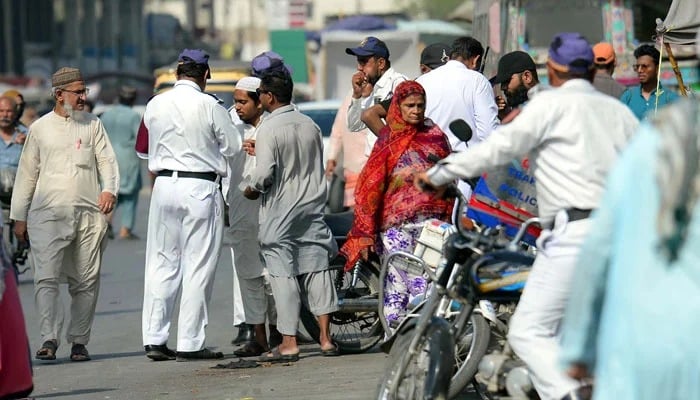
Officials say the system’s “faceless” nature eliminates human intervention and on-road disputes, ensuring greater transparency, accountability, and fairness in traffic enforcement. “The goal is to remove personal discretion and make road discipline a data-driven process,” a senior traffic police official said.
To assist motorists, TRACS Sahulat Centres have been established at major traffic offices and police stations, where citizens can view, pay, or contest challans. Integration with government databases—including the Excise and Taxation Department, Driving Licence System, and NADRA e-Sahulat—enables real-time verification and secure online payments through the TRACS mobile app and payment gateways.
Currently, 200 AI cameras are operational across Karachi, with plans to expand coverage to 12,000 cameras citywide. The initiative will later extend to other districts in Sindh, backed by oversight from the Citizens-Police Liaison Committee (CPLC) to ensure transparency and public trust.
Officials describe the launch as a landmark in digital governance and road safety, reflecting Sindh’s growing commitment to smart policing and modern urban management.