Table of Contents
New Provinces Referendum Debate Intensifies as Punjab Speaker Calls for Political Consensus
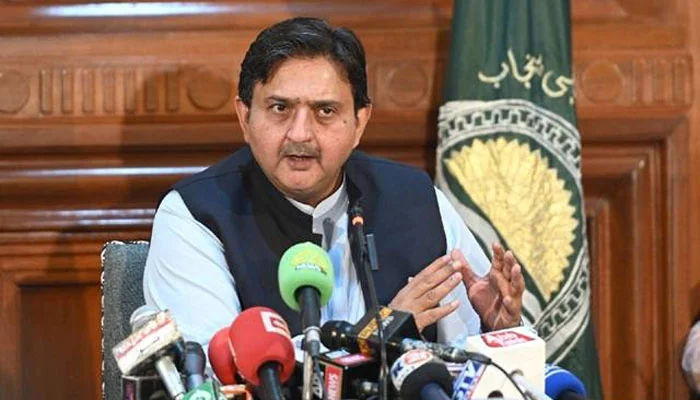
New Provinces Referendum has emerged as a significant political issue in Pakistan following renewed discussions about restructuring the country’s provincial boundaries and seeking public opinion on the creation of additional provinces. Punjab Assembly Speaker Malik Muhammad Ahmad Khan has said that it is too early to comment on holding a referendum, questioning whether any parliamentary house has formally demanded such an exercise.
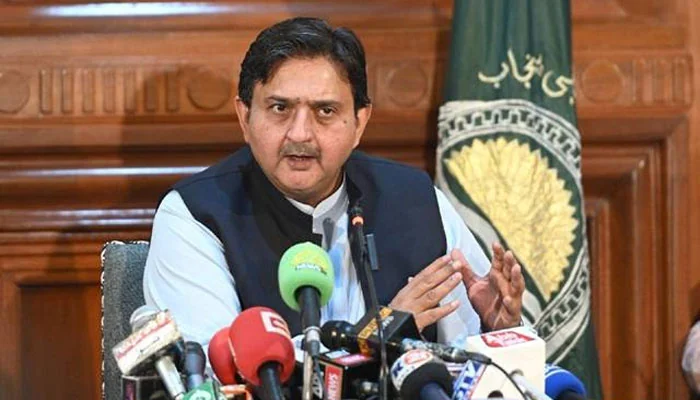
Speaking, the Punjab Assembly Speaker highlighted the political and constitutional questions surrounding the proposal. He said that discussions about a referendum should be approached cautiously, particularly when the matter has not formally reached the relevant parliamentary forums.
His remarks come amid growing political debate over whether Pakistan needs additional provinces to improve governance, administrative efficiency and public service delivery.
New Provinces Referendum: Punjab Speaker Questions Timing
Malik Muhammad Ahmad Khan said that making a definitive statement about a referendum at this stage would be premature.
He questioned whether any parliamentary house had formally called for a referendum, indicating that the proposal still required political and institutional consideration.
The speaker’s comments reflect the uncertainty surrounding the government’s approach to the proposed restructuring of provincial boundaries.
Although the idea has gained attention among political leaders, there is no settled agreement on how such a process should proceed or what constitutional mechanism should govern it.
Political Parties Fail to Reach Consensus
The Punjab Assembly Speaker acknowledged that three political parties had attempted to resolve their differences through negotiations but could not reach a common position.
The failure to achieve agreement highlights the political challenges involved in creating additional provinces.
Different political parties have expressed varying positions on the proposal, particularly concerning the future administrative structure of existing provinces.
The debate has also raised questions about political representation, provincial autonomy and the constitutional requirements for changing provincial boundaries.
Interior Minister Mohsin Naqvi recently proposed holding a referendum to determine public opinion on the creation of new provinces or administrative units.
He argued that consulting the public could help resolve the longstanding disagreement among political stakeholders.
However, the proposal has also prompted discussions about the role of parliament and provincial assemblies in making decisions concerning the country’s administrative structure.
Public Opinion and Democratic Representation
Malik Muhammad Ahmad Khan emphasised the importance of public opinion in democratic decision-making.
He suggested that if citizens themselves expressed a clear position on an issue, their elected representatives would face difficulty opposing their wishes.
His remarks underline the broader debate about the relationship between public consent and representative democracy.
The question is particularly important in discussions about new provinces, where decisions could have long-term implications for governance, political representation and the distribution of resources.
Nevertheless, public opinion and constitutional procedures remain separate considerations that would need to be addressed through the appropriate legal and parliamentary framework.
Speaker Discusses Differences Within His Political Party
The Punjab Assembly Speaker also spoke about his relationship with the leadership of his political party.
He said that whenever he disagreed with a particular decision or position within the party, he openly expressed his views.
According to him, the party leadership listened to his concerns, indicating that internal discussion and consultation remained important elements of political decision-making.
He also referred to his constituency, saying that receiving a party ticket or securing the nomination of a candidate was generally regarded as an indication of electoral success.
Constitutional Questions Remain Central to the Debate
The discussion over additional provinces is not limited to political negotiations. It also involves constitutional requirements governing changes to Pakistan’s provincial boundaries.
Under Article 239(4) of the Constitution, a constitutional amendment affecting the boundaries of a province requires approval by a two-thirds majority of the provincial assembly concerned, in addition to the required parliamentary process.
The issue has become more complicated because political parties have not reached agreement on the proposed changes.
The Pakistan Peoples Party has maintained its opposition to dividing Sindh, while other political figures have advocated smaller administrative units to improve governance.
President Asif Ali Zardari and Prime Minister Shehbaz Sharif have also emphasised that any move concerning new provinces must follow constitutional provisions, with parliament retaining a central role in the process.
For now, the possibility of a referendum remains part of an ongoing political discussion rather than a settled government decision.
Malik Muhammad Ahmad Khan’s latest comments highlight the need for further consultation, political consensus and constitutional clarity before Pakistan moves towards any decision on creating additional provinces.See More on Pulse Paksitan