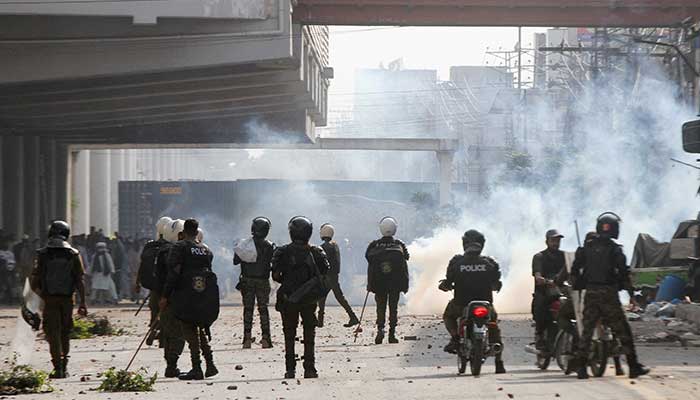
Police Operation Clears Muridke Protest as Commuters Regain Access to Major Roads
On Monday, normalcy began to return to Islamabad and Rawalpindi after a tense few days, following the successful clearance of Tehreek-e-Labbaik Pakistan (TLP) protesters from Muridke. Police operations, initiated late Sunday night, ended the protest sit-in, reopening the critical GT Road for regular traffic and easing the movement of vehicles between the twin cities.
Education and Commerce Resume Operations
Following the operation, Rawalpindi’s educational institutions reopened after a four-day closure, and commercial activity quickly resumed. Shops along Murree Road and surrounding business districts were up and running, marking a return to normalcy in the area. Traffic was reported to flow smoothly on Murree Road and other adjacent routes.
Despite these improvements, the road leading to Faizabad from Murree Road remained closed, and the Metro Bus Service between Islamabad and Rawalpindi remained suspended, causing some inconvenience for daily commuters.
Full Restoration of Mobile and Internet Services
Mobile phone and data services have been fully restored in both cities, providing much-needed communication for residents. Several major roads, including the IJP Road, Double Road, and Expressway, were cleared and reopened, facilitating better connectivity across the region. These measures have provided a significant relief to those needing to travel for work or other essential activities.
Violent Clashes Mark Protest’s Final Days
The clearance of the Muridke protest was not without violence. Police sources revealed that TLP protesters, who had marched from Lahore to Islamabad, clashed with law enforcement personnel. Stone-pelting escalated into the use of spiked clubs, petrol bombs, and indiscriminate gunfire, leading to casualties on both sides.
A station house officer (SHO) was martyred during the clashes, and 48 police officers were injured, 17 of whom were shot. In the chaos, three TLP members and a bystander were killed, while the group set fire to over 40 government and private vehicles. The police responded with a “limited operation in self-defence,” which successfully led to the arrest of several individuals involved in the violence.
Ongoing Operations in Gujranwala and Nearby Areas
In Gujranwala, ongoing operations are clearing the remnants of the protest, including trenches and containers blocking key routes. While many obstacles have been removed, traffic remains disrupted on certain stretches, including the Chanda Qila Bypass and the Chenab River bridge.
Impact on Education and Transport
In addition to university closures, several major train services were cancelled, including the Faiz Ahmad Faiz Passenger train from Lahore to Narowal. The Lahore College for Women University announced that all classes would be conducted online for the week, while the Supreme Court Bar Association elections scheduled for 16 October are set to take place amid the ongoing unrest.
Calls for Political Unity Amid Crisis
Prime Minister Shehbaz Sharif, after reviewing the situation with Interior Minister Mohsin Naqvi, emphasized the government’s commitment to restoring peace and ensuring the safety of citizens. A meeting was held in Lahore to discuss national security concerns, with a particular focus on counter-terrorism strategies and maintaining law and order during such critical times.
Rana Sanaullah, Adviser to the Prime Minister on Political Affairs, also appealed to TLP leadership to end the protest and support the government’s efforts to restore stability. He stressed the importance of national unity, urging political and religious groups to come together for the country’s greater good.