Pakistan Refutes U.S. Drone Allegations
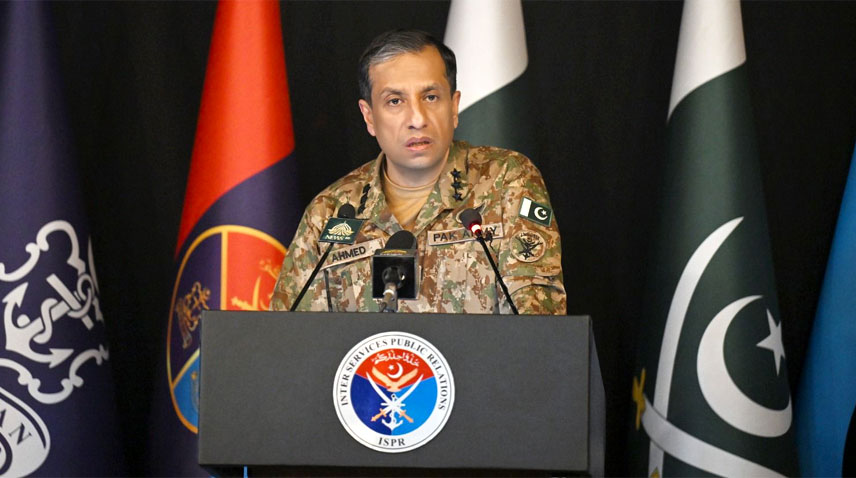
Director-General Inter-Services Public Relations (DG ISPR) Lieutenant General Ahmed Sharif Chaudhry has firmly denied claims by Afghanistan’s Taliban regime that Pakistan permitted the United States to conduct drone strikes from its territory.
“This allegation is baseless,” Chaudhry stated during a confidential media briefing with senior journalists in Islamabad on Monday. He clarified that no agreement exists between Islamabad and Washington allowing such operations, calling the reports “false and misleading.”
The clarification comes amid strained relations between Pakistan and Afghanistan, following frequent cross-border attacks and security concerns.
Talks Amid Fragile Truce
The military spokesperson briefed journalists on the current state of Pakistan-Afghanistan talks, counterterrorism measures, and broader regional security dynamics.
Chaudhry noted that the latest ceasefire between the two countries—brokered after Istanbul talks held from October 25 to 30—had been extended. Both sides agreed to form a monitoring and verification mechanism to sustain peace and penalize violations.
He added that the next phase of negotiations, scheduled for November 6 in Istanbul, would finalize operational details for this joint framework.
Opium Trade Funding Terrorism
Lt Gen Chaudhry also disclosed that Pakistan’s recent military operations had eliminated over 100 cross-border militants, most of whom were Afghan nationals.
He said the narco-economy remains a major source of funding for militant activities, particularly in Khyber Pakhtunkhwa (KP). The DG ISPR revealed that about 12,000 acres of poppy cultivation exist in the province, generating profits between Rs1.8 million to Rs3.2 million per acre.
“Local politicians and other elements are involved in this illicit cultivation,” he cautioned, noting that joint operations by the Frontier Corps and Anti-Narcotics Force (ANF) have destroyed poppy fields in the Tirah Valley.
He added that counter-narcotics efforts now form a central part of Pakistan’s broader anti-terror campaign.
Afghan Taliban’s Unfulfilled Commitments
Addressing the broader regional context, Chaudhry criticized the Afghan Taliban’s failure to uphold the Doha Agreement, which had called for an inclusive government through a Loya Jirga.
“Taliban promised a representative setup in Doha, but they have not fulfilled that commitment,” he said. “Pakistan continues to seek peace through dialogue, but if talks fail, other measures will be considered.”
He also accused certain Afghan factions of harboring militants from Pakistan’s Balochistan province and relocating them into civilian areas to use them as human shields.
According to journalist Hamid Mir, who attended the briefing, the DG ISPR presented detailed evidence of Afghan Taliban soldiers’ involvement in terrorist activities inside Pakistan—evidence that had also been shared with Afghan authorities during prior negotiations.
India’s Suspected False-Flag Plot
Lt Gen Chaudhry further issued a warning about a possible false-flag operation being orchestrated by India via a maritime route.
“We suspect India may attempt a false-flag operation to justify aggression against Pakistan,” he said, stressing that Pakistan’s defense forces are fully alert to such threats.
The DG ISPR emphasized that Pakistan’s military posture remains defensive but vigilant, and any violation of its sovereignty would be met with an appropriate response.
Conclusion
The DG ISPR’s statements underline Pakistan’s firm stance on two fronts—refuting Afghan accusations of U.S. collaboration and cautioning against potential Indian provocations. As Islamabad navigates fragile diplomatic ground with both neighbors, its military continues to emphasize counterterrorism, border security, and regional stability as strategic imperatives.