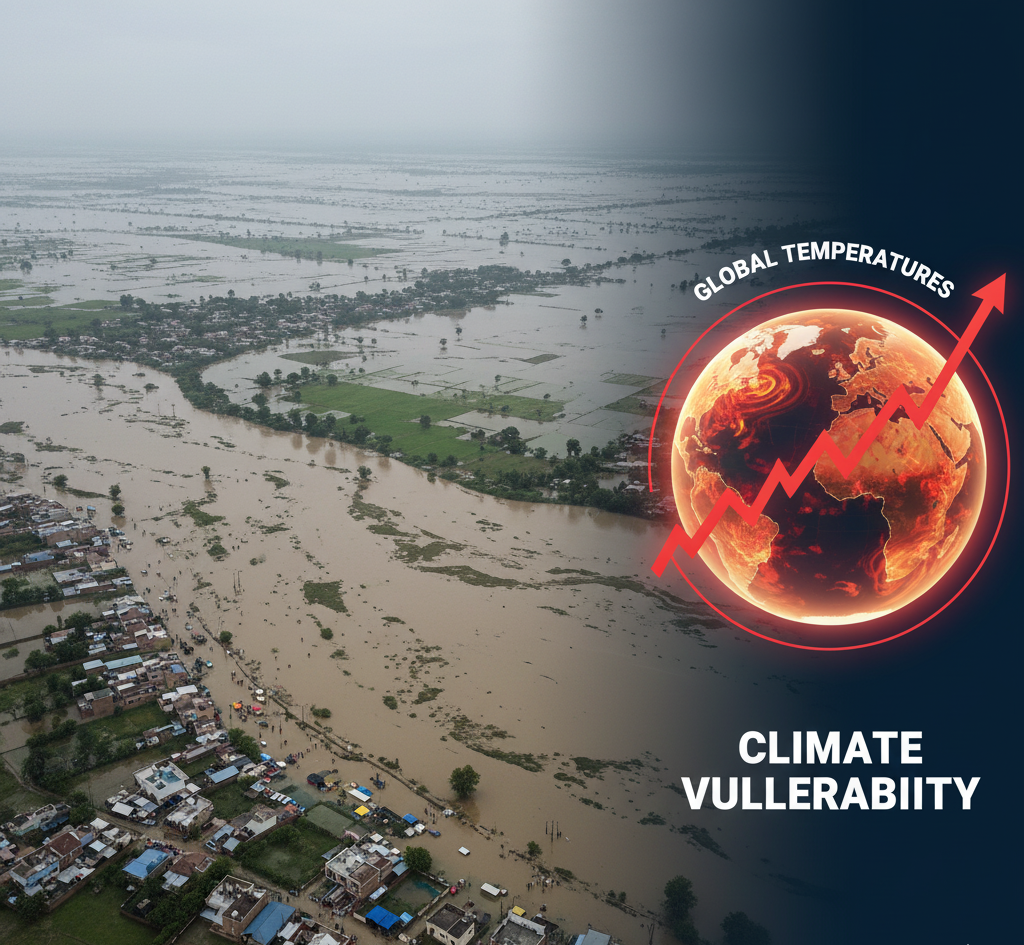
ISLAMABAD, Oct. 28, 2025 — Pakistan has suffered staggering economic losses of $130 billion due to climate-induced disasters, Prime Minister Shehbaz Sharif revealed on Tuesday, highlighting the disproportionate impact on countries contributing minimally to global emissions.
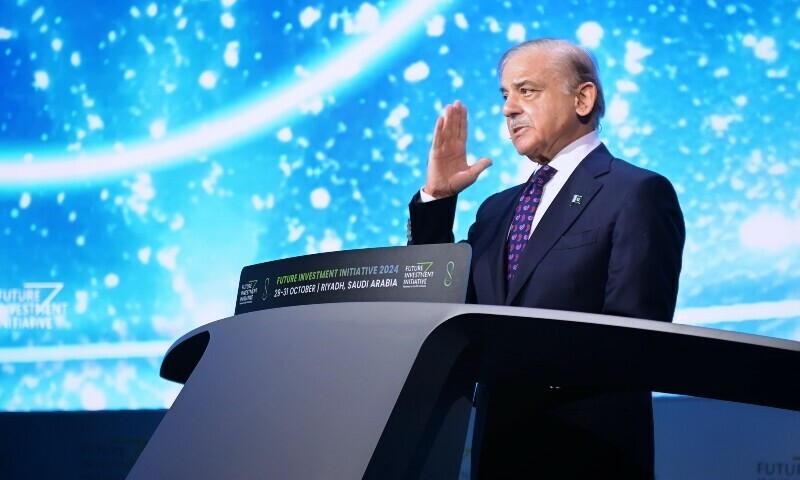
Speaking at the 9th Future Investment Initiative Conference (FII9) in Riyadh during a roundtable titled “Is Humanity Heading in the Right Direction?”, PM Shehbaz emphasized that Pakistan remains among the world’s most climate-vulnerable nations “through no fault of its own.”
“Our emissions account for less than a fraction of 1% of global carbon output, yet in 2022, we faced catastrophic floods, cloudbursts, and storms that submerged vast areas of land and destroyed crops,” he said, referring to last year’s devastating floods that left the country dependent on international loans for recovery.
Source: Dawn News
PM Shehbaz described the rebuilding process as a cycle of “going up the ladder and then coming back down,” stressing the urgent need for climate-resilient economic strategies. He called on the international community to share the burden and assist countries like Pakistan, which disproportionately suffer from climate crises.
Acknowledging past governance challenges, the premier highlighted reforms underway, including the full digitalization of the Federal Board of Revenue (FBR) and strengthened anti-corruption measures. He also pointed to Pakistan’s youthful population—comprising around 60% of the nation—as a key asset for future growth.
“Humanity can only progress when nations share their bounties, grievances, and technologies,” PM Shehbaz said, pledging to transform Pakistan into one of the fastest-growing economies by leveraging its natural resources and young workforce.

Source: Associated Press of Pakistan
On the topic of artificial intelligence, the prime minister noted Pakistan’s rapid adoption of AI technologies, acknowledging both the potential benefits and risks. He urged a global dialogue between developed nations and the Global South to ensure AI is used responsibly and productively.