First Cross-Border Pilgrimage Since May Conflict
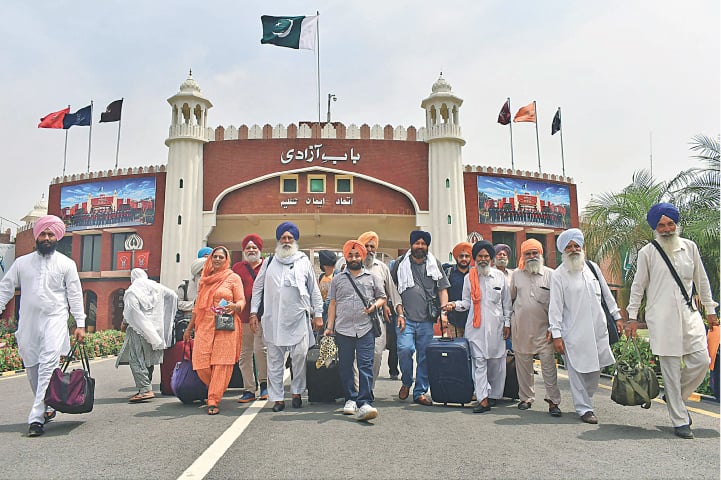
Pakistan on Tuesday welcomed the first group of Sikh pilgrims from India since the violent border clashes in May — the worst fighting between the two nations in over two decades. The arrival marks a cautious step toward normalcy following months of heightened tensions.
Dozens of pilgrims were seen crossing the Wagah-Attari border, which had been closed to regular travel since the conflict. They were greeted by Pakistani officials with flowers and rose petals, according to AFP reporters present at the scene.
Over 2,000 Pilgrims Granted Visas for Guru Nanak Celebrations
Pakistan’s High Commission in New Delhi confirmed that over 2,100 Indian Sikhs were issued visas to attend the 10-day celebrations marking the 556th birth anniversary of Guru Nanak Dev Ji, the founder of Sikhism.
The pilgrims are scheduled to gather at Nankana Sahib, Guru Nanak’s birthplace located about 80 kilometres west of Lahore, and will later visit other revered sites, including Kartarpur, where the Sikh guru is believed to be buried.
Indian media reports suggested that around 1,700 pilgrims were expected to cross the border on Tuesday, although official confirmation from Indian authorities was pending.

Promoting Interfaith Harmony Amid Strained Ties
In a statement last week, Pakistan’s mission said the decision to facilitate the pilgrimage reflected its commitment to interfaith harmony and cultural understanding.
“The initiative demonstrates Pakistan’s efforts to promote religious coexistence and respect for sacred traditions,” the statement read.
The Kartarpur Corridor, a visa-free passage opened in 2019 that allows Indian Sikhs to visit Kartarpur Gurdwara without crossing the main border, remains closed due to the recent hostilities.
Border Clashes Cast a Shadow on Pilgrimage
The reopening for pilgrims comes against the backdrop of severe military clashes in May — the deadliest since the 1999 Kargil conflict. The four-day exchange of fire erupted after India accused Pakistan of supporting an attack on tourists in Indian Illegally Occupied Jammu and Kashmir (IIOJK) on April 22, allegations Islamabad firmly denied.
Following the violence, the Wagah-Attari border was shut to general movement, disrupting cross-border exchanges and leaving diplomatic ties further strained.
Faith Beyond Borders
Sikhism, founded in the 15th century in the Punjab region, spans both sides of the modern-day India-Pakistan border. While most Sikhs migrated to India during the 1947 partition, several of their holiest sites — including Nankana Sahib and Kartarpur — remained in Pakistan.
Despite ongoing political friction, Pakistan has continued to grant special access to Indian Sikhs for religious observances. The latest pilgrimage offers a rare moment of peace and spiritual unity between two nations long divided by conflict.
As one pilgrim remarked before crossing the border, “Faith knows no borders — Guru Nanak belongs to all humanity.”