Table of Contents
Full News Article
Pakistan role in US Iran ceasefire is gaining international attention as analysts highlight Islamabad’s quiet but impactful diplomacy in reducing tensions between Washington and Tehran.
Pakistan’s involvement, described by political commentator Tahir Javed as a significant diplomatic achievement, is being viewed as a turning point in the country’s global positioning. Speaking on Aik News, Tahir Javed emphasized that Pakistan’s efforts may have contributed to preventing a wider regional or even global conflict.
Pakistan’s Diplomatic Breakthrough
Tahir Javed characterized Pakistan’s intervention as a major success in modern diplomacy. He credited the country’s leadership, particularly Chief of Army Staff General Asim Munir, for restoring global confidence and positioning Pakistan as a credible mediator.
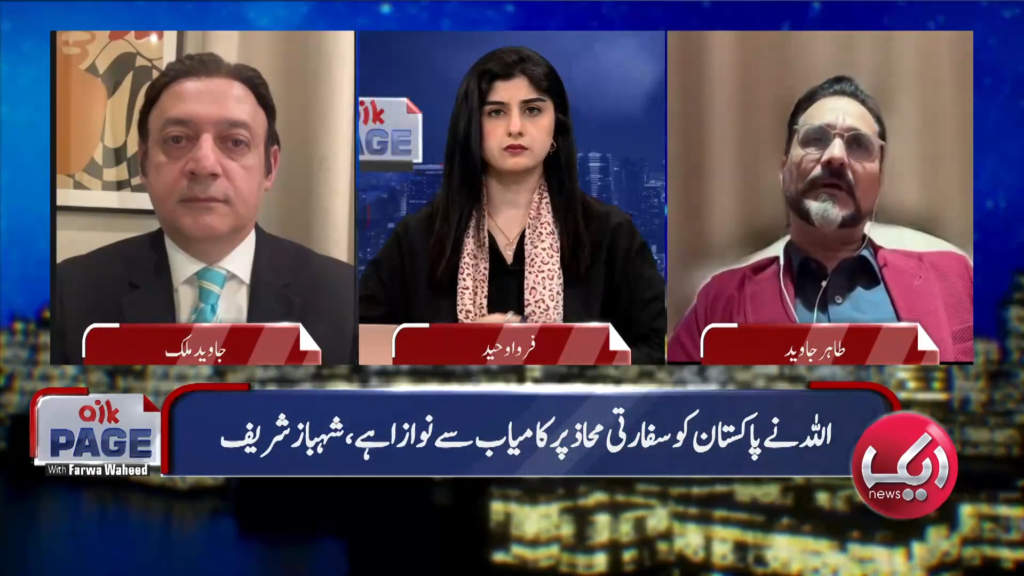
According to Tahir Javed, Pakistan introduced a balanced approach that appealed to both the United States and Iran. This approach, rooted in Pakistan’s historical ties with Tehran and strategic communication with Washington, enabled constructive engagement at a critical moment.
Rebuilding Trust with Washington
A notable aspect of the development is the apparent shift in US–Pakistan relations. Tahir Javed pointed out that Washington has traditionally viewed Islamabad as a complicated partner, often marked by mistrust.
However, he argued that Pakistan’s recent diplomatic conduct reflects a more transparent and consistent policy framework. This “truth-based” approach, as described by Tahir Javed, appears to be gradually rebuilding trust between the two nations.
He also hinted at the possibility of high-level diplomatic visits in the near future, signaling renewed engagement and cooperation.
A Strategic Win for Pakistan
Even if the ceasefire remains temporary, Tahir Javed believes Pakistan has already secured a strategic victory. By stepping into a mediation role that few nations attempted, Islamabad has strengthened its international credibility.
“This is effectively a win-win situation,” Tahir Javed noted, highlighting that Pakistan has demonstrated both initiative and capability in global conflict resolution.
Ongoing Risks and Regional Pressures
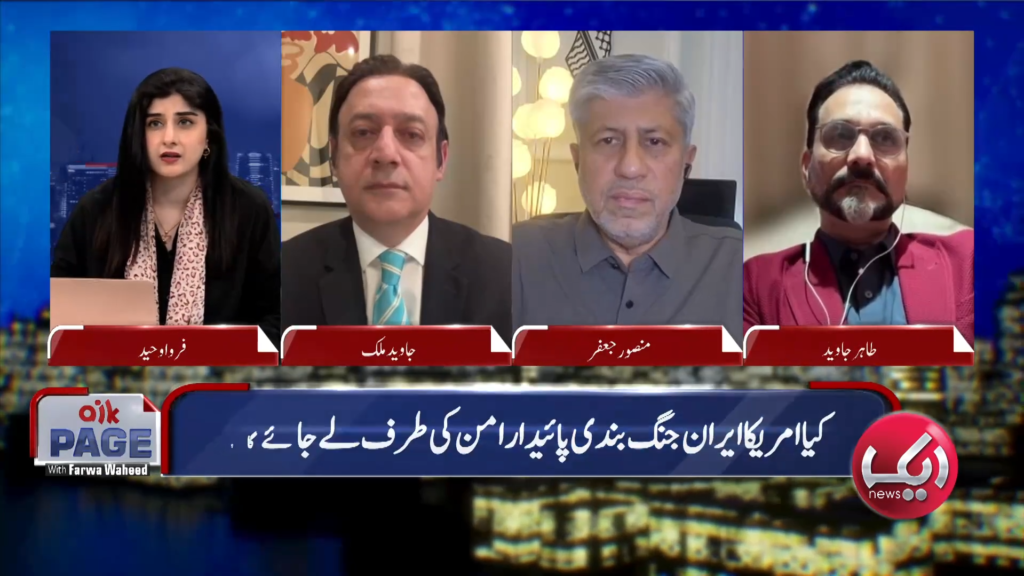
Despite the progress, the situation remains fragile. Tahir Javed identified Israeli Prime Minister Benjamin Netanyahu as a potential factor that could disrupt the ceasefire dynamics.
He explained that while US leadership may favor de-escalation due to political and strategic considerations, regional actors with differing priorities could complicate the process.
Economic Implications for Iran
A sustained ceasefire could have far-reaching economic consequences, particularly for Iran. Tahir Javed suggested that easing sanctions would unlock Iran’s vast energy potential, positioning it as a significant global economic player.
He even projected that Iran could potentially join the G20 within a decade if stability is maintained. However, he advised that Tehran must remain committed to peace, even when faced with minor provocations.
Pakistan’s Emerging Global Role
The broader implication of the Pakistan role in US–Iran ceasefire is the country’s evolving position on the world stage. Tahir Javed concluded that Pakistan is transitioning into a stabilizing force capable of influencing major geopolitical outcomes.
This development may mark the beginning of a new era in which Pakistan is not just a regional actor but a key participant in global diplomacy.