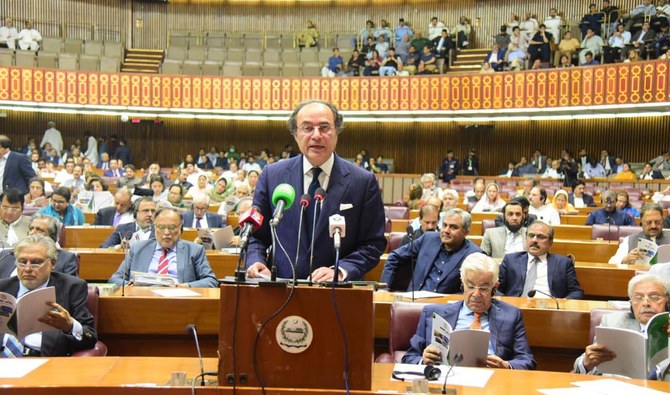
ISLAMABAD – Pakistan’s Finance Minister, Muhammad Aurangzeb, expressed optimism about the ongoing discussions with the International Monetary Fund (IMF), stating that the talks were progressing “positively.” He also clarified that the government had no immediate plans to introduce additional tax measures, despite the Federal Board of Revenue (FBR) facing a significant shortfall in its revenue targets.
In a press briefing in Islamabad, Aurangzeb highlighted the government’s confidence in boosting Pakistan’s tax-to-GDP ratio to 11%. He pointed to the ongoing tax-related cases in courts, which, once resolved, are expected to contribute to higher tax collections by the FBR.
For the fiscal year 2024-25, the FBR fell short by Rs1.2 trillion from its original target of Rs12.97 trillion. Despite implementing Rs1.3 trillion in additional taxes, the board collected Rs11.74 trillion after two downward revisions. The shortfall was largely attributed to unrealized recoveries from pending court cases, totaling around Rs250 billion.
Despite this gap in revenue, Aurangzeb emphasized that the government was not contemplating any new tax measures at this time. “We are not immediately taking additional tax measures,” he stated, reassuring the public and the business community of the government’s approach.
In a related development, the Finance Minister revealed plans for an investor conference in Washington, D.C., later this month. The event is aimed at attracting foreign investment into key sectors where the government sees significant opportunities. “The sectors are very clear where we seek their investment and where we see a clear investment appetite,” Aurangzeb remarked, adding that this initiative marks the beginning of a long-term engagement with international investors.
In his earlier comments to the Senate Standing Committee on Finance and Revenue, Aurangzeb also disclosed that the Finance Division would take over the responsibility of drafting the next Finance Bill, with the Tax Policy Office (TPO) replacing the FBR in this crucial task.
As Pakistan continues to navigate its fiscal challenges, the government’s efforts to balance tax reforms, attract foreign investment, and manage its financial obligations remain central to its economic strategy.