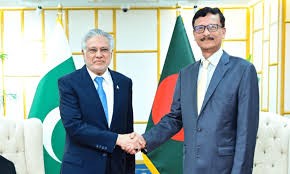
During his landmark visit to Dhaka, Pakistan’s Deputy Prime Minister and Foreign Minister Ishaq Dar engaged in productive talks with Bangladesh Chief Adviser Professor Muhammad Yunus. The meeting focused on revitalizing the South Asian Association for Regional Cooperation (Saarc) and enhancing bilateral relations between the two countries. This visit marks the first by a Pakistani foreign minister to Bangladesh in 13 years, highlighting a new phase of cooperation between the nations.
In a significant diplomatic development, Pakistan’s Deputy Prime Minister and Foreign Minister Ishaq Dar visited Bangladesh to discuss regional cooperation and the future of Saarc. His meeting with Bangladesh’s Chief Adviser, Professor Muhammad Yunus, emphasized the importance of revitalizing regional cooperation and fostering stronger bilateral ties between the two countries.
The discussions during this two-day visit, which was hailed as a “significant milestone” by the Pakistan Foreign Office, centered around improving trade, connectivity, and fostering youth linkages. Yunus, during their meeting, stressed the need to advance cooperation through Saarc, underlining the crucial role of people-to-people connections, particularly among the youth. Both leaders agreed that strengthening ties would lead to greater regional stability and prosperity.
This visit comes at a time when relations between Islamabad and Dhaka are undergoing a positive transformation, following the political upheaval in Bangladesh that led to a thaw in diplomatic ties. Dar’s discussions with Yunus focused on exploring avenues for economic cooperation and enhancing people-to-people engagements. They also delved into the importance of reviving the old connections between their nations to foster a thriving relationship.
In a statement issued by Yunus’s office, he urged for progress in bilateral trade and highlighted the need for mutual collaboration in various fields such as education, media, and cultural exchanges. Dar’s visit has also paved the way for further diplomatic engagements, with agreements signed in key areas, including visa exemptions for diplomatic passport holders and a joint working group on trade.
A notable achievement of the visit was the launch of the “Pakistan-Bangladesh Knowledge Corridor,” which will provide 500 scholarships to Bangladeshi students over the next five years. This initiative aims to foster greater educational exchange and collaboration between the two nations. Additionally, Pakistan will increase scholarships under the Pakistan Technical Assistance Programme, reflecting a commitment to building long-term educational and cultural ties.
Dar’s visit also included meetings with key Bangladeshi political figures, such as Khaleda Zia, the former Prime Minister of Bangladesh, and leaders from political parties including the Bangladesh Nationalist Party (BNP) and Jamaat-i-Islami. These discussions focused on enhancing diplomatic relations and furthering cooperation in trade and connectivity.
The two countries also signed six agreements during this visit, covering a wide range of sectors, from trade and economics to cultural exchange and media cooperation. The bilateral talks, described as constructive, also explored ways to rejuvenate Saarc and address important regional issues such as the situation in Palestine and the Rohingya crisis.