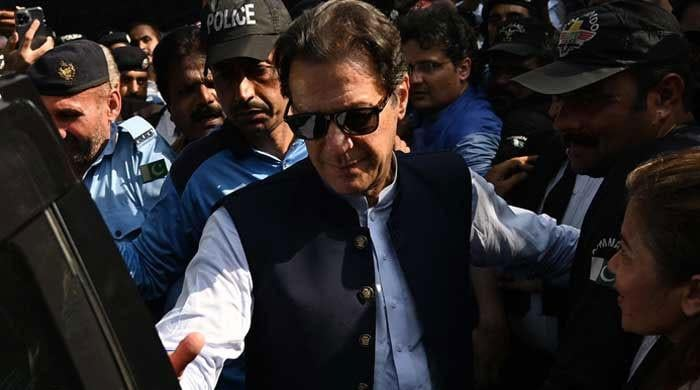
In a significant legal development, the Supreme Court of Pakistan has approved bail for Imran Khan, the founder of Pakistan Tehreek-e-Insaf (PTI), in eight cases related to the May 9 riots. The decision came after the Lahore High Court had previously rejected his bail pleas in these cases. The ruling was issued by a three-member bench led by Chief Justice of Pakistan Yahya Afridi.
On Thursday, the Supreme Court of Pakistan granted bail to Imran Khan in eight separate cases connected to the May 9 riots, which occurred following his arrest earlier that year. The cases include the infamous attack on Jinnah House in Lahore, which was part of a broader wave of violence that targeted military and civilian establishments.

Source: Al Jazeera
Khan, who has been incarcerated for over two years, had previously appealed to the Supreme Court after his bail petitions were dismissed by the Lahore High Court (LHC) in June. His defense argued that the First Information Reports (FIRs) lacked sufficient evidence to link him to the violence and that he was in NAB custody at the time of the riots, making his involvement impossible.
During the hearing, Chief Justice Yahya Afridi questioned the prosecutor regarding the evidence presented against Khan, to which the prosecutor cited testimonies from three witnesses, along with photogrammetric and voice-matching tests. However, the SC bench cautioned that evidence should be assessed by the trial court, as it would be inappropriate for the Supreme Court to draw conclusions prematurely.
Khan’s legal team, led by lawyer Salman Safdar, contended that the challan (charge sheet) had not been presented in the eight cases, and Khan was named in only three of the FIRs. His defense also emphasized that Khan’s involvement was unsubstantiated in the remaining cases.
The May 9 riots, triggered by Khan’s arrest in a graft case, led to widespread protests across the country. These protests resulted in significant damage to military and civil installations, including the Corps Commander’s House and the General Headquarters (GHQ) in Rawalpindi. Despite the violence, several PTI leaders and workers have since been granted bail, though many, including Khan, remain in custody.
Imran Khan has faced numerous legal challenges since his ousting from office in April 2022, and he has been charged in several cases ranging from corruption to terrorism. The Supreme Court’s decision marks a pivotal moment in his ongoing legal battles.