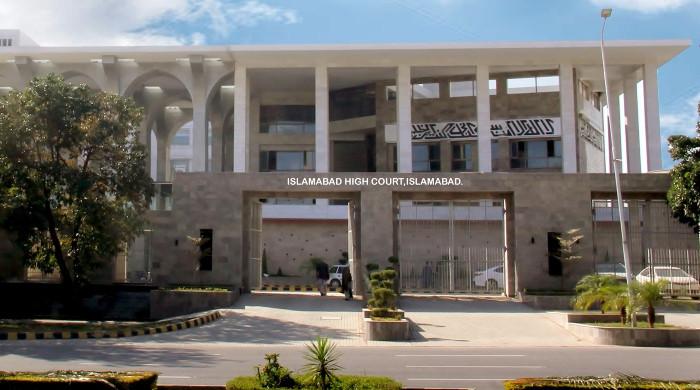
ISLAMABAD – In a landmark judgment, the Islamabad High Court (IHC) has ruled that while child marriages may constitute criminal offenses under Pakistani law, they are not automatically rendered invalid. Justice Muhammad Azam Khan, who issued the detailed ruling, made it clear that while marriages involving minors may be criminalized, the marital status itself is not nullified under current legal frameworks.
The case at hand involved a petition filed by Muhammad Riaz, who sought the return of his wife, Madiha Bibi, after her family forcibly took her from his home. The couple had married on May 30, 2025, despite opposition from Madiha’s family. The marriage certificate listed her age as “almost 18,” but her birth certificate revealed that she was actually only 15 years old, raising questions about the validity of the marriage under Pakistani law.
Justice Khan addressed this discrepancy by recognizing the legal complexities surrounding child marriages. While Madiha had married voluntarily and expressed her desire to stay with her husband, the court noted that the marriage itself, under Islamic law, could be valid if the individual had attained puberty, regardless of the statutory age. Under Islamic jurisprudence, marriage is considered valid when a girl has reached puberty and gives her consent, traditionally assumed to be around age 15.
However, under the Islamabad Child Restraint Marriage Act of 2025, marriages involving individuals under the age of 18 are criminalized, imposing penalties on the adult party and facilitators. Despite this, the Act does not explicitly declare such marriages void. Justice Khan acknowledged the legal contradiction and referred to various precedents, including the 1970 Supreme Court case of Mauj Ali, which held that Islamic law allows for a valid marriage upon the attainment of puberty.
The court also disagreed with a 2022 IHC ruling in Mumtaz Bibi, which declared child marriages to be void ab initio, citing concerns about the consequences of invalidating such marriages, such as the potential for social stigma, legal challenges to children’s legitimacy, and exposure to violence. Justice Khan also cited the Enforcement of Shariah Act of 1991, which mandates that laws must be interpreted in line with Islamic principles when multiple interpretations are possible.
Despite acknowledging the deeply troubling consequences of child marriages, Justice Khan highlighted the dangers of endorsing child marriages while criminalizing the adult facilitators. The court stressed that early marriages often result in forced pregnancies, poor health, domestic violence, and limited educational and economic opportunities, especially for girls in underprivileged communities.
In response to these challenges, the court issued seven key recommendations aimed at reforming Pakistan’s approach to child marriages. These recommendations include:
- Child Welfare Assessments: The court mandated that all Guardian Courts and Family Courts, as well as courts under Section 491, must engage Child Protection Officers to conduct welfare assessments before making any decisions regarding the custody, care, or marital status of minors. These assessments should evaluate the minor’s physical and mental maturity, the voluntariness of consent, and socio-economic factors.
- Legislative Review: The court recommended that the federal government undertake an urgent review of conflicting age definitions across various laws, including the Offence of Zina Ordinance, the Pakistan Penal Code, and the Islamabad Child Protection Act.
- Training for Nikah Registrars: The judgment instructed that Nikah Registrars be fully informed about the provisions of the Islamabad Child Restraint Marriage Act. Those who solemnize marriages involving minors should face criminal consequences and immediate revocation of their licenses.
- Birth Certificate Integration: The court urged the National Database and Registration Authority (NADRA) and marriage registration authorities to integrate birth certificates into marriage registration systems to ensure age verification before the solemnization of marriages.
- Awareness Campaigns: Justice Khan recommended a nationwide public awareness campaign aimed at educating citizens, public officials, and community leaders about the harmful effects of child marriages and the legal consequences they entail.
- International Obligations: The judgment referred to Pakistan’s ratification of the UN Convention on the Rights of the Child, emphasizing that children capable of forming their own views should be allowed to express them freely in all matters affecting them, and these views must be given due weight according to their age and maturity.
- Clear Statutory Stance: Lastly, the court called for clear statutory definitions and policies regarding marriages involving minors, particularly those who have attained puberty but lack the mental maturity to handle the responsibilities of marriage.
While the IHC’s ruling has drawn attention to the legal ambiguity surrounding child marriages, it has also highlighted the urgent need for comprehensive legislative reforms to better protect children from exploitation and harm.