Table of Contents
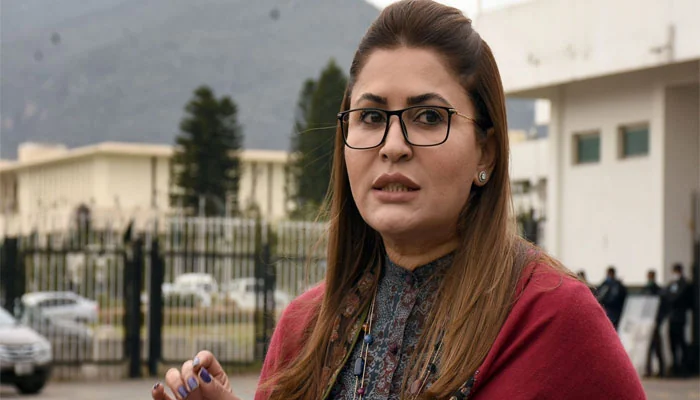
Shazia Marri has strongly defended the opposition’s right to express dissent, saying democratic disagreement cannot be treated as a crime. The Pakistan Peoples Party (PPP) leader maintained that Chairman Bilawal Bhutto Zardari is seeking constitutional supremacy, parliamentary representation and respect for democratic institutions rather than political concessions for his party.
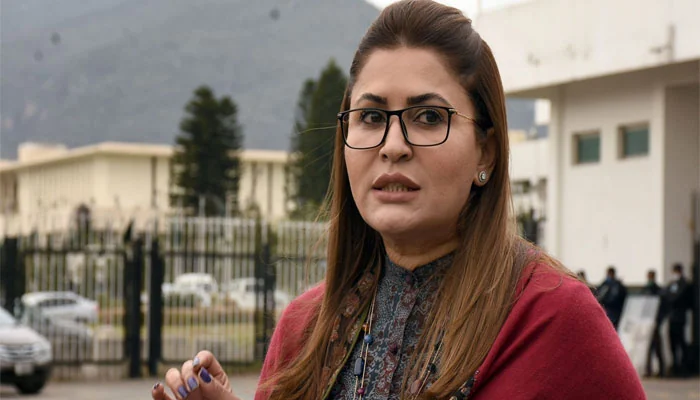
In a statement issued on Wednesday, November 18, Marri criticised the government’s approach towards opposition voices and questioned the manner in which the 27th Constitutional Amendment was approved. She also defended the PPP’s position on provincial autonomy and rejected suggestions that her party supported dividing provinces through political manoeuvring.
Shazia Marri Defends Democratic Right to Dissent
Shazia Marri said the right to disagree with government policies is an essential feature of democracy and must be protected regardless of political differences.
She argued that freedom of expression and political representation should not be limited to those holding government positions. According to her, opposition parties have an equally legitimate role in parliamentary proceedings and deserve opportunities to present their views.
The PPP lawmaker questioned why ministers were not ensuring the opposition’s rightful representation and voice in Parliament instead of criticising political statements made by opposition figures.
She emphasised that Bilawal Bhutto Zardari was not demanding special privileges or political favours for the PPP. Rather, his position was based on the supremacy of the Constitution and the protection of democratic principles.
PPP Rejects Unconstitutional Division of Provinces
Addressing the debate surrounding the creation of new provinces, Shazia Marri clarified that the PPP does not support dividing provinces through political arrangements or unconstitutional measures.
She maintained that any decision concerning the creation of new provinces must follow the constitutional framework and established legal procedures.
Marri also rejected the suggestion that her party had initiated discussions about dividing Sindh. She said the issue had been raised by others, while the PPP had simply expressed its position in response.
She questioned whether political representatives were now expected to remain silent even when expressing opinions on matters of constitutional and public importance.
Her remarks came amid an intensifying political debate over the future administrative structure of Pakistan and proposals concerning the creation of additional provinces.
Questions Raised Over 27th Constitutional Amendment
Shazia Marri also challenged the government’s position on the passage of the 27th Constitutional Amendment.
She called on Minister of State Talal Chaudhry to explain why the amendment was approved on the strength of numerical majority rather than broader political consensus.
The PPP leader questioned the government’s approach to parliamentary decision-making, arguing that democratic legislation should reflect meaningful parliamentary engagement.
She clarified that her party had not described the political system as having failed, nor had it called for a political reset in the manner attributed to it.
Instead, she said, the PPP had raised questions about constitutional principles, democratic representation and the protection of parliamentary institutions.
The controversy has also drawn attention to the relationship between political consensus, parliamentary authority and the role of opposition parties in constitutional legislation.
Sindh Assembly’s Position on Provincial Division
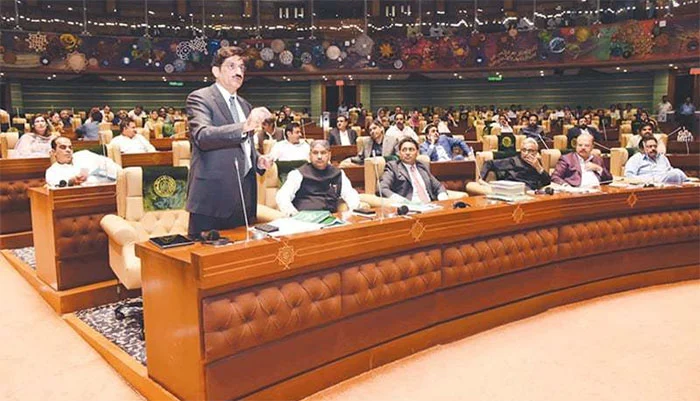
Defending her party’s stance on Sindh, Marri said the provincial assembly had repeatedly rejected proposals concerning the division of the province through constitutional resolutions.
She argued that the position adopted by the Sindh Assembly represented the views expressed by its elected representatives and should be respected in discussions about provincial boundaries.
The constitutional procedure for changing provincial boundaries is set out in Article 239(4), which requires approval by at least two-thirds of the total membership of the affected provincial assembly before the relevant constitutional amendment can be presented to the president for assent.
The Sindh Assembly has formally reaffirmed its opposition to dividing the province and changing its territorial boundaries.
Marri said Bilawal Bhutto Zardari had also highlighted how the weakening of democratic institutions had contributed to the country’s current political situation.
Sindh’s Financial Contribution to Federation
The PPP lawmaker also raised the issue of financial relations between Sindh and the federal government.
She claimed that Sindh provides approximately Rs585 billion in additional financial support to the federation, yet the federal government continues to question the provincial administration’s performance.
Marri argued that provincial contributions and constitutional financial entitlements should be considered when evaluating the relationship between the federation and its constituent units.
She maintained that the federal government should not overlook provincial rights while raising questions about governance and administrative performance.
Her remarks also reflected the PPP’s broader emphasis on provincial autonomy and the constitutional arrangements governing the distribution of financial resources between the federation and provinces.
Call for Constitutional Supremacy
Concluding her statement, Shazia Marri stressed that the Constitution must be respected consistently rather than invoked selectively according to political convenience.
She argued that constitutional principles cannot be accepted when they serve political interests and ignored when they become inconvenient.
The PPP leader reiterated that democratic governance requires respect for dissent, parliamentary representation, provincial autonomy and the freedom of elected representatives to express their views.
Her statement adds to the growing political debate over constitutional amendments, provincial autonomy and the relationship between the federal government and opposition parties.
At the centre of her argument was a clear message: disagreement is an essential democratic right, and political differences should be addressed through constitutional institutions and parliamentary dialogue rather than restrictions on political expression.See More on Pulse Pakistan