Table of Contents
Blue Passports: Committee Seeks Details of Parliamentarians and Bureaucrats
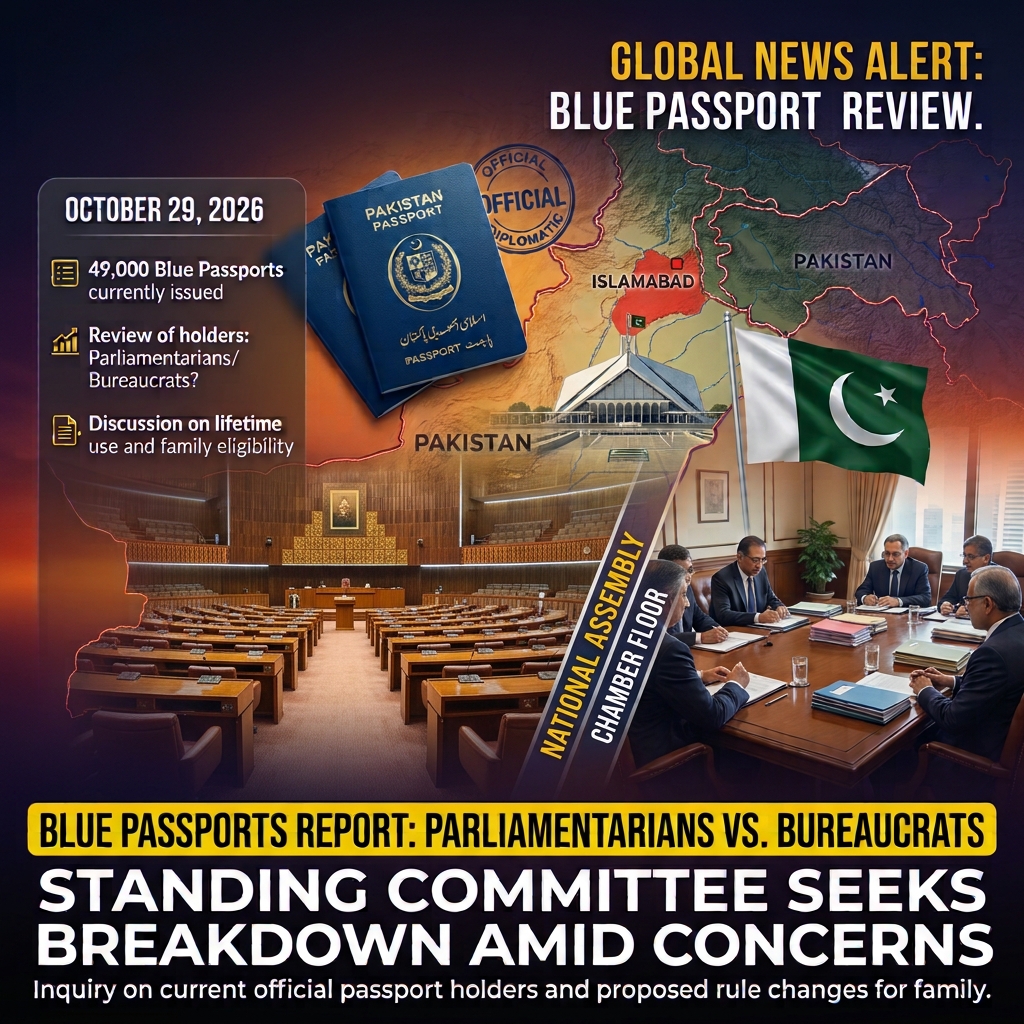
Blue Passports have come under renewed scrutiny in Pakistan as the National Assembly’s Standing Committee on Interior seeks a detailed breakdown of the 49,000 passports currently in circulation, including the number issued to parliamentarians and government officials.
The move comes amid an ongoing debate over eligibility for these official travel documents, efforts to secure visa-free arrangements with other countries, and a Senate proposal to extend blue passport privileges to retired lawmakers and their children.
Committee Seeks Blue Passport Breakdown
The National Assembly’s Standing Committee on Interior has asked the relevant authorities to explain how the 49,000 blue passports are distributed among parliamentarians, bureaucrats and other eligible categories.
The request seeks greater clarity about who holds these documents and the rules governing their issuance and continued use.
During the committee meeting, the Director General of Passports explained that the number of blue passports had been reduced from 75,000 to 49,000. However, the distribution of the remaining passports among different categories of holders was not specified in the supplied report.
The requested breakdown is expected to help lawmakers assess the existing arrangements and examine whether the current eligibility criteria require further clarification.
Why the Number of Passports Was Reduced
According to the Director General of Passports, reducing the number of blue passports was considered necessary in the context of efforts to secure visa-free travel arrangements with various countries.
The official indicated that the authorities had already brought the total down from 75,000 to 49,000.
The discussion also highlighted questions about how long elected representatives should be allowed to retain these documents. The DG Passports said that allowing members of the National Assembly to keep their blue passports for the duration of their time in office would mean continuing under the applicable rules.
Minister of State for Interior Talal Chaudhry also addressed the issue, asking for an opportunity to develop a solution concerning blue passports.
The matter involves balancing official travel requirements, eligibility rules and the government’s stated objective of facilitating international travel arrangements.

Senate Bill Proposes Lifetime Privileges
The debate has gained additional significance following the Senate’s unanimous passage of a bill seeking to grant lifetime blue passport privileges to senators.
Senator Abdul Qadir introduced the Passport Act Amendment Bill, which proposed allowing retired parliamentarians to retain and use their blue passports after leaving office.
Under the proposal described in the report, former members of the National Assembly or Senate who had taken the oath as lawmakers would qualify, regardless of whether they had completed their full parliamentary terms.
The bill also proposed extending blue passport eligibility to the children of members of parliament.
The proposal has brought the scope of official travel privileges for former lawmakers into focus, particularly as authorities review the overall number of passports in circulation.
The reported passage of the bill by the Senate does not, by itself, establish that the proposed provisions have become law. Its subsequent legislative status and implementation would need to be confirmed.
Debate Over Eligibility and Equal Treatment
The proposed extension of blue passport privileges has also prompted questions about which public officeholders should retain access to the facility after retirement.
During the Senate debate, Senator Nasir Butt called for the cancellation of blue passports issued to retired officials, secretaries and judges.
Senator Abdul Qadir, meanwhile, questioned why the children of parliamentarians should not receive the same facility if the children of Grade 22 government officers were eligible.
The exchange reflects differing views over whether blue passports should be linked to current official responsibilities, extended to former officeholders or made available to eligible family members.
A clear distinction remains necessary between proposals debated by lawmakers and the rules currently in force. The precise eligibility conditions and any approved changes will depend on the applicable legislation and official regulations.
What Happens Next
The National Assembly committee’s request for a detailed breakdown places the distribution of blue passports at the centre of the latest parliamentary discussion.
Authorities are being asked to clarify how many documents are held by parliamentarians and how many by bureaucrats, while the government has indicated that it is considering a way forward.
The figures could help inform the debate over eligibility, retention after retirement and proposed privileges for family members. However, the supplied report does not provide the requested category-wise numbers or confirm any final decision on changing the rules.
For now, the central questions remain how the existing 49,000 blue passports are distributed, which categories qualify to retain them, and whether the proposed lifetime privileges will become part of the country’s applicable passport framework.See More on Pulse Pakistan