Table of Contents
Imaan Mazari Sentencing: Major Court Verdict Sparks Legal Debate
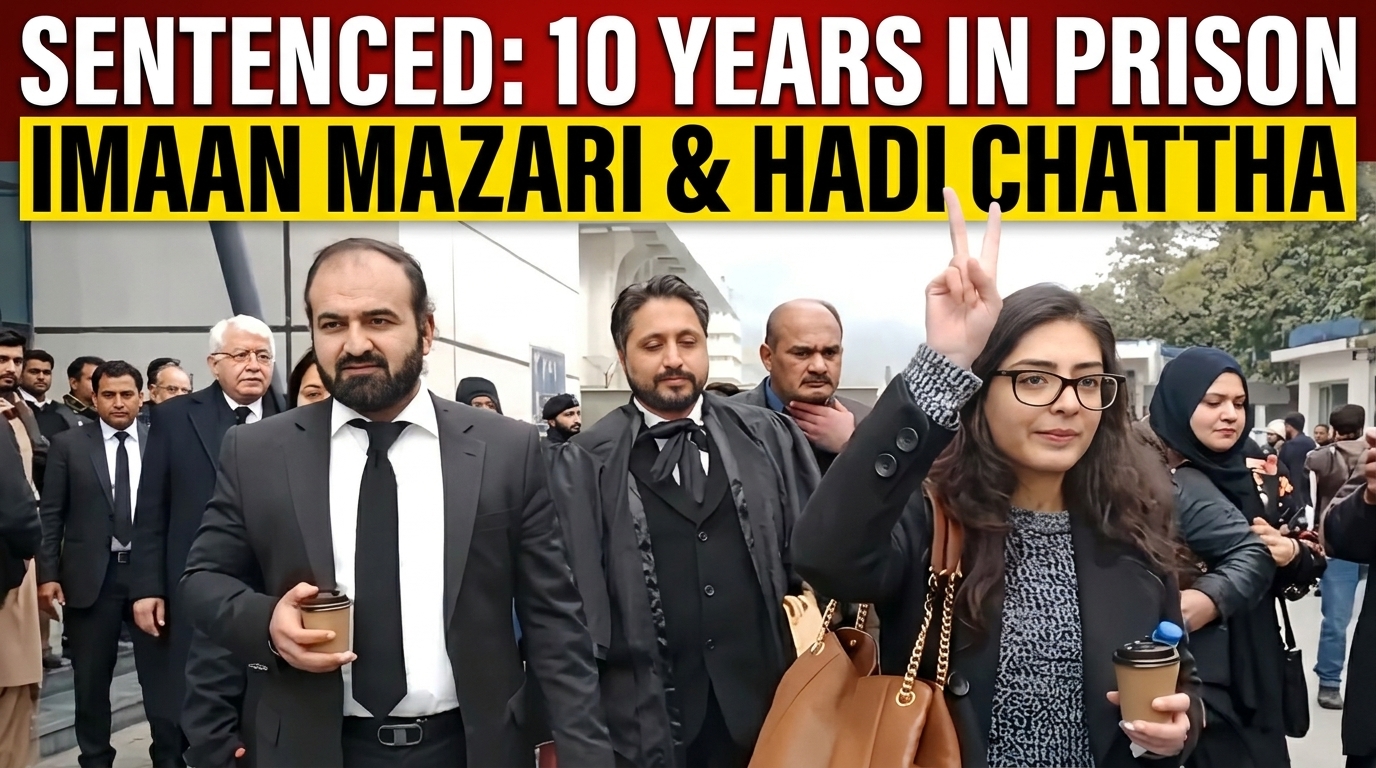
Imaan Mazari Sentencing has become a significant legal development in Pakistan after a Rawalpindi anti-terrorism court sentenced human rights lawyer Imaan Mazari and Hadi Ali Chattha to 10 years in prison each in a case involving the removal of security barriers and alleged interference with official duties. The judgment was announced at Adiala Jail, bringing an important stage of the criminal proceedings to a close.

Imaan Mazari Sentencing: Court Announces Verdict
Anti-Terrorism Court Judge Tahir Abbas Supra delivered the judgment during proceedings held at Adiala Jail in Rawalpindi.
According to Dunya News, the court convicted both defendants in connection with allegations involving security barriers and obstruction of official functions.
The verdict represents a major development in proceedings that originated from an incident reported in October 2024.
The available report confirms the sentences but does not provide the complete written judgment or detailed judicial reasoning.
Prison Terms and Financial Penalties
The court imposed prison sentences of 10 years each on Imaan Mazari and Hadi Ali Chattha.
Both defendants were sentenced under three separate legal provisions, and financial penalties were also imposed.
However, the report does not identify the precise statutory sections, specify the amounts of the fines, or explain whether the individual sentences will run concurrently.
Those details are important for understanding the full legal effect of the judgment and should be confirmed through the written court order.
Charges and Prosecution Evidence
The criminal proceedings concerned allegations that security barriers had been removed and government officials had been obstructed while performing their duties.
The prosecution presented seven witnesses before the anti-terrorism court.
Their testimony formed part of the evidentiary record considered during the proceedings.
The court had also appointed state counsel in the case. According to the reported account, state counsel Atif Mahmood conducted cross-examination of prosecution witnesses.
Cross-examination is a central component of criminal trials because it allows witness statements and the evidence supporting allegations to be challenged.
The published summary does not provide a detailed account of the testimony or the court’s assessment of individual witnesses.
Timeline of the Criminal Proceedings
The case against Imaan Mazari and Hadi Ali Chattha was registered on October 25, 2024.
The proceedings subsequently moved through the criminal justice system before reaching the stage of formal indictment.
Both defendants were indicted on October 7, according to the source report.
Following the indictment, the prosecution presented its witnesses, and cross-examination was conducted as part of the trial.
The court eventually announced its decision at Adiala Jail, imposing custodial sentences and fines on both defendants.
The available information does not establish every intervening hearing date or procedural development.
Legal Significance of the Verdict
The Imaan Mazari Sentencing has attracted attention because the proceedings involved a human rights lawyer and were heard by an anti-terrorism court.
The case also raises broader legal questions about how allegations involving obstruction of public officials are prosecuted and assessed under applicable criminal laws.
Nevertheless, the specific legal findings must be distinguished from wider commentary about the defendants or Pakistan’s judicial system.
A complete assessment requires examination of the written judgment, the statutory provisions applied, and the evidence accepted by the court.
The reported verdict establishes the trial court’s decision, but it should not be presented as a final determination of any possible appellate proceedings.
What Happens After the Judgment?
Following the Imaan Mazari Sentencing, attention may turn to whether either convicted defendant challenges the ruling before a higher court.
Pakistani criminal procedure provides mechanisms for challenging convictions, subject to the applicable laws and procedural requirements.
However, the source report does not confirm whether an appeal has been filed or whether either defendant’s legal representatives have issued a response.
For now, the confirmed development is that the Rawalpindi anti-terrorism court has handed both Imaan Mazari and Hadi Ali Chattha 10-year prison sentences and imposed fines.
Further reporting should focus on the written judgment, the exact legal provisions involved, and any officially confirmed appellate developments.See More on Pulse Paksitan