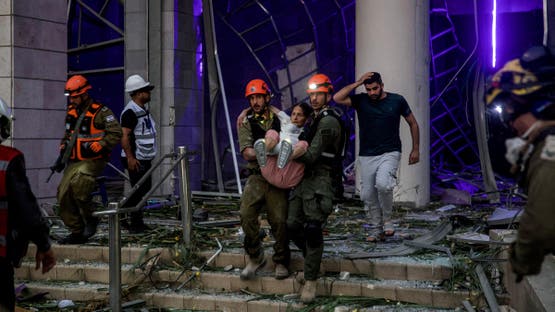
Israel’s emergency medical service, Magen David Adom (MDA), confirmed on Monday that the death toll from Iran’s most recent missile attacks has risen to five, with 87 others injured. This brings the total number of fatalities in Israel from recent Iranian strikes to 20.
According to MDA’s statement, four people — two men and two women, all approximately 70 years old — were killed in separate missile strikes across central Israel. “So far, MDA teams have evacuated 87 casualties to hospitals,” the statement said.
Iran Refuses Ceasefire Talks Under Fire
Iran has communicated to mediators Qatar and Oman that it is not willing to engage in ceasefire negotiations while under Israeli assault, a source with knowledge of the diplomatic exchanges
“The Iranians informed Qatari and Omani mediators that they will only pursue serious negotiations once Iran has completed its response to Israeli pre-emptive strikes,” the official stated, speaking on condition of anonymity due to the sensitivity of the situation.
The source added, “Iran made it clear that it will not negotiate while under attack.”
New Wave of Iranian Missile Strikes Hits Israel
In a fresh escalation, Iranian forces launched another massive barrage of nearly 100 missiles targeting Israeli cities early Monday morning.
The attack hit multiple locations, including Tel Aviv and Haifa. Several missiles struck buildings in Tel Aviv, while a fire broke out at the Haifa power plant following the assault.
Israeli media reported widespread power outages in central parts of the occupied territories as a result of the missile attack on Haifa.
Iran’s Revolutionary Guards stated that the recent offensive utilized a new strategy designed to confuse and disable Israel’s multi-layered air defense system — forcing the Israeli interceptors to mistakenly target each other.
Trump Reportedly Blocked Israeli Plan to Target Iran’s Supreme Leader
In a significant revelation, former U.S. President Donald Trump reportedly blocked an Israeli plan to assassinate Iran’s Supreme Leader, Ayatollah Ali Khamenei, in recent days, Pulse Pakistan has learned through U.S. officials.
“Have the Iranians killed an American yet? No. Until they do we’re not even talking about going after the political leadership,” said a senior U.S. administration official, speaking anonymously.
U.S. officials revealed that high-level communications have been ongoing between Washington and Tel Aviv following Israel’s large-scale military strike on Iran, aimed at halting its nuclear advancements.
According to the officials, Israel claimed it had a clear opportunity to assassinate Iran’s Supreme Leader, Ayatollah Ali Khamenei, but former U.S. President Donald Trump intervened and vetoed the plan.
Trump Claims Iran-Israel Peace ‘Soon’ Despite Ongoing Conflict
In a surprising statement posted on social media Sunday, former U.S. President Donald Trump claimed that Iran and Israel would “soon” reach a peace agreement, despite the ongoing deadly exchanges between the two nations.
“Iran and Israel should make a deal, and will make a deal,” Trump wrote. “We will have PEACE, soon.”
Trump suggested that undisclosed meetings were taking place, though he provided no details or evidence to support the claim. His optimism sharply contrasted with the statement by Israeli Prime Minister Benjamin Netanyahu, who vowed to intensify military operations against Iran.
Trump Warns Iran of Severe Retaliation if U.S. is Targeted
In a separate post on Friday night, Trump clarified that the United States had no involvement in Israel’s recent strike on Iran. However, he warned Tehran against any retaliatory action.
“The US had nothing to do with the attack on Iran tonight,” Trump said. “If we are attacked in any way, shape or form by Iran, the full strength and might of the US Armed Forces will come down on you at levels never seen before.”
Iranian Retaliation Leaves 10 Dead, Over 200 Injured
Israeli authorities reported that at least ten people were killed, more than 200 injured, and 35 others are still missing following Iran’s massive retaliatory strike over the weekend.
The strikes, targeting multiple cities including Tel Aviv and Haifa, were part of Iran’s response to previous Israeli military operations. Several military and strategic facilities were hit, causing heavy damage and widespread panic.
Emergency response teams continue rescue efforts as hospitals struggle to manage the high number of casualties.
Iran Launches New Missile Barrage as Conflict Escalates
The deadly conflict between Iran and Israel entered its third consecutive day as both countries launched fresh strikes on each other’s territories.
Late Saturday night, Iran unleashed another barrage of missiles on Israeli cities in a continued show of retaliation. The ongoing violence has raised serious concerns about the potential for a broader regional war.
In a continued wave of retaliatory strikes, Iran launched a large-scale missile attack targeting the occupied Palestinian territories. Sirens were heard in northern areas following the launch, as powerful explosions reportedly rocked the city of Haifa due to the impact of Iran’s hypersonic and ballistic missiles.
The Israeli military confirmed that the missiles struck northern regions of the country. Iran’s Islamic Revolutionary Guard Corps (IRGC) claimed responsibility for the attack, stating that cities such as Haifa and Tel Aviv were specifically targeted using Kheibar, Badr, and Emad missiles.
Israel Strikes Underground Missile Facility in Iran
In response, the Israeli military carried out strikes on what it described as a key underground missile site in Khorramabad, western Iran. Military spokesperson Brigadier General Effie Defrin stated that the facility housed surface-to-surface and cruise missiles and had previously appeared in Iranian state media footage.
“This is an important site that was even featured in a propaganda video by the Iranian regime in the past,” he said. “It was struck, and senior officials associated with it have also been eliminated. Dozens of other such sites have also been destroyed.”
The facility reportedly contained storage tunnels and multiple launch shafts, according to the Israeli military. Iranian media also confirmed strikes in Lorestan province, where Khorramabad is located.
Iran Activates Air Defences in Seven Provinces
Iranian media reported that air defences were activated across Tehran and six other provinces Saturday night in response to Israel’s air campaign. The areas included Hormozgan in the south, Kermanshah and Lorestan in the west, Qom in central Iran, East Azerbaijan in the northwest, and Khuzestan in the southwest.
Reports described the defence systems engaging “hostile targets.” Images circulated showing apparent destruction of two Israeli aircraft, although those claims remain unverified.
Mutual Strikes Intensify as Conflict Deepens
Iran and Israel exchanged heavy missile and airstrikes early Saturday after Israel initiated its largest air offensive to date against Iran.
Senior Iranian military officials indicated that the confrontation is far from over. “This confrontation will not end with last night’s limited actions and Iran’s strikes will continue,” one unnamed official warned. “This action will be very painful and regrettable for the aggressors.”
Air raid sirens echoed through Tel Aviv and Jerusalem as missile barrages lit up the skies. Residents rushed into shelters, and Israeli defence systems were activated in response.
According to updated figures, the toll from the strikes has risen to two dead and nearly 40 injured.
U.S.-Iran Nuclear Talks Cancelled Amid Escalating Conflict
A planned round of nuclear negotiations between the United States and Iran, scheduled for Sunday in Muscat, Oman, has been cancelled, Omani Foreign Minister Badr Albusaidi announced on Saturday.
The cancellation came a day after Israel launched a large-scale air offensive targeting Iranian commanders, scientists, and nuclear facilities, claiming it aimed to halt Iran’s progress toward building an atomic weapon.
A senior official from the U.S. administration confirmed the cancellation but emphasized that Washington remains committed to diplomatic talks and hopes Iran will return to the table soon.
Israel Issues Warning to Iran After Missile Strikes
Despite the Israeli offensive, Iranian missile strikes continued to hit residential areas in Israel. In response, Israel’s Defence Minister warned that the leadership in Tehran had crossed a red line.
“If Supreme Leader Ayatollah Ali Khamenei continues to fire missiles at the Israeli home front, Tehran will burn,” he declared.
Israeli Military Announces New Airstrikes on Tehran
Israeli Chief of Staff Eyal Zamir and Air Force Commander Tomer Bar announced on Saturday that the Israeli military is preparing for new airstrikes targeting Tehran. “The path to Iran is paved,” they stated during a security briefing, indicating that operational plans were underway to strike targets in the Iranian capital.
Iran Warns Western Powers Over Involvement
Iran issued a stern warning to the United States, United Kingdom, and France, threatening retaliation if they assist in intercepting Iranian strikes on Israel. According to an official statement quoted by local media, Iran declared that any country helping to block its operations would face attacks on its regional military bases and naval assets.
“Any country that participates in repelling Iranian attacks on Israel will be subject to the targeting of all regional bases of the complicit government, including military bases in the Persian Gulf countries and ships and naval vessels in the Persian Gulf and the Red Sea,” the statement said.
Iranian Generals Killed in Israeli Strikes
Iranian media reported the deaths of two senior military figures in Israeli airstrikes. The victims, General Gholamreza Mehrabi and General Mehdi Rabbani, were deputy commanders within Iran’s armed forces general staff. Their deaths contribute to a rising toll of at least 78 Iranians killed in recent Israeli attacks.
U.S. Military Intercepts Iranian Missiles Bound for Israel
Two U.S. officials confirmed that American forces helped intercept Iranian missiles aimed at Israel. They did not disclose whether fighter jets, naval assets, or missile systems were involved in the defense operation.
Simultaneously, explosions were reported in Iran, including near the Natanz uranium enrichment facility. Israel declared a state of emergency in anticipation of Iranian retaliation involving missiles and drones.
Missile Barrages Escalate on Both Sides
Iran launched new waves of missile attacks on Saturday, targeting Tel Aviv before dawn. Explosions were also reported in Tehran, with at least two projectiles hitting Mehrabad airport, a site that hosts an air force base.
Israel’s military said it intercepted some of the incoming missiles and continued its campaign under “Operation Rising Lion”—a multi-day offensive aimed at eliminating what it called an existential threat.
According to Israeli authorities, the operation has already hit nuclear facilities, missile development sites, and senior commanders. Officials claimed Iran has enough enriched uranium to build 15 nuclear bombs “within days.”
Casualties in Israel from Friday night’s barrage included 34 injured, mostly with minor wounds, and at least one confirmed death.
Israel Expands Operations Against Iran With Covert and Military Strikes
Alongside its extensive aerial assault, Israel’s intelligence agency, Mossad, carried out covert sabotage operations within Iran, reportedly targeting strategic missile installations and air defense networks, according to senior Israeli officials.
As tensions escalated, Tel Aviv’s Ben Gurion Airport was closed indefinitely, and Israeli air defense units were placed on high alert in anticipation of further Iranian retaliation.
Israel Prepares for Retaliation
Israel’s Defence Minister warned of an imminent missile and drone attack from Iran following what he termed a “pre-emptive” Israeli strike. He cautioned that the Israeli civilian population was likely to face immediate danger.
Iran Downs Israeli Drones
Iranian forces reportedly intercepted and shot down multiple Israeli reconnaissance drones in the Salmas region, accusing them of violating Iranian airspace on espionage missions.
Iran Rejects Nuclear Dialogue
Iran declared that continued negotiations with the U.S. over its nuclear program were now “meaningless” in light of Israel’s military assault. Iranian officials accused the United States of tacitly supporting the attacks and undermining diplomatic efforts.
“You cannot claim to negotiate while your ally bombs Iranian territory,” said Iran’s foreign ministry spokesperson.
Massive Retaliation from Iran
In response to the strikes on its territory and military leadership, Iran launched over 100 drones aimed at Israel. This came as part of its larger counter-offensive targeting Israeli cities and military sites.
Israeli Forces Target Tabriz
Renewed Israeli attacks hit the northwestern Iranian city of Tabriz, with reports indicating that the Shahid Fakuri military airbase was struck. Thick plumes of smoke were seen rising near the city’s airport as the assault unfolded.
Pakistani Parliament Condemns Israeli Action
The National Assembly of Pakistan unanimously passed a resolution condemning Israel’s assault on Iran. The resolution expressed solidarity with the Iranian government and people and urged international bodies like the UN Security Council and OIC to intervene.
“An attack on Iran’s sovereignty and security is unacceptable,” the resolution stated, reaffirming Iran’s right to defend its territorial integrity.
Prime Minister Sharif Reacts
Prime Minister Shehbaz Sharif issued a strong condemnation of the Israeli strikes, calling them “unprovoked” and “deeply alarming.” He warned that such actions could destabilize the entire region and conveyed condolences to the Iranian people for their losses.
U.S. Distances Itself from Israeli Offensive
U.S. Secretary of State emphasized that the United States had no involvement in the Israeli strikes and reiterated that its primary concern was the safety of American forces in the region. He warned Iran not to target U.S. personnel or facilities.
Meanwhile, President Trump convened a National Security Council meeting to assess the rapidly evolving crisis.
Israeli Military Chief on High Alert
Israeli Chief of Staff announced the mobilization of tens of thousands of soldiers and described the ongoing operation as a historic campaign to neutralize what he called an “existential threat.”
Economic Impact
The conflict’s fallout extended to global markets, where crude oil prices surged amid fears of broader regional instability. Investors moved toward safe-haven assets, reflecting heightened global uncertainty.
Iranian Military Losses Mount
Israeli airstrikes reportedly claimed the lives of several high-ranking Iranian military and nuclear officials, including the commander-in-chief of the Islamic Revolutionary Guard Corps. Reports also suggest that other senior figures from Iran’s armed forces were killed in the attacks on Tehran and multiple cities.
The situation remains fluid, with both nations bracing for continued conflict.
Top Iranian Commanders Killed in Israeli Strikes as Tensions Escalate
Iran has confirmed the deaths of two of its top military officials in overnight Israeli airstrikes on Tehran. According to local sources, Major General Hossein Salami, chief commander of the Islamic Revolutionary Guard Corps (IRGC), was killed while present at a military facility targeted in the capital.
Salami, a key architect of Iran’s military strategy and a longtime figure in the country’s security structure, played a central role in Iran’s regional influence operations.
Chief of Staff Also Killed
In addition, Major General Mohammad Bagheri, the Chief of Staff of Iran’s Armed Forces, was confirmed killed in the same series of attacks. Iranian media reported that Bagheri was martyred in air raids conducted by Israeli jets.
New Appointment Amid Crisis
In response to the high-level assassinations, Ameer Habibullah has been appointed as the new Chief of Staff of the Armed Forces, signaling continuity of command amid growing instability.
Khamenei Vows Retaliation
Responding to the attacks, Ayatollah Seyyed Ali Khamenei issued a strongly worded message, vowing a “harsh and painful” response against Israel. He condemned the killing of senior military officials and civilians in what he described as a grave crime.
Khamenei accused Israel of targeting residential areas and warned that the actions would lead to bitter consequences for those responsible.
Saudi Arabia Condemns the Strikes
Saudi Arabia also reacted to the developments, condemning the Israeli airstrikes that reportedly hit Iran’s nuclear facilities, missile factories, and residential areas. Explosions were heard near the Natanz uranium enrichment facility, one of Iran’s most sensitive nuclear sites.
Reports from Tehran indicated civilian casualties, including children, and damage to infrastructure. State television described widespread destruction in residential districts and IRGC facilities.
Trump Reaffirms Support for Israel
Meanwhile, U.S. President Donald Trump reiterated that the United States had no involvement in the Israeli attacks but reaffirmed his support for Israel. He emphasized that the U.S. would stand by its ally and warned regional actors against further escalation.
The situation remains highly volatile, with Iranian leadership vowing ongoing retaliation, while international calls for restraint continue to mount.
Trump Pledges U.S. Support for Israel Amid Rising Tensions
In an interview, former U.S. President Donald Trump declared that the United States would back Israel if Iran retaliates following recent Israeli airstrikes. He emphasized that Iran must not be permitted to acquire nuclear weapons and expressed cautious optimism about the resumption of diplomatic dialogue.
“We’re hoping Iran will return to the negotiating table,” Trump said, reaffirming the U.S. position on pursuing a diplomatic path despite escalating hostilities.
Oil Prices Soar Amid Middle East Escalation
Global oil markets reacted sharply to the heightened conflict. Oil prices surged by more than 10% on Friday, reaching their highest levels in nearly five months. The spike followed Israeli strikes on Iran, stoking fears of supply disruptions in the volatile Middle East region.
- Brent crude futures rose by $6.29 (9.07%) to $75.65 per barrel, after peaking at $78.50, the highest since January 27.
- U.S. West Texas Intermediate (WTI) crude climbed $6.43 (9.45%) to $74.47, hitting an intraday high of $77.62, the most since January 21.
These price jumps marked the largest single-day gains since early 2022, when Russia’s invasion of Ukraine caused a major disruption in global energy markets.
Analysts warn that continued escalation between Iran and Israel could lead to prolonged volatility in oil prices and potentially impact global energy security.