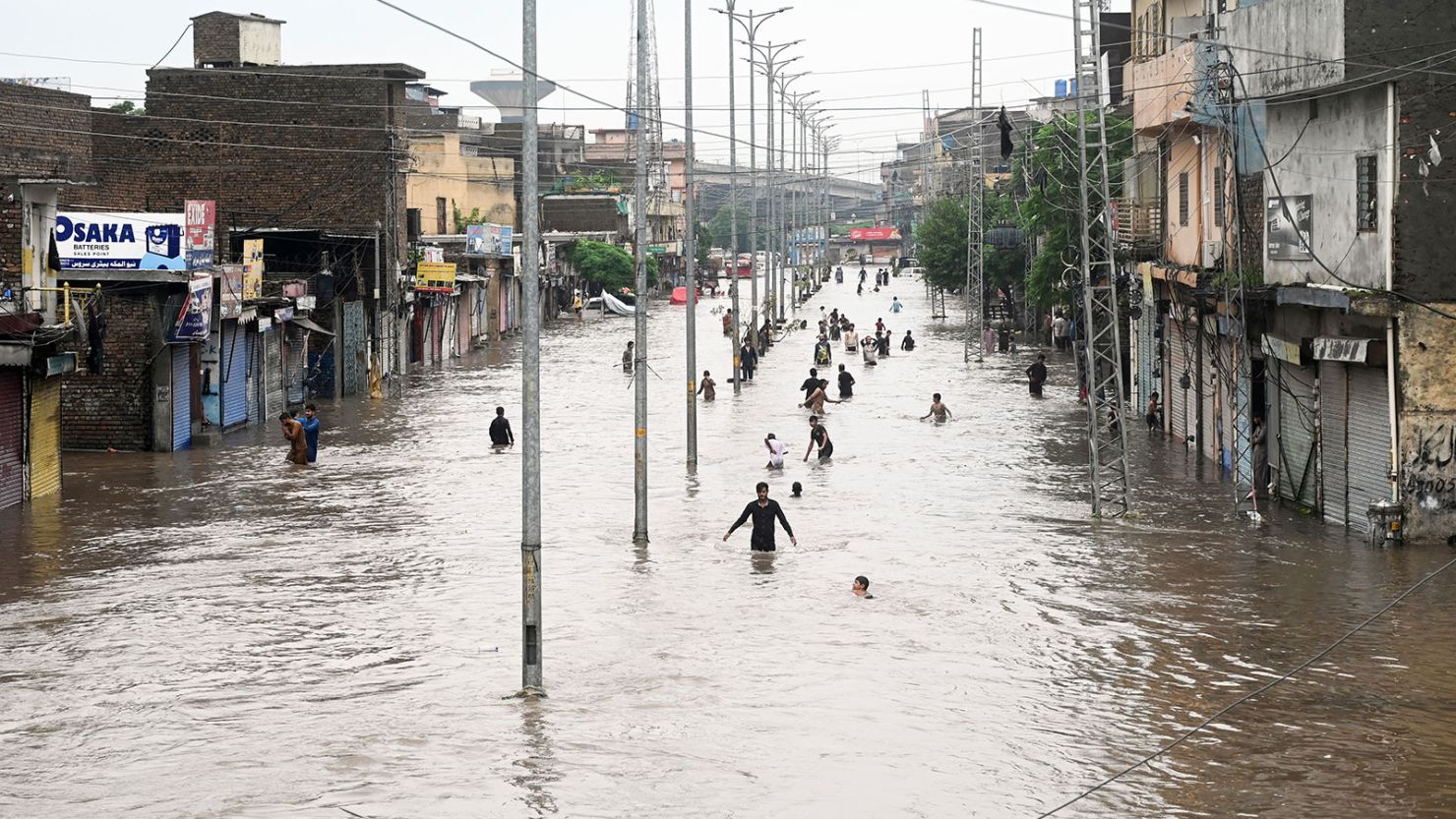
At least 57 people have died in the last two days due to devastating floods and heavy monsoon rains that began sweeping through Pakistan on Wednesday. The majority of the victims were children, with the rains causing severe damage to infrastructure and displacing thousands across the province of Punjab.
The torrential rain, which started on Wednesday, has wreaked havoc in Pakistan’s most populous province, Punjab, triggering floods in multiple cities and rural regions. The National Disaster Management Authority reported that many of the deaths were caused by building collapses, with 24 children among the casualties.
This latest disaster marks another extreme weather event in Pakistan, following a series of heatwaves and catastrophic floods in recent years. The monsoon season, which began in late June, has already led to the deaths of at least 180 people across the country, with children making up a significant portion of the victims.
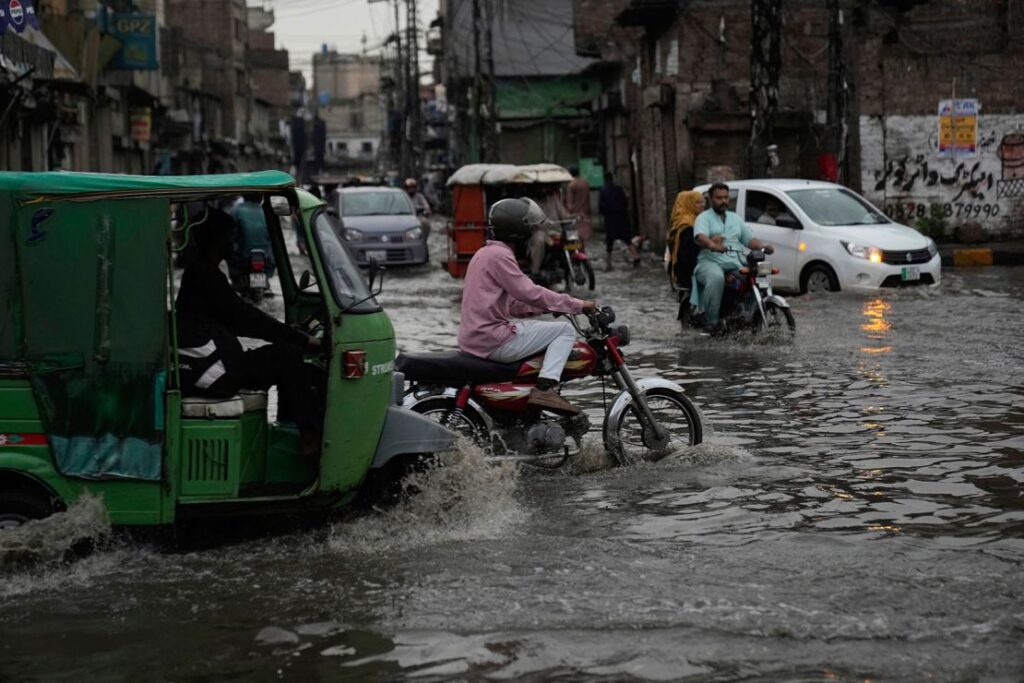
One of the hardest-hit areas is Chakwal, located 60 miles south of Islamabad. The floodwaters submerged entire villages, devastated crops, and disrupted vital infrastructure such as power lines. Local resident Malak Jamil, a small farm owner, expressed his despair, stating that the damage to his property has caused losses of more than $6,000—far beyond his annual income.
In Rawalpindi, neighboring Islamabad, the rain overwhelmed the city’s drainage system, flooding roads and homes. Power outages lasting up to 19 hours left residents without water, while an emergency public holiday was declared to address the crisis. In the village of Jabbar Darvesh, Asim Ali described how his home was partially destroyed by the floods. “We’ve never seen anything like this before,” Ali said, adding that his house was now uninhabitable.
The Pakistani military has deployed helicopters to assist in evacuating stranded citizens, with more than 100 people rescued from flooded areas. The authorities continue to issue evacuation warnings for low-lying regions.
As the rain subsides, the Pakistan Meteorological Department predicts a brief respite, but experts warn that the monsoon season, lasting until September, could bring further challenges. The floods have already caused significant disruption, and residents have been advised to avoid downed power lines and damaged electrical appliances, as electrocution remains a risk.
The United Nations Children’s Fund (UNICEF) has raised alarms about the severe risks children face, from drowning to waterborne diseases. Scientists have pointed to climate change as a major factor in intensifying these extreme weather events, with warming temperatures contributing to heavier rainfall during the monsoon months.
The floods of 2022, which were some of the worst in Pakistan’s history, killed over 1,700 people, displaced millions, and left the country struggling to recover for years. This year, experts also note the increasing threat posed by the accelerated melting of glaciers in northern Pakistan, which exacerbates flood risks.