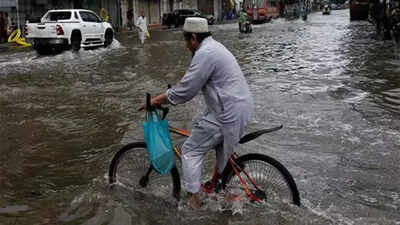
Torrential monsoon rains have wreaked havoc across Pakistan’s Punjab province, claiming at least 30 lives in the past 24 hours and pushing the nationwide death toll to 170 since June 26, 2025. The Provincial Disaster Management Authority (PDMA) reported that Chakwal, located 300 km from Lahore, was the hardest hit, receiving a record-breaking 423 mm of rain, triggering flash floods and urban inundation.
The relentless downpour, which began Wednesday, has caused widespread destruction, with 300 injuries and over 125 houses damaged in cities including Lahore, Faisalabad, Okara, Sahiwal, Pakpattan, and Chakwal. Most fatalities resulted from collapsing structures, electrocutions, and drowning, exacerbated by poor infrastructure and aging buildings. Chief Minister Maryam Nawaz declared a “rain emergency” in multiple districts, including Rawalpindi, mobilizing district administrations, police, and Rescue 1122 to protect residents. Hospitals are on high alert, with field units prepared for emergencies.
Rescue operations, supported by the Pakistan Army, are underway in Chakwal and Jhelum, where 57 people have been evacuated using over 50 boats. Rawalpindi authorities declared a public holiday on July 17 and issued evacuation warnings for low-lying areas near Nullah Leh, where water levels reached 15–16 feet, nearing the critical 20-foot threshold. The Pakistan Meteorological Department (PMD) forecasts heavy rainfall and thunderstorms continuing through July 18, raising concerns about further flooding in rivers and streams across Punjab, Khyber Pakhtunkhwa, and Balochistan.
The PDMA has urged residents to avoid flood-prone areas and prepare emergency kits. Punjab’s vulnerability to monsoon flooding, compounded by climate change, echoes the catastrophic 2022 floods that killed 1,700 and caused $30 billion in damages. Chief Minister Nawaz emphasized proactive measures, with ongoing efforts to provide medical care and relief to affected communities.