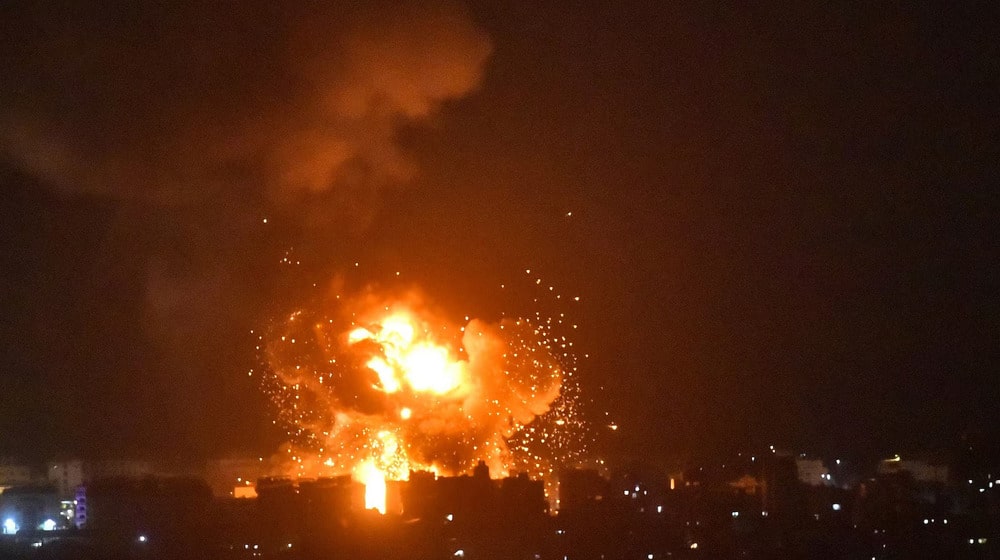
Lahore — In a stark warning, former National Security Adviser (NSA) Lt Gen (retd) Nasser Khan Janjua has cautioned that India could attempt another missile strike against Pakistan, stressing the need for constant vigilance and preparedness.
Speaking at a seminar titled “Pakistan’s Recent Diplomatic Successes, Future Prospects, and Evolving Defence Strategy” in Lahore, Janjua outlined the growing risks posed by India, noting that its internal political instability could heighten the chances of renewed aggression. “New Delhi knows that Pakistan has state-of-the-art missile technology and is fully capable of countering any malicious designs,” he stated, adding that Pakistan’s position as the only Islamic nuclear power in the world would always act as a significant deterrent to India.
Janjua further emphasized that Pakistan’s global standing had strengthened due to its recent defense advancements, while India had found itself diplomatically isolated. He also took aim at the United States, accusing it of undermining Muslim leadership in countries like Iraq, Libya, Egypt, and Syria, declaring that Pakistan now represented the “last standing Islamic nuclear power of the Muslim Ummah.”
The seminar also included comments from former Air Marshal (retd) Sajid Habib, who praised the readiness of the Pakistan Air Force (PAF), claiming that should India launch another attack, the PAF would shoot down not seven, but seventy of India’s aircraft. He highlighted the professionalism demonstrated by the air force during Operation Bunyanum Marsoos.
Meanwhile, former Rear Admiral (retd) N A Rizvi stressed that while Pakistan’s naval defense was strong, the full operationalization of the Gwadar Port was essential for Pakistan’s strategic depth. “Gwadar’s activation is vital for the country’s future security,” he asserted, adding that Pakistan could once again rise among the nations if led by wise and capable leadership.
Foreign-policy expert Muhammad Mahdi described Pakistan’s balanced relations with both China and the United States as a diplomatic success but highlighted the urgent need for capacity building within the country. He noted that foreign investment in Pakistan had yet to materialize significantly and called for strengthening institutional frameworks, particularly the Foreign Office, to handle evolving regional challenges more effectively.
Dr. Naveed Elahi took a global perspective, noting that the Tehreek-e-Taliban Pakistan (TTP) represented not just a domestic, but a global threat. He also emphasized the role of Pakistan’s youth, with 60% of the population being under the age of 30, and the importance of creating overseas employment opportunities to provide a positive outlook for the future.
Other speakers, including Major (retd) Nayyer Shehzad and analyst Salman Ghani, pointed out that while Pakistan’s military forces had performed admirably, the country’s political and economic sectors still required deep structural reforms to ensure long-term stability.
The seminar’s overarching message was clear: Pakistan’s defense, diplomatic, and economic strategies must evolve together. Speakers called on leadership to accelerate the completion of Gwadar Port, attract foreign investment, and strengthen institutions to protect the nation’s strategic interests in the years to come.