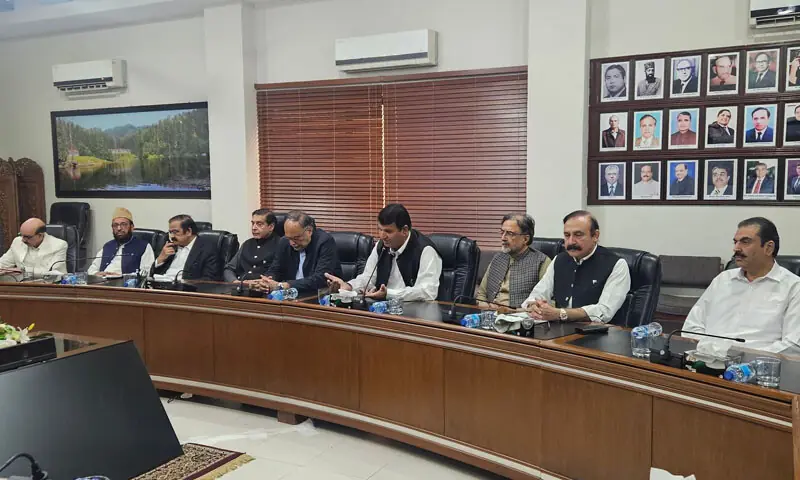
High-Level Government Delegation Seeks Peace Amid AJK Protests, Reaches Consensus on Demands
MUZAFFARABAD – As protests in Azad Jammu and Kashmir (AJK) continue to escalate, a high-level government delegation has met with the Joint Awami Action Committee (JAAC) to address their grievances. The move comes in the wake of violent demonstrations that have left at least nine people dead, including three police officers.
The government delegation, acting on the directives of Prime Minister Shehbaz Sharif, included key figures such as Senator Rana Sanaullah, federal ministers Sardar Yusuf, Tariq Fazal Chaudhry, Ahsan Iqbal, former AJK president Masood Khan, and PPP leader Qamar Zaman Kaira. The group met with JAAC representatives in Muzaffarabad on Thursday to engage in discussions aimed at resolving the unrest gripping the region.
Progress on Key Demands
Federal Minister Muqam reported that the talks had taken place in a “cordial atmosphere” and emphasized that a consensus had been reached on many issues. Minister Ahsan Iqbal, a member of the government delegation, reiterated that the primary goal was to restore peace to AJK, warning that instability could be exploited by external adversaries.
Earlier, Senator Sanaullah addressed journalists, saying, “We are here to listen to the demands of the Action Committee, as directed by the Prime Minister.” He assured that the delegation would work to address what he referred to as the “legitimate demands” of the protesters.
Prime Minister’s Involvement and Urgency for Peace
Prime Minister Shehbaz Sharif has closely monitored the situation and expressed deep concern over the violence in AJK. Following the protests, which have led to numerous casualties, including around 172 police injuries, the Prime Minister ordered a transparent investigation into the events and the provision of immediate aid to affected families. He also emphasized the importance of maintaining peace during protests, asserting that while peaceful assembly was a constitutional right, it should not disrupt public order.
“We are always ready to address the issues of our Kashmiri brothers,” the Prime Minister stated, while also stressing that negotiations were the key to resolving tensions. He directed law enforcement to exercise restraint in their dealings with protesters, signaling a shift toward dialogue rather than confrontation.
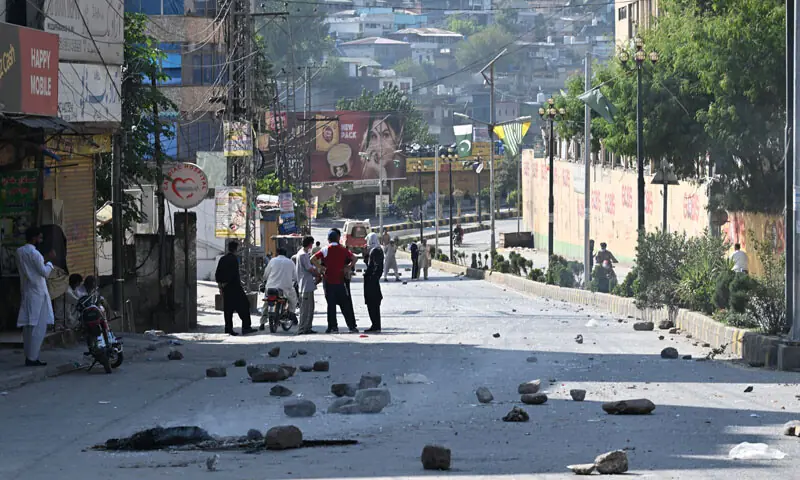
AJK Government’s Efforts to Facilitate Talks
The AJK government has already made strides in addressing some of the demands put forward by the JAAC. These include the rollback of certain privileges for the elite and changes to the reserved seats for refugees in the AJK Legislative Assembly. The demands, outlined in a 38-point charter, also call for reforms aimed at reducing the number of ministers in the region’s government.
According to the AJK Prime Minister, negotiations were progressing, with 90% of the demands already accepted. “We are committed to resolving the remaining issues through further dialogue,” he said. Federal Minister Tariq Fazal Chaudhry also reiterated that most of the JAAC’s demands had already been addressed, with only a few requiring constitutional amendments. He urged protesters to reconsider their position, arguing that continued protests would not lead to additional concessions.
Moving Forward with Dialogue
The Prime Minister has appealed to the JAAC leadership to cooperate with the government’s negotiation committee, which is tasked with resolving outstanding issues. The committee is expected to submit its recommendations to the Prime Minister’s office for a swift resolution.
While the situation remains tense, both the government and the Awami Action Committee have shown willingness to continue discussions. The committee’s leaders, including Ahsan Iqbal and Qamar Zaman Kaira, underscored the importance of constructive engagement and warned against the destabilizing influence of external elements trying to exploit the unrest.
Conclusion: A Path Toward Stability
As the federal government works with the AJK leadership to bring about a peaceful resolution, the priority remains to quell the unrest and address the concerns of the protesters. With a majority of the demands already accepted, it is hoped that ongoing negotiations will pave the way for lasting peace in Azad Jammu and Kashmir, preventing further loss of life and fostering a more stable environment in the region.