Table of Contents
Indus Waters Treaty compliance is essential for maintaining regional peace, stability and trust between Pakistan and India, Deputy Prime Minister and Foreign Minister Muhammad Ishaq Dar has said, stressing that water-sharing arrangements must remain governed by international law.
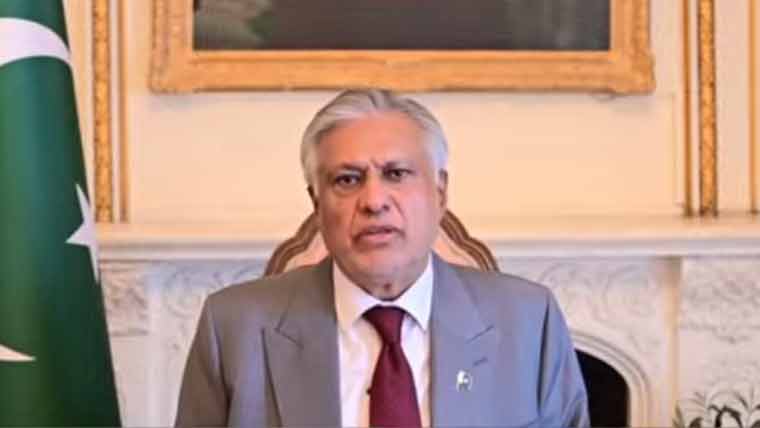
Dar made the remarks while addressing a seminar on the treaty at the Embassy of Pakistan in Washington through a virtual address. His comments come as the decades-old water-sharing framework remains a significant issue in Pakistan-India relations.
Ishaq Dar stresses treaty compliance
Ishaq Dar said the Indus Waters Treaty, signed by Pakistan and India in 1960, should be viewed as more than a conventional bilateral agreement. According to him, it provides an established legal framework for managing water resources shared by the two countries.
The World Bank, which played a central role in facilitating negotiations leading to the treaty, describes the agreement as a framework governing the use of the Indus river system. It allocates the western rivers — the Indus, Jhelum and Chenab — primarily to Pakistan, while the eastern rivers — Ravi, Beas and Sutlej — are allocated to India, subject to provisions contained in the treaty.
Dar emphasized that continued adherence to the agreement is closely linked to broader regional stability.
Treaty carries wider security significance
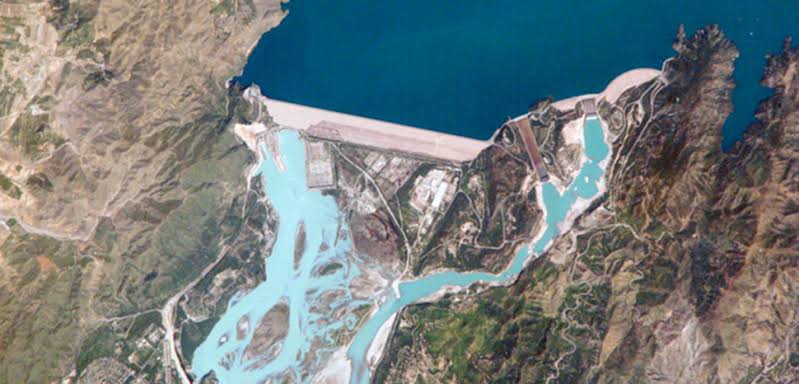
The foreign minister argued that water is directly connected to human survival, agriculture, food security and economic development. Any uncertainty surrounding access to shared water resources, therefore, can have consequences extending beyond the immediate water sector.
The Indus Waters Treaty was negotiated over several years with World Bank involvement and was signed in Karachi on September 19, 1960. The World Bank says the agreement created a durable framework for cooperation between the two countries despite repeated periods of political tension and conflict.
Dar maintained that international agreements provide states with mechanisms for addressing differences without allowing disputes to undermine wider regional peace.
Pakistan emphasizes international law
Pakistan has consistently maintained that questions involving shared water resources should be addressed through the treaty’s established mechanisms and applicable principles of international law.
The World Bank’s own description makes clear that its role under the treaty is specific and procedural. Depending on the nature of a disagreement, the treaty provides mechanisms involving the Permanent Indus Commission, a Neutral Expert or a Court of Arbitration.
Dar said Pakistan would continue using diplomatic and legal channels to protect what it considers its legitimate water rights.
His remarks also reflect Pakistan’s broader position that water should remain a means of cooperation rather than becoming a source of confrontation between the two nuclear-armed South Asian neighbours.
A critical issue for Pakistan-India relations
The treaty has assumed renewed importance amid heightened tensions between Pakistan and India. Recent Pakistani statements have repeatedly called for adherence to international obligations and warned against actions that could undermine established water arrangements.
In a separate June 2026 seminar, Dar described the treaty as a vital instrument of regional peace, stability and cooperation, while the World Bank has continued to outline its limited procedural responsibilities under the agreement.
The latest message from Islamabad is that the preservation of the treaty is not solely about water allocation. It is also about maintaining a rules-based framework for managing disputes between two neighbouring states.
For Pakistan, where the Indus Basin is central to agriculture, food production and economic activity, the issue carries substantial national importance.
Dar’s call for compliance therefore places the Indus Waters Treaty at the intersection of water security, international law and regional diplomacy, with Pakistan signaling that it intends to continue pursuing its position through diplomatic and legal avenues.See More on Pulse Paksitan