ISLAMABAD, December 8, 2025 — The International Monetary Fund’s (IMF) Executive Board is meeting today to review the approval of $1.2 billion in financing for Pakistan, following a staff-level agreement reached in October on the country’s ongoing loan programmes.
If approved, Pakistan is expected to receive approximately $1 billion under the Extended Fund Facility (EFF) and an additional $200 million through the Resilience and Sustainability Facility (RSF), which supports climate-related reforms and recovery efforts.
The IMF’s review comes after a series of consultations led by Iva Petrova, conducted in Karachi and Islamabad from September 24 to October 8, and subsequent discussions in Washington, DC. The lender has acknowledged Pakistan’s robust programme implementation while outlining key priorities: sustaining fiscal discipline, assisting households affected by recent floods, keeping inflation within the State Bank of Pakistan’s target range, restoring energy sector viability, and advancing structural reforms.
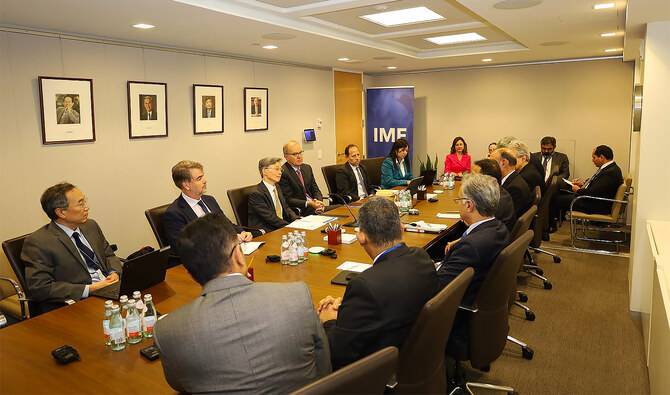
In addition, the IMF highlighted progress under the RSF-backed climate agenda, noting that Pakistan’s vulnerability to floods and climate-related disasters underscores the importance of consistent and comprehensive mitigation measures.
Ahead of the Board meeting, the IMF released its Governance and Corruption Diagnostic (GCD) report, warning that entrenched corruption and weak institutional capacity continue to impede Pakistan’s economic development. The report highlighted that corruption significantly affects the efficiency of public spending, revenue collection, and overall trust in the legal system.
“Persistent corruption remains a major challenge in Pakistan, with political and economic elites often capturing public policies and benefits for private gain,” the report stated. It added that citizens frequently face continuous unofficial payments to access basic services, while funds lost to corruption could otherwise support productive development initiatives.
Economists say the IMF’s upcoming approval could provide a vital boost to Pakistan’s economy, offering both fiscal support and confidence to investors, while reinforcing the importance of structural reforms and anti-corruption measures as part of long-term stability.