Table of Contents
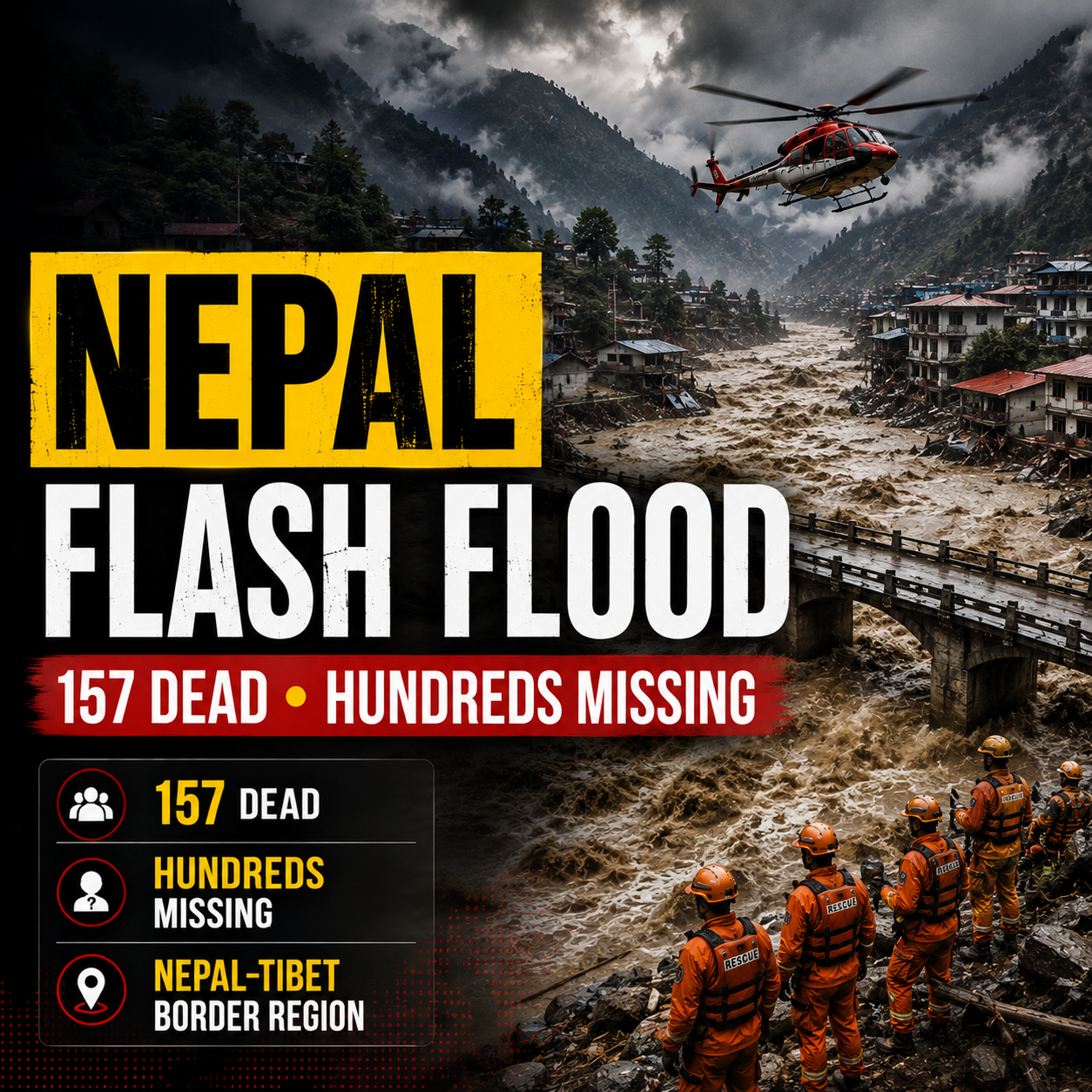
Nepal Flash Flood has caused catastrophic destruction along Nepal’s northern border with Tibet, killing at least 157 people in Nepal, while hundreds of travellers, tourists and other people remain missing as rescue teams struggle to reach remote areas.
The disaster struck the Himalayan border region on Wednesday after a sudden surge of water and mud swept through communities in Nepal’s Rasuwa district and neighbouring Tibet. Chinese authorities have separately reported deaths and missing people in Tibet.
Nepal Flash Flood Devastates Border Region
The flooding caused widespread damage to homes, roads, bridges and energy infrastructure. The affected region includes routes used by tourists and Hindu pilgrims travelling towards the sacred Mount Kailash area.
The scale of the destruction has made it difficult for authorities to establish a complete picture of casualties and missing persons. Communication links have also been disrupted in several affected locations.
Reuters reported that a major mud and rock collapse into a river may have triggered the disaster, with satellite information pointing towards a landslide or glacial collapse. The exact cause remains under investigation.
Hundreds of Tourists Reported Missing
The number of missing travellers has risen as authorities continue compiling lists from the affected region.
The latest reports cited by ABC News say Nepal’s tourism authorities have listed 484 tourists as missing, including 391 foreign nationals and 93 Nepali citizens. Among the missing are more than 100 Indians and British nationals, although figures for individual nationalities have varied between reports as authorities continue verification.
The disaster has also affected workers and local residents. South Korean authorities, for example, have reported eight nationals working at a hydropower project as missing.
CCTV Captures Scale of Disaster
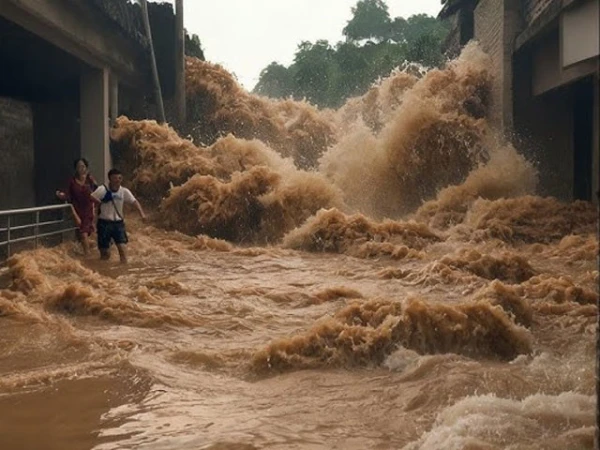
Security footage from the Chinese side of the border captured the sudden arrival of the floodwaters.
The footage showed people attempting to flee as a powerful torrent carrying mud and debris swept through the border area, damaging buildings, vehicles and other infrastructure.
Images from Nepal have similarly shown homes surrounded by mud, damaged roads and bridges and communities cut off by floodwater.
Rescue Operations Face Major Challenges
Nepal’s security forces have mobilised personnel and helicopters to search for survivors and missing people.
However, the operation has been severely hampered by destroyed roads, high river levels, damaged communications infrastructure and difficult Himalayan terrain. Helicopters have faced difficulties landing in some of the worst-hit areas until water levels fall.
Officials have warned residents living near rivers to move towards safer, elevated locations because of the continuing risk of flooding and landslides.
The disaster has also damaged Nepal’s electricity infrastructure. According to reports, around 430 megawatts of electricity production capacity has been affected.
Xi Jinping Orders Intensified Search
Chinese President Xi Jinping has directed authorities to conduct an intensive search for missing people and strengthen monitoring and early-warning systems to reduce the risk of further disasters.
Chinese emergency personnel have been deployed in the Tibet region, where the Gyirong area was also hit by a mudslide. Authorities there reported additional casualties and hundreds of people missing.
Cause of Flood Under Investigation
Experts and authorities are examining several possible causes, including an earthquake-related landslide, rock-and-ice avalanche or glacial collapse.
The International Centre for Integrated Mountain Development said preliminary hydrological observations indicated an exceptionally rapid and powerful flood wave. Satellite analysis has also pointed towards a landslide in the border region.
With rescue teams still unable to access some areas, officials fear the casualty figures could change as isolated communities are reached and missing-person lists are verified.
The latest figures therefore remain provisional, and authorities are continuing search, rescue and identification operations across the affected Himalayan region.