Table of Contents
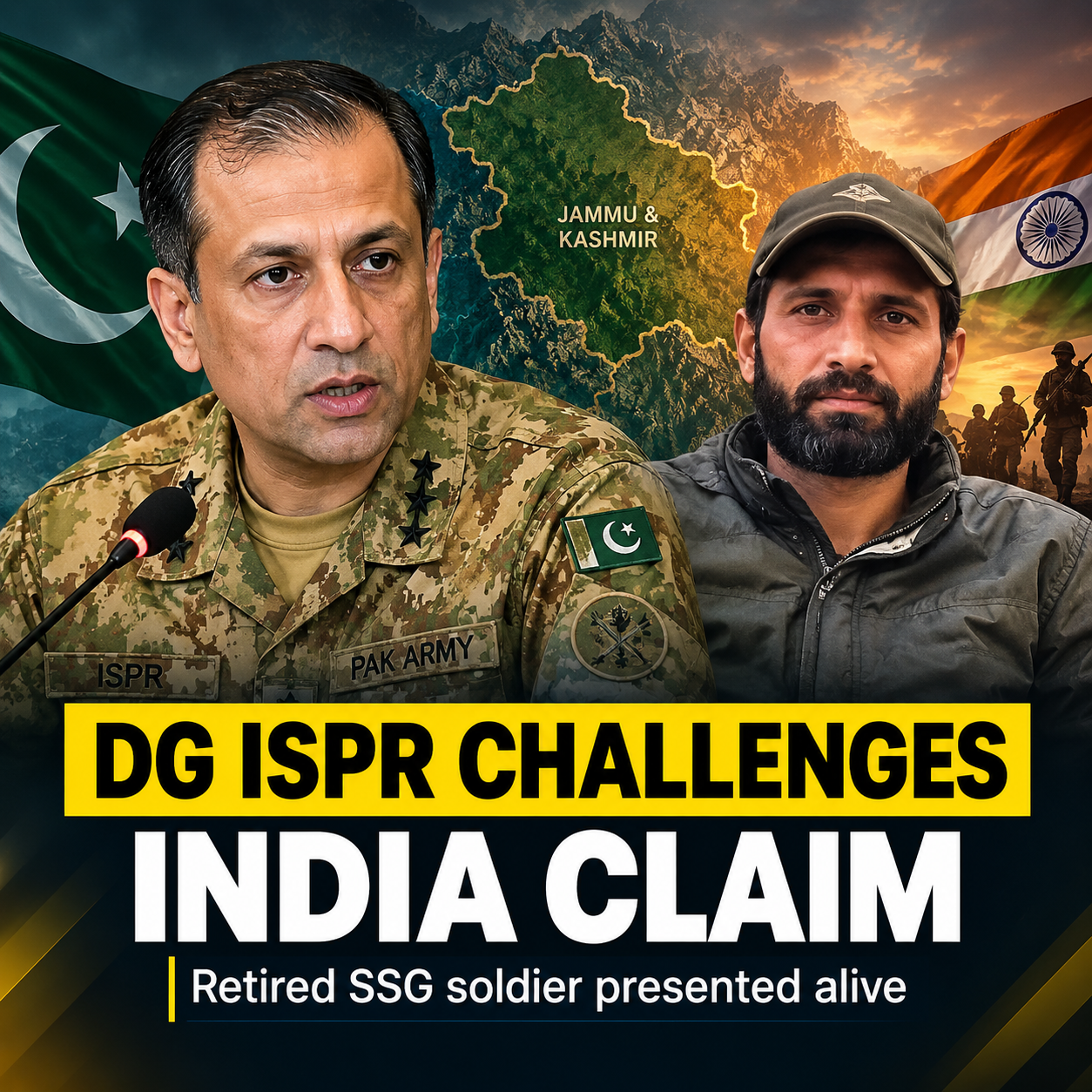
DG ISPR Challenges India’s Kashmir Operation Claim
DG ISPR challenges India’s account
Director General Inter-Services Public Relations (DG ISPR) Lieutenant General Ahmed Sharif Chaudhry said on October 1 that the Indian military had staged what he described as another “false-flag” operation.
According to the Pakistani military spokesperson, the sequence began on the night of September 29, when India’s Chinar Corps posted on social media that security forces had conducted an operation in the Korag-Yousmarg area of Indian-administered Jammu and Kashmir.
Indian authorities subsequently reported that a Lashkar-e-Taiba militant identified as Muhammad Asif, also known as Hashim Musa, had been killed. India’s Ministry of Home Affairs later described the individual as senior Lashkar-e-Taiba commander Musa alias Asif Fauji and said he was killed during an intelligence-led operation in Budgam district.
Muhammad Asif appears before media
The central point of the Pakistani military’s rebuttal was the appearance of Muhammad Asif himself before journalists.
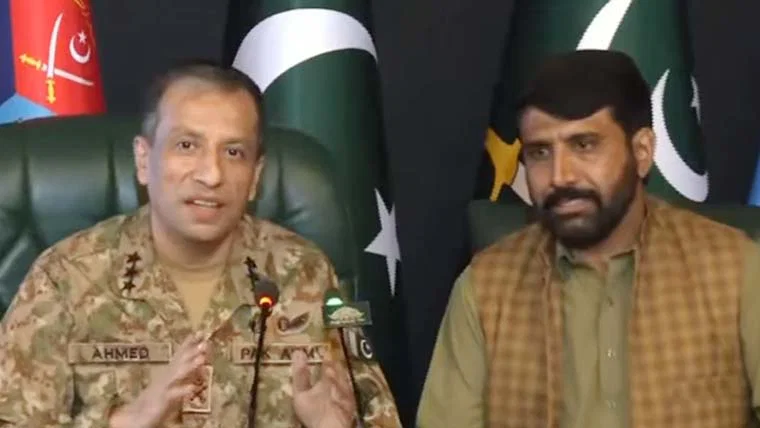
Lieutenant General Ahmed Sharif Chaudhry presented the former SSG soldier during the press conference, saying Indian reports had incorrectly identified him as the militant killed in the operation.
Asif said he learned through social media that he had allegedly been killed in Kashmir. He said friends and acquaintances began contacting him after reports of his supposed death circulated.
According to Pakistani media reports, Asif is from Pindi Gheb in Attock district and retired from the Special Services Group in 2023. He said he was alive and working for a private security company in Rawalpindi.
He rejected the allegations linking him to militant activities and described the reports as baseless and fabricated.
Conflicting claims over Kashmir operation
The episode has produced sharply conflicting accounts from the two sides.
Indian authorities maintain that security forces killed a senior Lashkar-e-Taiba commander known as Musa or Asif Fauji in Budgam. India’s Press Information Bureau said the operation was part of a longer campaign against a four-member Lashkar-e-Taiba group operating in Jammu and Kashmir since 2022.
Pakistan, meanwhile, disputes the identification and has used the presence of the retired soldier Muhammad Asif to challenge the Indian narrative.
The DG ISPR described the sequence as evidence of an alleged false-flag operation and questioned why a living former Pakistani serviceman had been identified in connection with the reported killing.
The competing accounts remain a significant point of dispute, with Pakistan rejecting India’s identification while Indian authorities continue to stand by their account of the operation.
DG ISPR raises broader security concerns
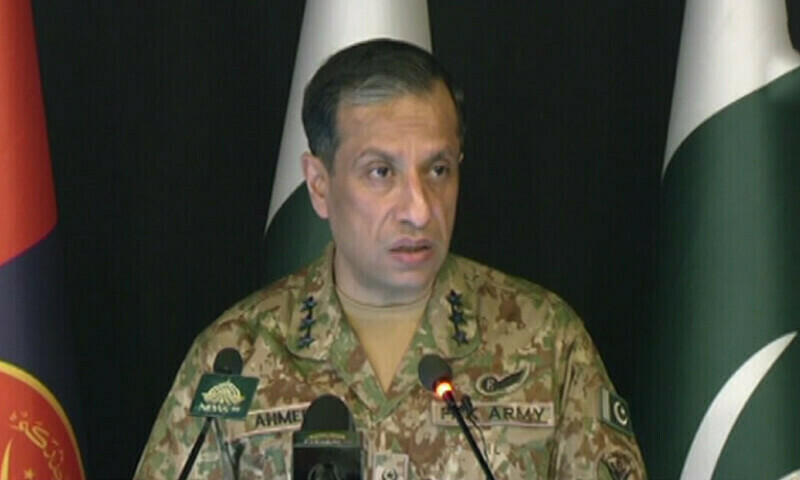
During the briefing, Lieutenant General Ahmed Sharif Chaudhry also raised broader allegations concerning India’s policies toward Pakistan and security developments in the region.
He accused India of supporting militant organizations targeting Pakistan and alleged that New Delhi had used security incidents for political and strategic purposes. These allegations were presented by Pakistan’s military spokesperson and were not independently established in the briefing.
The DG ISPR also discussed developments in Afghanistan, alleging that terrorist organizations operate from Afghan territory and that Pakistan faces security threats emanating from across the border.
He reiterated that Pakistan’s armed forces remain prepared to respond to threats against the country’s security and territorial integrity.
Military reiterates position on politics
The DG ISPR also addressed questions concerning the military’s role in domestic politics.
He reiterated that the armed forces have no role in politics and said political matters should be handled by political parties and the government.
Lieutenant General Ahmed Sharif Chaudhry further said the National Action Plan had been formulated by politicians and should be implemented through the relevant state institutions.
The latest dispute adds another layer to already strained India-Pakistan relations, particularly over competing narratives surrounding security operations in Jammu and Kashmir. The presentation of Muhammad Asif by Pakistan has directly challenged the Indian identification of the person killed, while Indian authorities continue to maintain that the individual killed was Lashkar-e-Taiba commander Musa alias Asif Fauji.See More on Pulse Pakistan